WindBorne Systems Challenges Global Weather Giants with AI-Driven Forecasting
WindBorne Systems has unveiled the sixth iteration of its proprietary weather forecasting model, WeatherMesh, marking a significant shift in how meteorological data is processed and predicted. By leveraging deep learning and a unique, proprietary data collection network, the startup claims its latest model outperforms the European Centre for Medium-Range Weather Forecasts (ECMWF)—long considered the gold standard in the industry. The new system provides hourly updates with a high-resolution 3 km grid across the U.S. and Europe, offering predictive accuracy five days out that rivals traditional models’ one-day forecasts.
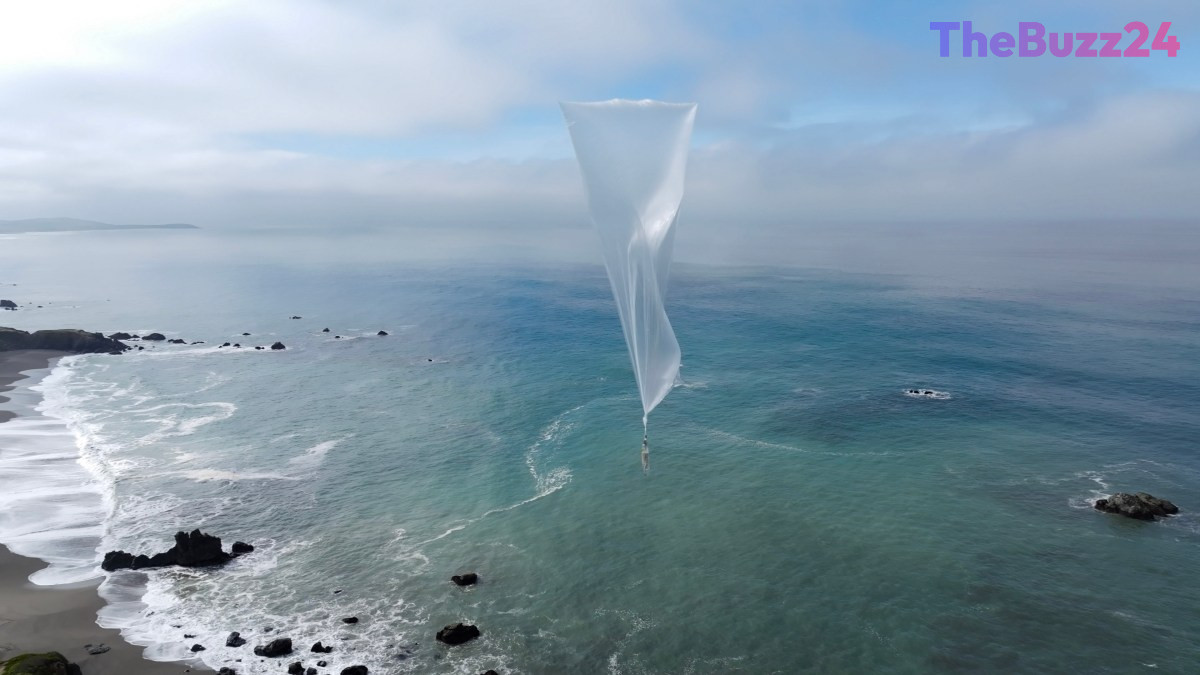
Unlike traditional weather forecasting, which relies on massive supercomputers to run complex physics-based simulations, WindBorne’s approach integrates AI with a physical data advantage. The company operates a global fleet of approximately 400 weather balloons that feed real-time sensor data directly into its transformer-based models. This direct data ingestion allows the company to bypass the reliance on external datasets typically required by other AI weather models, providing a more autonomous and stable predictive capability.
Founded in 2019 by Stanford students, the company has secured $25 million in venture funding to scale its infrastructure. While the startup currently provides data to government entities like the U.S. Air Force, Navy, and NOAA, it remains focused on refining its core technology rather than immediate commercial software expansion. To ensure operational safety, the company has implemented sophisticated air traffic monitoring protocols to navigate its balloon fleet around commercial aviation, underscoring its commitment to integrating high-tech data collection with global safety standards.
Key Takeaways
- WindBorne Systems' WeatherMesh-6 model offers hourly, high-resolution forecasts that reportedly outperform traditional government-backed systems.
- The company maintains a competitive edge by combining AI modeling with a proprietary network of 400 weather balloons for direct data ingestion.
- The startup has secured $25 million in funding and currently supplies critical weather data to U.S. military branches and government agencies.
Editor’s Analysis & Impact
The emergence of WindBorne Systems highlights a pivotal transition in meteorology: the move from computationally expensive physics-based models to agile, data-rich AI architectures. By controlling both the data source—via its balloon fleet—and the model, WindBorne is effectively vertically integrating the weather forecasting supply chain. This is a significant threat to legacy institutions that rely on centralized, slower-moving data assimilation processes. The broader implication is that high-fidelity, localized weather data will become increasingly commoditized, shifting the competitive advantage toward those who can capture unique, real-time environmental inputs. As AI agents become the primary interface for consumer information, companies like WindBorne are positioning themselves to be the foundational infrastructure for the next generation of climate-sensitive decision-making in sectors ranging from agriculture to global commodity trading.
Frequently Asked Questions
Q: How does WindBorne achieve higher accuracy than traditional models?
A: WindBorne combines deep learning models with a proprietary network of 400 weather balloons, allowing for direct data ingestion that is more frequent and granular than traditional physics-based models.
Q: Is WindBorne's technology currently used by government agencies?
A: Yes, the company provides its balloon-gathered data to the U.S. National Oceanic and Atmospheric Administration (NOAA), as well as the U.S. Air Force and Navy.
AI Disclosure: This article is based on verified data and official reports. Our Team and AI have cross-referenced every financial detail with primary sources to ensure total accuracy.
More from this Category