Escalation in the Gulf: US and Iran Exchange Strikes Amid Strained Negotiations
Tensions in the Persian Gulf region have sharply escalated as the United States and Iran engaged in a series of retaliatory strikes, with President Donald Trump vowing further action. Speaking from the Oval Office, Trump stated that the U.S. had inflicted significant damage on Iran and intended to continue its offensive operations. He reiterated his call for Iran to agree to a new deal, suggesting that the nation’s current stance would lead to severe consequences.
These developments follow overnight exchanges of fire between the two nations. The U.S. initiated strikes on Tuesday, citing Iran’s alleged downing of a U.S. Army helicopter. In response, Iran’s Islamic Revolutionary Guard Corps (IRGC) reported targeting U.S. bases in the region. President Trump, via his social media platform, criticized Iran’s prolonged negotiation period and warned of a steep price to pay, asserting that Iran had been militarily overcome.
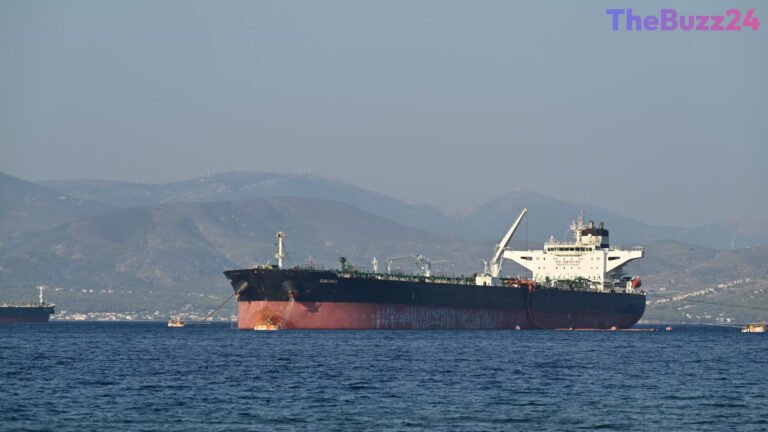
Adding to the volatile situation, the U.S. military announced it had struck an oil tanker in the Gulf of Oman for allegedly violating an ongoing blockade by attempting to transport Iranian oil. This incident occurred off the coast of Oman, where an attack on a vessel named Settebello left three Indian sailors missing and 21 crew members rescued. The U.S. has been blockading Iranian ports since Iran effectively closed the critical Strait of Hormuz shipping route in response to earlier U.S. and Israeli attacks. The Settebello marks the eighth ship targeted by U.S. forces.
Iranian officials have accused the U.S. of undermining diplomatic efforts through inconsistent messaging and actions, including alleged violations of a ceasefire. Iran’s foreign ministry spokesman emphasized the need for stability in any diplomatic process. Meanwhile, the International Atomic Energy Agency (IAEA) approved a U.S.-backed resolution urging Iran to provide details about its nuclear program, a move criticized by Iran as hypocritical given simultaneous U.S. aggression. Iran maintains its nuclear program is for peaceful purposes, while the U.S. and Israel express concerns about potential weapons development.
Key Takeaways
- The U.S. and Iran have exchanged retaliatory strikes, escalating regional tensions.
- President Trump has vowed continued military action against Iran and urged a new deal.
- An oil tanker was struck by U.S. forces in the Gulf of Oman, with Indian sailors reported missing.
Editor’s Analysis & Impact
The recent escalation between the U.S. and Iran signals a dangerous intensification of a long-standing geopolitical conflict. The tit-for-tat strikes, coupled with the targeting of commercial shipping, threaten to destabilize the vital Strait of Hormuz and disrupt global oil supplies, potentially impacting international markets. The ongoing nuclear negotiations, now overshadowed by direct military confrontation, face significant hurdles. The broader implications include increased risk of wider regional conflict, humanitarian concerns for affected populations, and renewed pressure on global energy prices. The international community faces a critical juncture in de-escalating the situation and preventing further destabilization.
Frequently Asked Questions
Q: What triggered the recent U.S. strikes on Iran?
A: The U.S. stated that its strikes were a proportional response to Iran's alleged downing of a U.S. Army helicopter near the Strait of Hormuz.
Q: What is the significance of the Strait of Hormuz?
A: The Strait of Hormuz is a critical chokepoint for global oil transportation, with a significant portion of the world's oil passing through it daily. Its closure or disruption has major implications for global energy markets.
Q: What is the current status of Iran's nuclear program negotiations?
A: Negotiations are ongoing but have become increasingly fraught, with the IAEA recently passing a resolution urging Iran to provide more details on its nuclear activities. The military escalation complicates these diplomatic efforts.
AI Disclosure: This article is based on verified data and official reports. Our Team and AI have cross-referenced every financial detail with primary sources to ensure total accuracy.
More from this Category