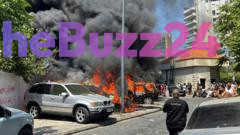
Escalating Airstrikes in Southern Lebanon Result in Significant Casualties
A series of intense Israeli airstrikes and artillery bombardments across southern Lebanon has resulted in at least 17 deaths, further destabilizing an already volatile region. The town of Tayr Debba, located east of the port city of Tyre, bore the brunt of the violence, with nine individuals reported killed following multiple drone and jet strikes. Additional casualties were confirmed in the villages of Deir Qanoun el-Nahr and Seddiqin, while a separate drone strike in the coastal city of Sidon claimed two more lives.
The ongoing military campaign has seen a marked intensification of activity, with the Israeli military targeting infrastructure sites and rocket launchers associated with Hezbollah. In response, Hezbollah fighters have continued to engage Israeli forces, launching rocket barrages and shellfire at troop gatherings and military vehicles in the Bayada and Yohmor regions. The conflict, which has displaced nearly one million people and left over 1.4 million in need of humanitarian aid, shows little sign of abating despite previous attempts at brokered ceasefires.
Amidst the escalating violence, the United Nations has taken a formal step toward accountability. Human rights chief Volker Türk has announced the deployment of an investigative team to Lebanon to document potential violations committed by all parties involved since early March. The findings, expected by late July, could serve as a foundation for future war crimes prosecutions. While the Lebanese government requested the mission, the level of cooperation from Israeli authorities remains uncertain as the broader geopolitical standoff between Israel, Iran, and the United States continues to complicate diplomatic efforts.
Key Takeaways
- At least 17 people were killed in a wave of Israeli airstrikes across southern Lebanon, including multiple strikes near the city of Tyre.
- The United Nations is deploying an investigative team to Lebanon to document potential human rights violations and war crimes committed by all sides.
- The conflict has resulted in the displacement of nearly one million people, with over 1.4 million residents currently requiring humanitarian assistance.
Editor’s Analysis & Impact
The current situation in Lebanon represents a critical inflection point in the broader Middle Eastern conflict. The failure of the April ceasefire and the direct exchange of fire between Israel and Iran underscore a shift from proxy warfare to a more direct, high-stakes confrontation. The involvement of UN human rights investigators adds a layer of international legal pressure, though its practical impact on the battlefield remains limited. Economically and socially, Lebanon is facing a humanitarian catastrophe that will require years of reconstruction, regardless of when hostilities cease. The future outlook remains grim, as both Israel and Hezbollah appear committed to their respective military objectives, leaving little room for diplomatic de-escalation in the immediate term. The risk of a ‘permacrisis’ in the region is high, with global energy markets and regional stability hanging in the balance.
Frequently Asked Questions
Q: What is the purpose of the UN human rights mission in Lebanon?
A: The mission aims to investigate and document potential human rights violations committed by all parties involved in the conflict since March, with the findings potentially being used for future war crimes prosecutions.
Q: How many people have been displaced by the conflict in Lebanon?
A: According to UN data, nearly one million people—approximately one-fifth of Lebanon's population—have been displaced from their homes due to the ongoing hostilities.
AI Disclosure: This article is based on verified data and official reports. Our Team and AI have cross-referenced every financial detail with primary sources to ensure total accuracy.
More from this Category