Virtual Reunions: How AI ‘Deadbots’ and Deepfakes Are Redefining Grief for Russian Military Families
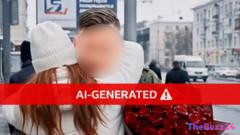
A new wave of artificial intelligence technology is allowing families of Russian soldiers killed or missing in Ukraine to “reunite” with their loved ones in the digital realm. Since mid-2025, AI-generated videos and photos depicting fallen servicemen returning home, embracing their wives, or ascending to heaven as angels have surged in popularity across social media platforms like Instagram and TikTok. While these digital creations offer a semblance of closure to grieving relatives, they have also sparked intense ethical debates and deep political outrage, particularly in Ukraine, where the reality of the conflict is starkly different from the idealized AI narratives.
Local creators have turned this digital afterlife trend into a booming cottage industry. Entrepreneurs who co-founded specialized “farewell video” projects compile photographs provided by grieving families to animate emotional, cinematic reunions. These services, which range in price from 200 to 10,000 roubles, have proven highly lucrative. Some creators report monthly earnings of up to 200,000 roubles—nearly double the average Russian wage. However, the commercialization of grief has drawn sharp criticism from onlookers who accuse these creators of capitalizing on tragedy.
Beyond the financial aspects, the psychological and ethical implications of “grief tech” remain highly controversial. Katarzyna Nowaczyk-Basińska, a researcher at the University of Cambridge’s Leverhulme Centre for the Future of Intelligence, notes that the long-term impact of using “deadbots” and deepfakes during the mourning process is still largely unknown. While some users express deep gratitude for the virtual comfort these videos provide, others find the practice deeply unsettling, describing the AI-generated images as a painful illusion that fails to ease the actual trauma of loss.
The geopolitical dimension further complicates the phenomenon. In these AI-generated clips, Russian soldiers are consistently portrayed as heroic protectors, completely omitting the devastation caused by the invasion of Ukraine. This sanitized depiction has provoked fierce backlash from Ukrainians online, who view the videos as propaganda that glorifies those responsible for violence. As generative AI tools become more sophisticated and accessible, the line between personal mourning, commercial enterprise, and political narrative continues to blur.
Key Takeaways
- AI-generated 'deadbots' and deepfakes are increasingly being used by Russian families to visualize reunions with soldiers killed or missing in Ukraine.
- A lucrative cottage industry has emerged around these 'farewell videos,' with some creators earning double the average national wage by animating photos of deceased servicemen.
- The trend has sparked intense ethical and political controversy, drawing criticism for commercializing grief and provoking outrage among Ukrainians who see the videos as sanitized propaganda.
Editor’s Analysis & Impact
The rise of wartime ‘deadbots’ represents a poignant and troubling intersection of generative AI, commercial exploitation, and geopolitical propaganda. As ‘grief tech’ transitions from a niche concept to a mainstream consumer service, it challenges traditional boundaries of mourning and memory. From an industry perspective, this phenomenon highlights the rapid democratization of deepfake technology, allowing low-cost, high-margin businesses to scale quickly in regions with limited access to mainstream Western AI tools. However, the broader implications are deeply concerning. By sanitizing the grim realities of war into comforting, idealized digital fantasies, these tools can be weaponized—intentionally or not—to shape public perception and soften the domestic impact of military casualties. As the digital afterlife industry expands globally, regulators and ethicists will face unprecedented challenges in governing how the likenesses of the deceased are used, monetized, and manipulated.
Frequently Asked Questions
Q: What are 'deadbots' and how are they being used in this context?
A: Deadbots are AI-generated digital avatars or animations created from photos and data of deceased individuals. In this context, families of fallen Russian soldiers use them to create simulated videos of their loved ones returning home, offering a virtual form of closure.
Q: Why are these AI-generated videos causing controversy?
A: The videos are highly controversial because they portray Russian soldiers as heroic figures while ignoring the destruction of the war in Ukraine, sparking outrage among Ukrainians. Additionally, critics argue that charging money for these videos exploits the grief of mourning families.
Q: What do experts say about the psychological impact of this technology?
A: Researchers note that the long-term psychological effects of using AI deepfakes to cope with loss are still unknown. While some find comfort in these digital reunions, others warn that they create a false illusion that may hinder the natural grieving process.
AI Disclosure: This article is based on verified data and official reports. Our Team and AI have cross-referenced every financial detail with primary sources to ensure total accuracy.
More from this Category