Delivery Robots Spark Backlash: Pedestrians Forced to Dodge Tech on Sidewalks
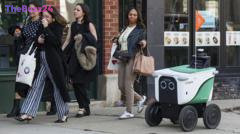
Autonomous delivery robots, designed to transport groceries and fast food, are increasingly appearing on sidewalks in cities across the US, UK, Japan, South Korea, and Germany. While proponents claim these machines offer a futuristic and efficient service, helping to reduce traffic and emissions, a growing number of residents and local authorities are expressing significant concerns.
In Chicago, residents like John Roberts have voiced frustration, describing situations where they and their families have had to step aside to avoid the zipping robots. Roberts, who initially found the robots “neat” and “futuristic,” now worries about the potential chaos if dozens of these machines, equipped with lights and cameras, become commonplace. He has launched a petition calling for a suspension of the robots in Chicago until safety tests are conducted and clear usage regulations are established. Reports of collisions, injuries, and robots obstructing traffic and emergency vehicles have fueled these anxieties.
Similar issues are being addressed in Glendale, California, where the city council is considering a temporary ban. Council members cite the robots’ unannounced arrival, their impact on pedestrian movement and accessibility, and a lack of regulatory clarity as primary concerns. Councilmember Ardy Kassakhian highlighted the need for a comprehensive regulatory framework, including operating rules, insurance requirements, accessibility standards, and accountability for operators, especially on narrower sidewalks.
Beyond safety and accessibility, the rise of delivery robots is also raising concerns about employment. The Independent Workers Union of Great Britain (IWGB) has expressed worries about the potential impact on delivery drivers’ jobs, warning of significant human consequences if these robots become widespread. Despite these challenges, companies like Starship Technologies maintain that their robots are safe and designed to integrate smoothly into communities, emphasizing that public perception needs to adapt to this new form of urban mobility. Analysts predict a substantial growth in the autonomous delivery robot market, underscoring the urgent need for clear global regulations.
Key Takeaways
- Delivery robots are facing backlash from residents and local authorities due to concerns about pedestrian safety, accessibility, and potential job displacement.
- Cities like San Francisco and Toronto have implemented restrictions or bans on sidewalk delivery robots, while others are considering regulatory frameworks.
- Despite public concerns, companies operating these robots assert their safety and efficiency, and market analysts predict significant future growth in the sector.
Editor’s Analysis & Impact
The increasing deployment of autonomous delivery robots presents a classic clash between technological advancement and public acceptance. While the potential benefits in efficiency and reduced emissions are clear, the immediate challenges of sidewalk congestion, pedestrian safety, and accessibility cannot be ignored. The fragmented regulatory landscape worldwide highlights the nascent stage of this technology’s integration into urban environments. As the market is projected to boom, a proactive approach from policymakers is crucial to establish clear guidelines that balance innovation with the needs of communities, ensuring that technological progress does not come at the expense of public well-being or livelihoods.
Frequently Asked Questions
Q: What are the main concerns regarding delivery robots on sidewalks?
A: The primary concerns include pedestrian safety, as people may have to step into the street to avoid the robots. Other issues involve accessibility for all pedestrians, potential obstruction of traffic and emergency vehicles, and the impact on jobs for human delivery drivers.
Q: What actions have cities taken regarding delivery robots?
A: Some cities have implemented restrictions or bans. For example, San Francisco has limited their access to less busy areas, and Toronto has prohibited them from using sidewalks. Chicago has banned them from specific areas, and Glendale is considering a temporary ban while developing regulations.
Q: What do companies operating delivery robots say?
A: Companies like Starship Technologies state that their robots are safe, polite, and programmed to be careful. They believe these robots offer a useful service and are designed to integrate into communities, suggesting that public perception needs to adapt to sharing sidewalks with them.
AI Disclosure: This article is based on verified data and official reports. Our Team and AI have cross-referenced every financial detail with primary sources to ensure total accuracy.
More from this Category