Maritime Traffic Resumes in Strait of Hormuz Following US-Iran Agreement
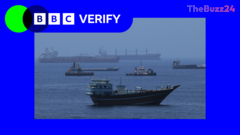
Maritime activity in the Strait of Hormuz has begun to recover following a landmark agreement between the United States and Iran aimed at de-escalating regional hostilities. Data indicates that at least 172 vessels have navigated the critical waterway since the deal was finalized on June 18. While this represents a significant step toward normalcy, current transit volumes remain well below the pre-conflict average of 138 daily crossings, as ship owners navigate a complex landscape of safety concerns and regulatory shifts.
The easing of long-standing US sanctions has facilitated a notable uptick in Iranian oil and petrochemical exports. The US Treasury has issued temporary licenses allowing for the sale of these products through August 21, leading to the departure of at least 30 tankers laden with Iranian cargo. Despite this, the shipping industry remains cautious. Many vessels are opting for the Iranian-approved northern route, while international maritime groups continue to warn of potential sea mines in the central shipping lanes, recommending that vessels utilize a southern corridor near the Omani coast instead.
Operational uncertainty persists as conflicting directives emerge from Iranian authorities. While the recent agreement mandates that Iran ensure safe passage for commercial vessels, the Persian Gulf Strait Authority has begun requiring transit permits, a move that has caused hesitation among some international ship owners due to the authority’s sanctioned status. Furthermore, contradictory statements from Iranian military and diplomatic officials regarding the status of the strait continue to create a volatile environment for global energy markets, which have already reacted to the situation with a decline in Brent crude prices.
As of this week, hundreds of tankers and cargo ships remain anchored within the Gulf, waiting for clearer signals regarding safety and administrative requirements. The Joint Maritime Information Center continues to conduct mine clearance operations, and the long-term stability of the route will likely depend on the successful implementation of the administrative framework promised by the recent diplomatic breakthrough.
Key Takeaways
- Maritime traffic in the Strait of Hormuz is slowly recovering, with 172 vessels transiting since the US-Iran agreement was signed.
- The US has temporarily eased sanctions on Iranian oil and petrochemicals, though ship owners remain cautious due to ongoing mine threats and regulatory ambiguity.
- Conflicting messages from Iranian officials and the requirement for new transit permits are contributing to a slow return to pre-war shipping volumes.
Editor’s Analysis & Impact
The partial reopening of the Strait of Hormuz is a critical development for global energy security, given that a significant portion of the world’s oil supply passes through this chokepoint. The immediate market reaction—a drop in Brent crude prices—reflects the easing of supply chain fears. However, the industry remains in a ‘wait-and-see’ mode. The primary risk factor moving forward is the lack of unified administrative control; until the US, Iran, and international maritime bodies reach a consensus on safety protocols and transit permits, volatility will likely persist. If the current de-escalation holds, we can expect a gradual normalization of oil prices, but any further military posturing or discovery of additional sea mines could quickly reverse these gains, keeping shipping insurance premiums and freight rates elevated in the near term.
Frequently Asked Questions
Q: Why is the Strait of Hormuz significant to global trade?
A: The Strait of Hormuz is one of the world's most important oil chokepoints, as a massive percentage of global petroleum exports must pass through this narrow passage to reach international markets.
Q: Are there still safety risks for ships using the strait?
A: Yes. International maritime groups have warned of the presence of sea mines in the central shipping lanes, leading to recommendations that vessels use a specific southern route that has been cleared of hazards.
AI Disclosure: This article is based on verified data and official reports. Our Team and AI have cross-referenced every financial detail with primary sources to ensure total accuracy.
More from this Category