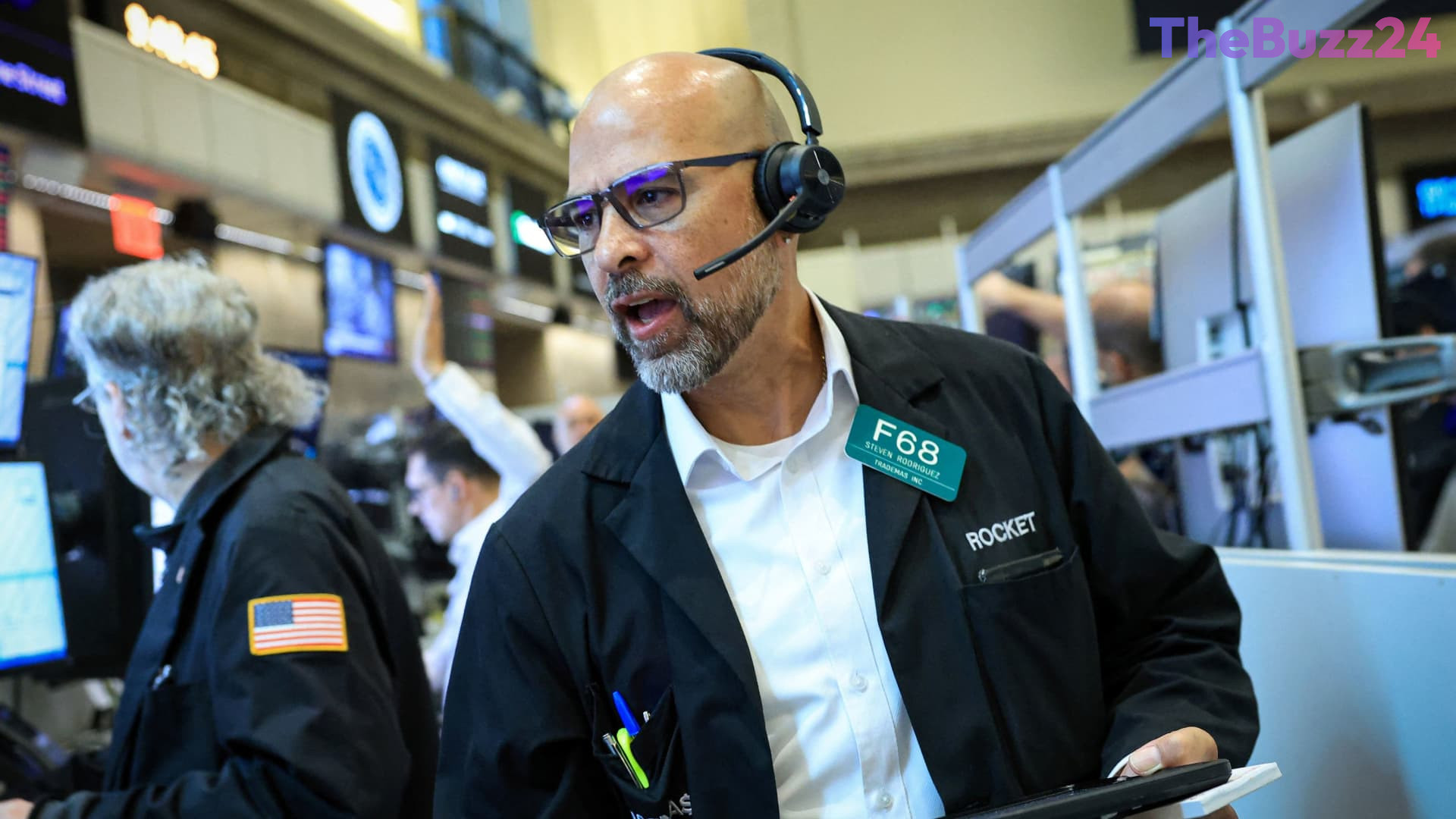
Market Volatility Deepens as Investors Pivot Away from Tech Giants
Global financial markets are experiencing a period of heightened volatility as investors aggressively rotate out of major technology stocks, leading to a significant divergence in performance across key indices. While the Nasdaq Composite has faced a four-day losing streak—its longest since February—the Dow Jones Industrial Average has managed to buck the trend, buoyed by strength in the healthcare, financial, and industrial sectors. This shift reflects a growing investor concern regarding the sustainability of high valuations in the tech sector, particularly as companies like Apple and Microsoft announce price hikes driven by rising component and storage costs.
The sentiment has rippled across international markets, with Asia-Pacific indices seeing broad declines. Japan’s Nikkei 225 and South Korea’s Kospi both faced downward pressure, mirroring the cautious mood on Wall Street. SoftBank Group, in particular, saw its shares plummet by 11% as concerns mount over the escalating costs associated with artificial intelligence infrastructure and the performance of its subsidiary, Arm Holdings. Analysts suggest that the market is currently testing investor conviction, moving away from the concentrated leadership of the ‘Magnificent Seven’ toward a more fragmented and volatile landscape.
Simultaneously, the commodities market is grappling with its own set of challenges. Oil prices have trended lower despite persistent geopolitical tensions in the Middle East, including reports of maritime incidents near the Strait of Hormuz and ongoing diplomatic friction regarding Iranian assets. Furthermore, internal pressures within OPEC have added a layer of uncertainty, as Iraq has signaled potential dissatisfaction with its current output quotas. As traders look toward upcoming economic data, including wholesale inventories and consumer sentiment readings, the broader market remains in a state of recalibration, balancing geopolitical risks against shifting monetary policy expectations.
Key Takeaways
- Investors are rotating capital out of major technology stocks into defensive sectors like healthcare and industrials, causing a divergence between the Nasdaq and the Dow.
- Rising costs for components and storage are forcing tech giants to implement price hikes, contributing to market anxiety and sector-wide selloffs.
- Geopolitical tensions in the Middle East and internal OPEC disputes are keeping oil prices volatile despite supply concerns.
Editor’s Analysis & Impact
The current market environment represents a structural shift in leadership. For years, the ‘Magnificent Seven’ tech stocks provided a reliable engine for growth; however, the recent rotation suggests that investors are becoming increasingly sensitive to valuation multiples and the tangible costs of AI infrastructure. The divergence between the Dow and the Nasdaq indicates a ‘flight to quality’ or at least a flight to stability, as participants hedge against potential Federal Reserve policy shifts. Looking ahead, the market will likely remain sensitive to any news regarding inflation data and corporate margins. If tech companies continue to struggle with passing on costs to consumers, we may see a prolonged period of consolidation. Conversely, the instability within OPEC and geopolitical friction in the Middle East provide a ‘floor’ for energy prices, which could complicate the inflation outlook for central banks globally.
Frequently Asked Questions
Q: Why are tech stocks currently underperforming?
A: Tech stocks are facing pressure due to a combination of rising component costs, which are forcing price hikes, and a broader investor rotation into more stable sectors like healthcare and industrials.
Q: How are geopolitical tensions affecting oil prices?
A: Despite tensions in the Middle East and potential supply constraints from OPEC, oil prices have remained under pressure as investors weigh these risks against broader global economic concerns and potential demand shifts.
AI Disclosure: This article is based on verified data and official reports. Our Team and AI have cross-referenced every financial detail with primary sources to ensure total accuracy.
More from this Category