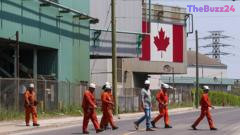
Navigating Stagnation: The Complex Reality of Canada’s Economic Landscape
Canada is currently navigating a period of significant economic uncertainty, characterized by a technical recession, persistent inflationary pressures, and a widening divide in financial stability among its citizens. While the nation has avoided a prolonged downturn, recent data confirms two consecutive quarters of GDP decline, highlighting the fragility of the current recovery. Government officials maintain that they are actively working to bolster productivity and diversify trade, yet the immediate reality for many households remains one of financial strain.
Inflation continues to be a primary concern for the Canadian public, with rising energy costs—partially fueled by global geopolitical instability—impacting the cost of living. This economic environment has created a stark disparity: while existing homeowners have seen their equity grow, younger generations and renters are increasingly sidelined by high housing costs and a competitive market. Furthermore, youth unemployment remains stubbornly high, suggesting that the current economic structure is failing to provide sufficient opportunities for new entrants to the workforce.
External factors, particularly the complex trade relationship with the United States, further complicate the outlook. Ongoing tariff disputes have hit specific industrial sectors hard, forcing businesses to grapple with reduced profitability and uncertainty. As the government seeks to expand trade relationships across Asia and Europe to reduce reliance on its southern neighbor, industry leaders warn that the window for tangible progress is narrowing. Investors are increasingly demanding clear, actionable results to ensure long-term stability.
Despite these headwinds, analysts point to Canada’s fundamental strengths, including a highly educated workforce and abundant natural resources. The challenge moving forward lies in addressing structural inefficiencies, such as internal trade barriers between provinces and an increasingly uncompetitive tax system. Unlocking the country’s full potential will require a delicate balance of immediate relief for struggling families and long-term strategic reforms to foster a more resilient, independent economy.
Key Takeaways
- Canada experienced a technical recession in late 2025 and early 2026, with growth forecasts remaining modest for the coming years.
- A significant wealth gap is emerging, as rising housing costs benefit existing homeowners while creating severe financial pressure for renters and younger Canadians.
- Trade tensions with the U.S. and internal regulatory barriers are identified as major structural hurdles to economic growth and business investment.
Editor’s Analysis & Impact
The Canadian economy is at a critical inflection point where traditional growth drivers are being tested by global protectionism and domestic structural stagnation. The reliance on the U.S. market, while historically beneficial, has become a liability due to sector-specific tariffs that disrupt supply chains and erode business confidence. The government’s pivot toward diversifying trade partners in Asia and Europe is a necessary long-term strategy, but it offers little solace to businesses currently facing margin compression. Furthermore, the ‘generational divide’ in wealth—driven by housing policy—poses a long-term social risk that could dampen consumer spending and labor mobility. Future outlook depends heavily on the government’s ability to streamline inter-provincial trade and reform tax policies to attract capital that is currently looking for more predictable, high-return environments elsewhere.
Frequently Asked Questions
Q: What is a technical recession?
A: A technical recession is generally defined as two consecutive quarters of negative economic growth, measured by a decline in Gross Domestic Product (GDP).
Q: Why are younger Canadians struggling more than other demographics?
A: Younger Canadians face a combination of high youth unemployment rates and a housing market where costs have outpaced wage growth, making home ownership and financial independence increasingly difficult.
AI Disclosure: This article is based on verified data and official reports. Our Team and AI have cross-referenced every financial detail with primary sources to ensure total accuracy.
More from this Category