Exceptional Wildfires Force Emergency Response Near Paris Amid Record Heat
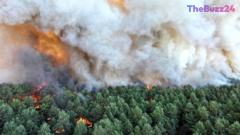
A massive wildfire in the Fontainebleau forest, located approximately 40 miles southeast of Paris, has reached an exceptional scale, forcing emergency services to deploy aerial firefighting assets to the region for the first time. The blaze, characterized by officials as highly virulent, has already consumed over 800 hectares of woodland. The incident caused significant disruptions to regional infrastructure, including the partial closure of a major north-south highway during the peak of the summer travel season.
The severity of the situation has necessitated an unprecedented response, with firefighting planes typically reserved for the arid southern regions of France being redirected to the Paris area. In addition to fixed-wing aircraft, authorities have deployed two helicopters and an observation plane to coordinate efforts aimed at protecting lives and property. This comes as the Paris region endures its third major heatwave of the year, contributing to a summer defined by record-breaking temperatures across the European continent.
Beyond the immediate threat to the forest, the extreme weather has impacted broader national operations. The heat has forced the temporary suspension of activities at three nuclear power stations to prevent the release of heated cooling water into already stressed waterways. Furthermore, transportation networks have faced significant strain, with high-speed rail services at the Gare de Lyon experiencing delays of up to six hours, and organizers of the Tour de France being forced to shorten a race stage as temperatures approached 40C.
Key Takeaways
- A massive wildfire in the Fontainebleau forest has consumed over 800 hectares, requiring the rare deployment of firefighting aircraft to the Paris region.
- Record-breaking summer heatwaves have disrupted critical infrastructure, including the temporary shutdown of three nuclear power plants and significant rail delays.
- The wildfire crisis is part of a broader European trend of extreme weather, with similar emergency incidents reported in the UK and Spain.
Editor’s Analysis & Impact
The current wildfire crisis near Paris serves as a stark indicator of the increasing vulnerability of European infrastructure to climate-driven extreme weather. The necessity of moving firefighting resources from the south to the north suggests that traditional regional risk assessments are becoming obsolete as heatwaves become more frequent and intense. From an economic perspective, the disruption to high-speed rail and the forced operational pauses at nuclear power facilities highlight the fragility of energy and transport grids under thermal stress. Moving forward, European nations will likely need to invest in more decentralized emergency response capabilities and climate-resilient infrastructure to mitigate the cascading effects of these heat-related events on both public safety and national productivity.
Frequently Asked Questions
Q: Why were nuclear power stations shut down during the heatwave?
A: The stations were temporarily shut down to prevent the discharge of warm cooling water into local waterways, which are already suffering from high temperatures and could be ecologically damaged by further heating.
Q: Is it common for firefighting planes to operate in the Paris region?
A: No, this is the first time firefighting planes have been deployed from the southern part of France to the Paris region, highlighting the exceptional and unprecedented scale of the current wildfire.
AI Disclosure: This article is based on verified data and official reports. Our Team and AI have cross-referenced every financial detail with primary sources to ensure total accuracy.
More from this Category