Eastern North America Chokes as Ontario Wildfire Smoke Spreads
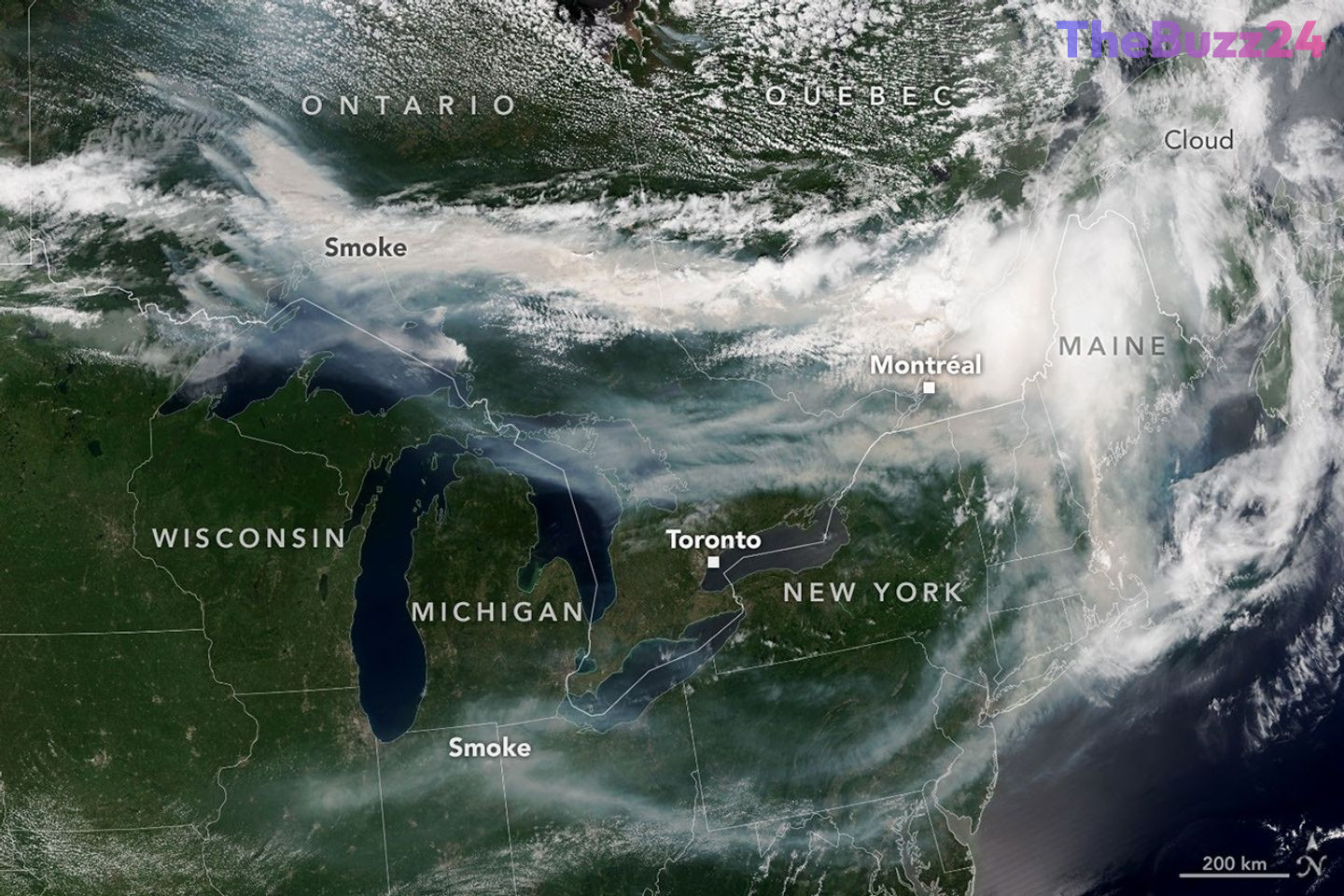
Vast plumes of smoke originating from wildfires in Ontario, Canada, were observed drifting eastward across significant portions of Canada and the United States on the afternoon of July 14, 2026. Satellite imagery captured by the Visible Infrared Imaging Radiometer Suite (VIIRS) on the NOAA-21 satellite provided a stark visual of the widespread atmospheric impact. After a relatively slow start, Canada’s 2026 fire season intensified by late June due to dry, warm conditions, bringing activity closer to the 25-year average. By mid-July, nearly 850 fires were actively burning nationwide, with over 180 concentrated in Ontario.
Winds primarily carried the dense smoke southeast, blanketing much of southern Ontario, parts of Quebec, and extending into the U.S. Midwest and Northeast. This atmospheric phenomenon transformed skies into shades of gray and yellow, casting an eerie orange hue on the sun in many affected regions. The impact on air quality varied significantly with altitude; while high-altitude smoke had negligible effects, ground-level concentrations led to deteriorating conditions. Toronto, for instance, experienced unhealthy air quality levels, compounding health risks for residents already grappling with a concurrent heat wave.
Much of the smoke originated from fires in Northwestern Ontario, where eight blazes saw substantial growth on July 13 and 14, prompting officials to issue evacuation orders for several local communities. As of July 14, fires across Canada have consumed approximately 1.9 million hectares (4.7 million acres) since the beginning of the year. While this is a considerable area, it remains well below the extreme season totals recorded in 2023 and 2025. The trajectory for the remainder of the fire season is uncertain, with experts from the U.S., Canada, and Mexico continuously monitoring conditions through seasonal fire outlooks.
Key Takeaways
- Extensive smoke plumes from Ontario wildfires are impacting air quality across eastern Canada and parts of the U.S.
- The 2026 Canadian fire season, while active with 1.9 million hectares burned, remains below the extreme levels of 2023 and 2025.
- Local communities in Northwestern Ontario have faced evacuation orders due to significant fire growth, with cities like Toronto experiencing unhealthy air quality compounded by heatwaves.
Editor’s Analysis & Impact
The widespread smoke from Canadian wildfires underscores the growing cross-border implications of climate-related events. For industries, this could mean disruptions to air travel, outdoor tourism, and agriculture due to reduced visibility and air quality. Healthcare systems may face increased demand for respiratory-related issues, leading to higher costs. Looking ahead, the frequency and intensity of such events are projected to rise, necessitating enhanced international cooperation in fire prevention, management, and air quality monitoring. Businesses and governments will need to adapt to these new realities, investing in resilient infrastructure and public health advisories to mitigate the economic and social fallout. The ongoing fire season serves as a stark reminder of the urgent need for comprehensive climate action and adaptive strategies.
Frequently Asked Questions
Q: What areas are primarily affected by the wildfire smoke?
A: The smoke from Ontario wildfires is primarily affecting eastern Canada, including much of southern Ontario and parts of Quebec, as well as extending into the U.S. Midwest and Northeast.
Q: How is the smoke impacting air quality?
A: Air quality impacts vary by altitude; while high-altitude smoke has minimal effects, ground-level smoke has led to unhealthy conditions in cities like Toronto, exacerbated by concurrent heat waves.
Q: How does the 2026 fire season compare to previous years?
A: As of mid-July 2026, approximately 1.9 million hectares have burned across Canada. This is a significant area but remains well below the totals seen in the extreme fire seasons of 2023 and 2025.
AI Disclosure: This article is based on verified data and official reports. Our Team and AI have cross-referenced every financial detail with primary sources to ensure total accuracy.
More from this Category