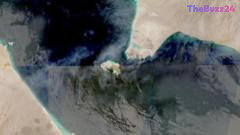
Red Sea Chokepoint Threatened as Houthi Attacks Deepen Middle East Crisis
The volatile security landscape in the Middle East has taken a severe downturn following a series of aggressive maritime assaults in the Red Sea. Fighter groups operating out of Yemen have claimed responsibility for targeting commercial vessels, effectively threatening to choke off vital shipping lanes connecting Europe and Asia through the narrow Bab El Mandeb Strait. These developments coincide with ongoing military exchanges involving United States forces and Iranian coastal installations, compounding fears of a prolonged regional conflict.
For Gulf Arab nations accustomed to relative stability, the recent escalation has disrupted daily life and commerce. With the critical Strait of Hormuz already severely constrained, the potential closure of the Bab El Mandeb maritime route removes a key alternative pathway used by exporters to bypass blocked waterways. Saudi Arabia, which previously mitigated regional trade bottlenecks by routing oil shipments through its transcontinental pipeline to Red Sea terminals, now faces severe logistical hurdles as vessels risk coming under fire near the Yemeni coastline.
The strategic geography of Yemen—punctuated by rugged terrain, caves, and mountainous hideouts—provides insurgent groups with robust defensive advantages that traditional military campaigns have struggled to neutralize. Previous international efforts to safeguard commercial shipping through naval patrols and targeted air strikes have yielded limited long-term deterrence. Analysts warn that unless diplomatic channels yield a comprehensive framework to de-escalate tensions between Washington and Tehran, global supply chains will continue to absorb the shock of soaring freight costs and delayed cargo deliveries.
Compounding the geopolitical friction, recent diplomatic agreements facilitating civil nuclear cooperation have sparked broader anxieties regarding regional proliferation. While energy initiatives are officially designated for peaceful purposes, observers note the potential for a cascading security dilemma involving neighboring states seeking strategic parity. As military maneuvers persist across land and sea, the convergence of maritime blockades, persistent skirmishes, and stalled diplomatic efforts points toward an extended phase of economic and political instability across the Arabian Peninsula.
Key Takeaways
- Houthi maritime attacks in the Red Sea threaten the crucial Bab El Mandeb Strait, risking a major bottleneck in global trade.
- Ongoing military clashes between US forces and Iran have exacerbated regional instability, impacting energy exports and supply chains.
- New civil nuclear agreements in the region have raised long-term concerns over potential arms races and heightened geopolitical tensions.
Editor’s Analysis & Impact
The intensification of hostilities involving Houthi forces and broader US-Iran flashpoints introduces severe risks to international commerce and energy security. The disruption of both the Strait of Hormuz and the Bab El Mandeb Strait creates a dual-chokepoint crisis that forces maritime carriers to seek costly detours around the African continent, invariably driving up consumer prices and delaying goods. From a macroeconomic perspective, prolonged uncertainty in the Middle East acts as a significant tax on global growth. Furthermore, the interplay between military deterrence and emerging civil nuclear frameworks highlights a fragile security architecture that could trigger wider proliferation anxieties. Policymakers and market participants must account for prolonged volatility, as traditional military interventions have thus far failed to establish permanent maritime security.
Frequently Asked Questions
Q: Why is the Bab El Mandeb Strait important for global trade?
A: The Bab El Mandeb Strait is a crucial maritime chokepoint connecting the Red Sea to the Indian Ocean, serving as a primary transit route for cargo moving between Europe and Asia, including critical energy and fertilizer shipments.
Q: How are regional oil exports being affected by the current conflict?
A: With the Strait of Hormuz effectively closed due to ongoing hostilities, major exporters like Saudi Arabia have relied on transcontinental pipelines to move oil to Red Sea terminals. However, recent Houthi threats near Yemen now jeopardize these alternative shipping routes as well.
Q: What role do the Houthis play in the current Middle East escalation?
A: The Houthis are an Iran-backed Shia tribal group controlling large parts of Yemen. Their recent attacks on commercial vessels in the Red Sea have added a maritime dimension to the broader US-Iran conflict, threatening international shipping lanes.
AI Disclosure: This article is based on verified data and official reports. Our Team and AI have cross-referenced every financial detail with primary sources to ensure total accuracy.
More from this Category