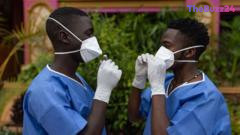
A Tale of Two Borders: Why Uganda is Winning the Fight Against Ebola as DRC Cases Surge
The Ebola outbreak in the eastern region of the Democratic Republic of Congo (DRC) has escalated into the second-worst on record, with the official death toll climbing past a grim milestone of 1,500. Health experts warn that the actual number of fatalities is likely much higher, as the virus is spreading at a significantly faster rate than observed in previous outbreaks. However, just across the border in Uganda, the public health landscape presents a starkly different and far more optimistic scenario.
Ugandan health officials recently celebrated a major milestone as the country’s last active Ebola patient was discharged from the hospital. Throughout the entire duration of the current threat, Uganda managed to limit its caseload to just 20 infections and two deaths. Public health officials emphasize that this successful containment was not a matter of luck, but rather the direct result of heavy, proactive investments in medical preparedness and rapid response infrastructure.
Uganda’s resilience stems from lessons learned during nine previous outbreaks since 2000. When the first imported cases from the DRC were identified, Ugandan authorities immediately activated a specialized Ebola treatment center at Mulago Hospital in Kampala. The facility, which was kept on standby with leftover medical supplies and trained emergency teams from previous health emergencies, was fully operational within a single day. Additionally, the government implemented strict contact tracing, successfully quarantining more than 6,000 individuals who had been exposed to the virus for the mandatory 21-day incubation period.
In contrast, the DRC faces a complex web of logistical and security challenges that have severely hampered containment efforts. The current outbreak, driven by the rare Bundibugyo strain, initially went undetected for weeks because local surveillance systems were only testing for more common Ebola species. Furthermore, the epicentre of the outbreak in Ituri province is plagued by violent conflict, military rule, and active rebel groups like the M23 militia. This ongoing instability has displaced millions of people, making systematic contact tracing and surveillance nearly impossible as populations remain constantly on the move.
Recognizing that its own long-term safety is intrinsically linked to its neighbor’s health, Uganda has declared itself Ebola-free and is actively assisting the DRC. Ugandan Health Minister Chris Baryomunsi confirmed that the country has deployed dozens of experienced healthcare workers across the border to help contain the virus at its source. By strengthening border screenings and continuing public education campaigns, Uganda aims to prevent any future cross-border transmissions while supporting regional recovery.
Key Takeaways
- Uganda successfully contained its Ebola outbreak to just 20 cases and two deaths through rapid contact tracing, quarantining over 6,000 people, and utilizing pre-established treatment centers.
- The Democratic Republic of Congo (DRC) faces a severe crisis with over 1,500 deaths, exacerbated by active conflict, population displacement, and delayed detection of the rare Bundibugyo strain.
- Uganda has declared itself Ebola-free and deployed healthcare workers to the DRC, acknowledging that long-term domestic safety depends on regional containment.
Editor’s Analysis & Impact
Uganda’s successful containment of the Ebola virus highlights the critical value of robust public health infrastructure and proactive government intervention in developing economies. By investing in specialized facilities like Mulago Hospital and maintaining trained emergency teams, Uganda avoided the devastating economic and social disruptions that typically accompany prolonged epidemics. Conversely, the ongoing crisis in the Democratic Republic of Congo underscores how geopolitical instability, armed conflict, and weak infrastructure can cripple even well-funded international humanitarian efforts. For global health organizations and pharmaceutical developers, this contrast emphasizes that medical solutions—such as vaccines and therapeutics—are only as effective as the local delivery systems and security conditions on the ground. Moving forward, regional health security in East Africa will heavily depend on cross-border collaboration and sustained funding for preventative surveillance.
Frequently Asked Questions
Q: Why was Uganda able to contain Ebola so much faster than the DRC?
A: Uganda leveraged lessons from past outbreaks to implement rapid contact tracing, quarantine over 6,000 potentially exposed individuals, and immediately activate pre-stocked treatment facilities. In contrast, the DRC's response has been severely hindered by active armed conflict, mass displacement, and initial delays in identifying the specific Ebola strain.
Q: What strain of Ebola is responsible for the current outbreak?
A: The outbreak involves the Bundibugyo strain, a relatively rare species of the Ebola virus. The DRC's initial failure to detect this specific strain allowed the virus to spread unnoticed for several weeks before containment measures could be properly initiated.
Q: Why did Uganda declare itself Ebola-free without waiting the standard 42 days?
A: Ugandan health authorities declared the country Ebola-free because all recorded cases were imported from the DRC, and there was no evidence of unexplained community transmission within Uganda, allowing them to bypass the traditional 42-day waiting period.
AI Disclosure: This article is based on verified data and official reports. Our Team and AI have cross-referenced every financial detail with primary sources to ensure total accuracy.
More from this Category