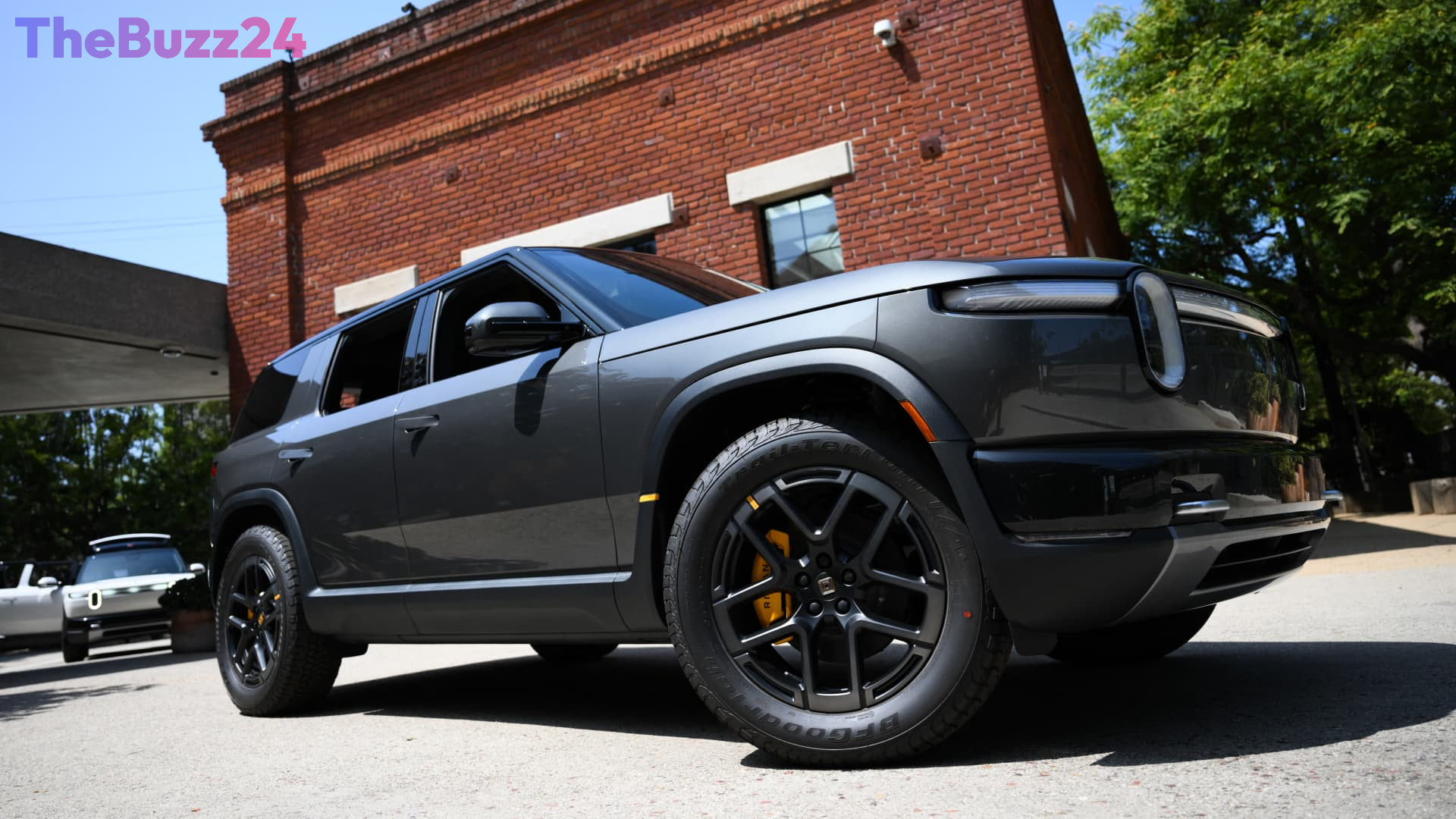
Rivian Adjusts Financial Outlook, Streamlines 2026 Spending Amid Production Ramp-Up
Rivian Automotive has announced a strategic adjustment to its financial projections, notably reducing its planned capital expenditures for 2026 and slightly narrowing its anticipated earnings losses for the current year. These revisions were detailed alongside the company’s second-quarter financial results.
The electric vehicle manufacturer is maintaining its delivery forecast, aiming to deliver between 65,000 and 70,000 vehicles to customers. The updated guidance now places adjusted losses in the range of $1.8 billion to $2 billion, a slight improvement from the previous forecast of $1.8 billion to $2.1 billion. Concurrently, capital expenditures for 2026 are projected to be between $1.7 billion and $1.8 billion, down from an earlier estimate of $1.95 billion to $2.05 billion.
Rivian attributes the $250 million reduction in mid-point capital spending to enhanced project efficiencies and a revised timing of expenditures. These adjustments come as the company continues to invest in new technologies, including its advanced hands-free driving system. The company’s second-quarter performance saw revenue reach $1.66 billion, surpassing analyst expectations. Gross profit also showed a significant turnaround, moving from a loss of $206 million in the prior year to a profit of $179 million, bolstered by a strong showing from its software and services division.
Further bolstering its financial position, Rivian expects to receive substantial funding later this year, including $1 billion in non-recourse debt financing from its software collaboration with Volkswagen Group and an additional $250 million equity investment from a separate partnership with Uber. The company also confirmed its cash reserves remain robust, with an estimated $5.3 billion in cash, cash equivalents, and short-term investments at the end of the first quarter.
Key Takeaways
- Rivian has reduced its 2026 capital expenditure plans by $250 million due to efficiency gains and timing adjustments.
- The company has narrowed its full-year earnings loss guidance and maintained its vehicle delivery target of 65,000-70,000 units.
- Rivian anticipates significant funding injections later this year from partnerships with Volkswagen Group and Uber.
Editor’s Analysis & Impact
Rivian’s revised financial outlook signals a pragmatic approach to capital management as it navigates the competitive EV landscape. The reduction in 2026 spending, coupled with a narrowed loss forecast, suggests a focus on operational efficiency and a more conservative growth strategy. While maintaining delivery targets is positive, the company’s path to profitability hinges on scaling production, particularly with the new R2 SUV. The anticipated funding from Volkswagen and Uber provides crucial financial runway, but sustained execution and market demand will be key determinants of Rivian’s long-term success and its ability to achieve profitability.
Frequently Asked Questions
Q: What are Rivian's updated financial targets for 2026?
A: Rivian now plans to spend between $1.7 billion and $1.8 billion on capital expenditures in 2026, a reduction from its previous projection. The company has also slightly narrowed its adjusted loss guidance for the current year to a range of $1.8 billion to $2 billion.
Q: How is Rivian planning to fund its operations?
A: Rivian expects to receive $1 billion in non-recourse debt financing from its software deal with Volkswagen Group and an additional $250 million equity investment from a partnership with Uber later this year. The company also reported a strong cash balance of approximately $5.3 billion.
Q: What is Rivian's delivery outlook?
A: Rivian is sticking to its previously stated delivery target of 65,000 to 70,000 vehicles for the year.
AI Disclosure: This article is based on verified data and official reports. Our Team and AI have cross-referenced every financial detail with primary sources to ensure total accuracy.
More from this Category