Fatal Helicopter Collision and Escalating Wildfires Grip Europe Amidst Severe Drought
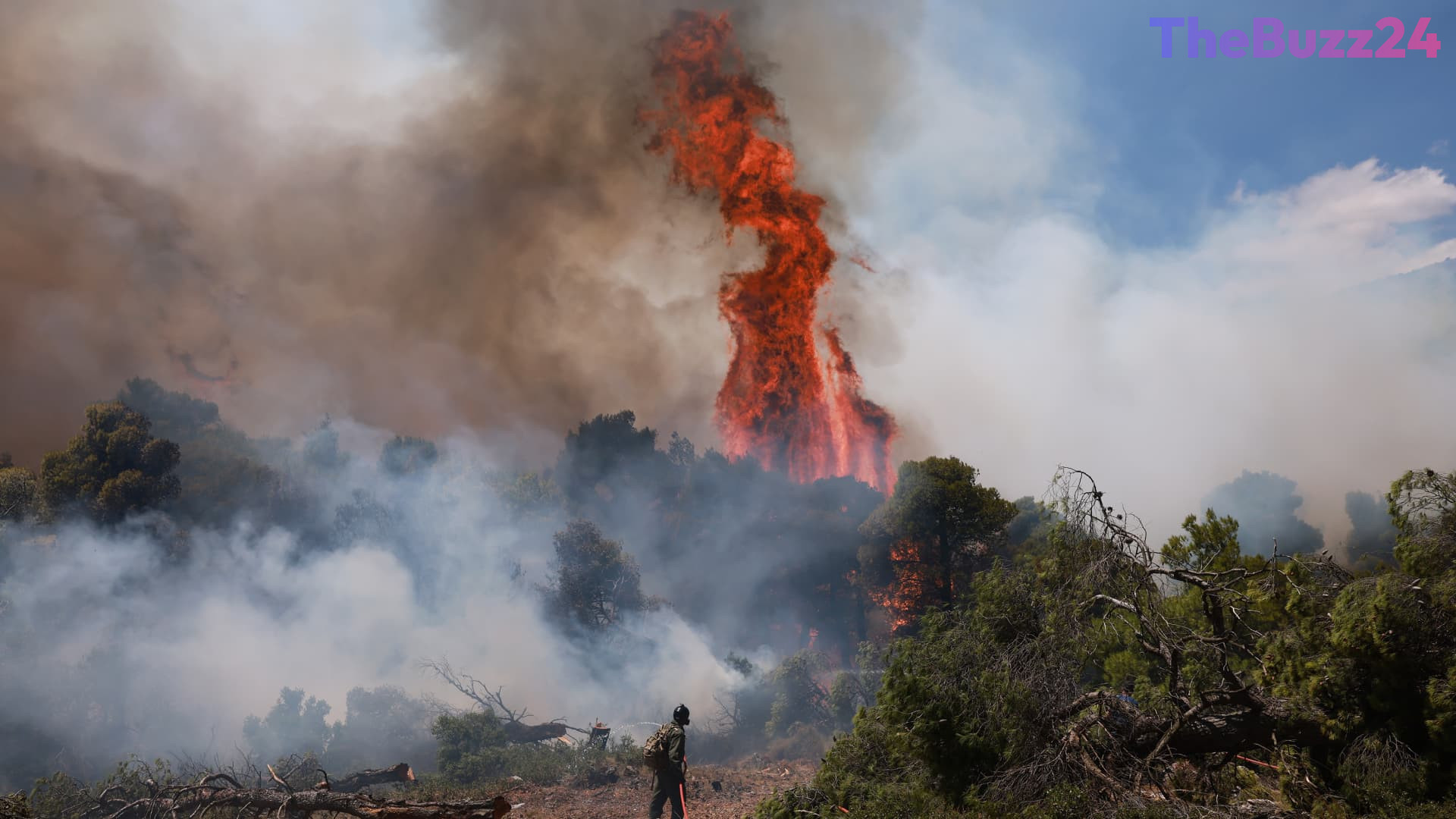
A tragic mid-air collision between two firefighting helicopters has claimed the lives of two individuals while battling massive wildfires in Greece. The incident occurred in the Psatha area of the Attica region, where crews were working to contain blazes that have already destroyed over 100 homes. The victims, a Greek and a Danish national, were killed in the crash, while the crew of the second helicopter survived. Authorities have launched a formal investigation into the circumstances surrounding the collision.
The wildfires in Greece have been particularly devastating, with some blazes reportedly ignited by sparks from private electricity networks connected to wind turbines. This has led to multiple arrests on suspicion of negligence. In addition to the Attica region, the island of Kefalonia has faced emergency evacuations as flames spread through residential areas. The intensity of these fires has been exacerbated by gale-force winds and extreme heat, pushing emergency services to their operational limits.
Across the continent, the impact of extreme weather is being felt in multiple sectors. In France, shifting winds have redirected wildfires into difficult-to-access forested areas, while Spain continues to battle reignitions in several provinces. Beyond the immediate danger of fire, a severe drought is crippling European water systems. The receding levels of the Danube and Rhine rivers have created a critical energy crisis, most notably in Hungary, where the nation’s sole nuclear power plant was forced to shut down due to insufficient water levels.
Key Takeaways
- A fatal helicopter collision during firefighting operations in Greece has resulted in two deaths.
- Wildfires in Greece and France are being driven by extreme heat and shifting wind patterns, causing widespread evacuations.
- Severe drought across Europe is impacting critical infrastructure, forcing the shutdown of Hungary's primary nuclear plant.
Editor’s Analysis & Impact
The recent string of disasters across Europe highlights a dangerous convergence of climate volatility and infrastructure vulnerability. The fatal collision in Greece underscores the heightened risks faced by emergency personnel during increasingly frequent wildfire seasons. More significantly, the energy crisis emerging in Hungary and Serbia demonstrates that climate change is directly undermining industrial stability. When receding river levels can force the shutdown of nuclear and hydroelectric plants, the implications for regional energy security are profound. This trend suggests that future economic and political stability in Europe will be increasingly tied to water management and the resilience of energy grids against extreme weather. As the continent adapts to a warmer climate, the focus must shift from reactive emergency management to proactive, climate-resilient infrastructure planning.
Frequently Asked Questions
Q: What is the current status of the wildfires in Greece?
A: While some areas are seeing a temporary reprieve, several settlements remain under evacuation orders, and investigations are ongoing regarding the cause of the fires in the Boeotia and Attica regions.
Q: Why was the nuclear plant in Hungary shut down?
A: The plant was forced to cease operations because the Danube River reached record-low water levels due to severe drought, making it impossible to maintain necessary cooling processes.
AI Disclosure: This article is based on verified data and official reports. Our Team and AI have cross-referenced every financial detail with primary sources to ensure total accuracy.
More from this Category