FAA Probes Potential Safety Lapse Involving Trump’s Marine One Helicopter
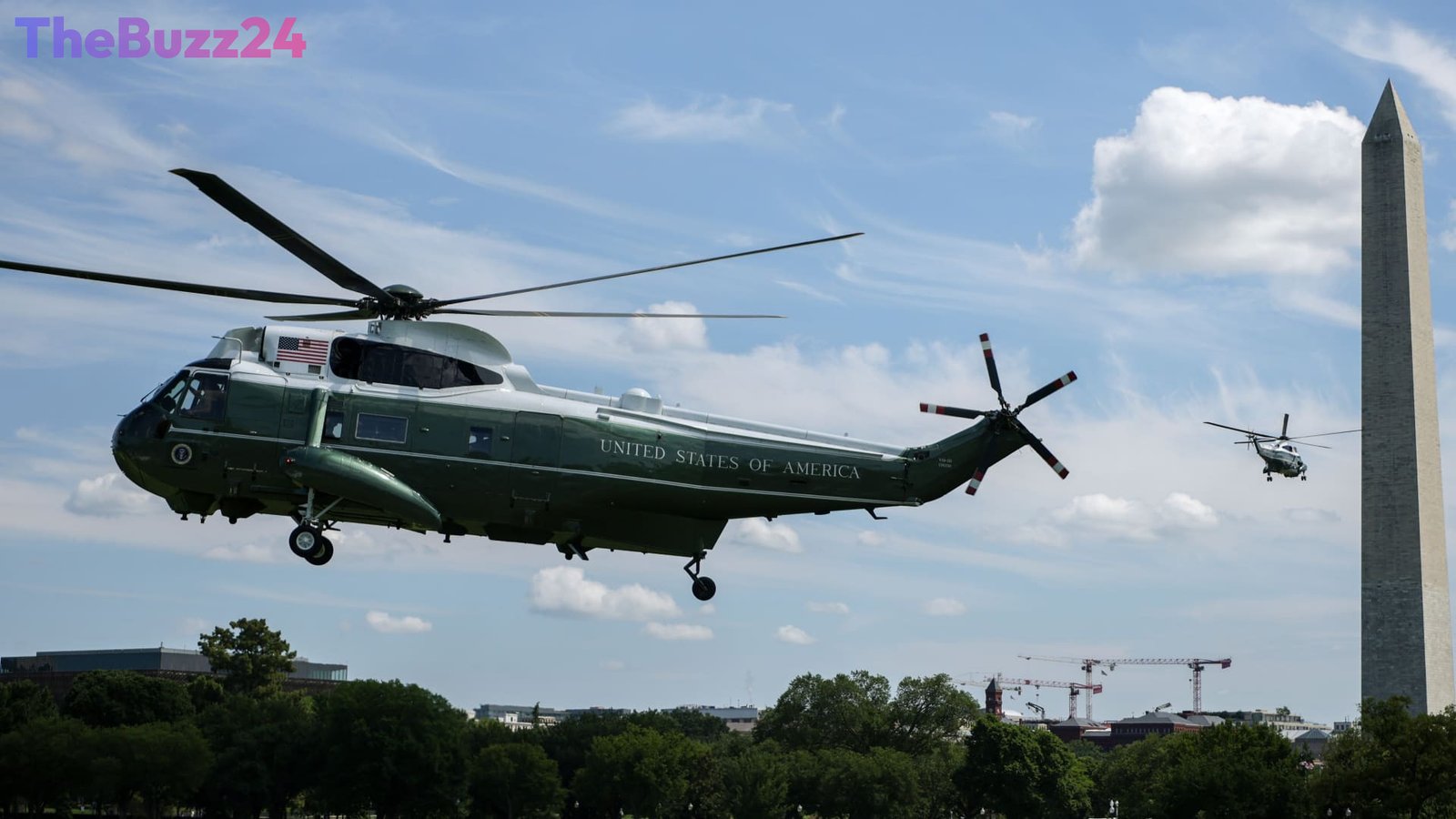
The Federal Aviation Administration (FAA) has launched an investigation into a safety incident that occurred on Tuesday involving the presidential helicopter, Marine One, which was carrying President Donald Trump. While the agency confirmed the review, it noted that the incident did not appear to involve a dangerous near-miss or converging aircraft.
The incident reportedly occurred as Marine One departed from the White House. According to sources, air-traffic controllers had not halted commercial flights at the nearby Ronald Reagan Washington National Airport as required by policy. This policy was implemented following a fatal mid-air collision the previous year. The presidential helicopter lifted off from the Ellipse near the White House around 2:33 p.m. ET, en route to Joint Base Andrews for a trip to Los Angeles.
Sources indicated that an Envoy Air flight, a regional jet subsidiary of American Airlines, departed shortly after Marine One and was involved in the apparent loss of separation incident. FAA regulations mandate specific horizontal and vertical separation distances between aircraft, particularly around airports. It is alleged that these separation standards may not have been maintained in this instance, though the aircraft were not believed to be converging. Both Marine One and the Envoy Air jet reportedly landed without further incident. Another regional flight was rerouted as a precautionary measure.
This investigation comes in the wake of a tragic mid-air collision in January 2025 involving a regional jet and an Army helicopter near Reagan National Airport, which resulted in 67 fatalities. The National Transportation Safety Board attributed that crash to systemic failures by the FAA, particularly concerning the management of helicopter traffic near the airport. Following that event, the FAA implemented stricter rules, including barring mixed helicopter and jet traffic and typically halting commercial traffic when Marine One is operating in the vicinity.
Key Takeaways
- The FAA is investigating a potential safety incident involving President Trump's Marine One helicopter.
- The incident occurred due to a possible failure to halt commercial air traffic as required by safety protocols.
- This investigation follows a previous fatal mid-air collision that led to stricter FAA regulations for helicopter and jet traffic near Washington National Airport.
Editor’s Analysis & Impact
This incident highlights ongoing challenges in managing complex air traffic, especially around busy airports and when high-profile flights are involved. The FAA’s investigation will scrutinize adherence to post-crash safety protocols, which were specifically designed to prevent a recurrence of the tragic 2025 collision. The outcome could lead to further refinements in air traffic control procedures or increased scrutiny of operational compliance. For airlines and aviation authorities, it underscores the critical need for robust safety management systems and unwavering adherence to established separation standards to maintain public trust and ensure the safety of all air travel.
Frequently Asked Questions
Q: What is Marine One?
A: Marine One is the call sign of any United States Marine Corps aircraft carrying the President of the United States. It is typically a large, sophisticated helicopter operated by the Marine Corps.
Q: What are the FAA's safety regulations regarding helicopter and jet traffic near airports?
A: Following a fatal mid-air collision in January 2025, the FAA implemented stricter rules around Reagan National Airport. These rules generally require commercial traffic to be halted when Marine One is in flight near the airport and have barred mixed helicopter and jet traffic, emphasizing the need for significant separation between aircraft.
Q: What was the previous fatal incident that led to stricter FAA rules?
A: In January 2025, a regional jet and an Army helicopter collided mid-air near Reagan National Airport, resulting in 67 fatalities. The NTSB investigation found systemic failures by the FAA in managing helicopter traffic near the airport.
AI Disclosure: This article is based on verified data and official reports. Our Team and AI have cross-referenced every financial detail with primary sources to ensure total accuracy.
More from this Category