Ceasefire Frays in Southern Lebanon as Israeli Strikes and Evacuation Orders Resume
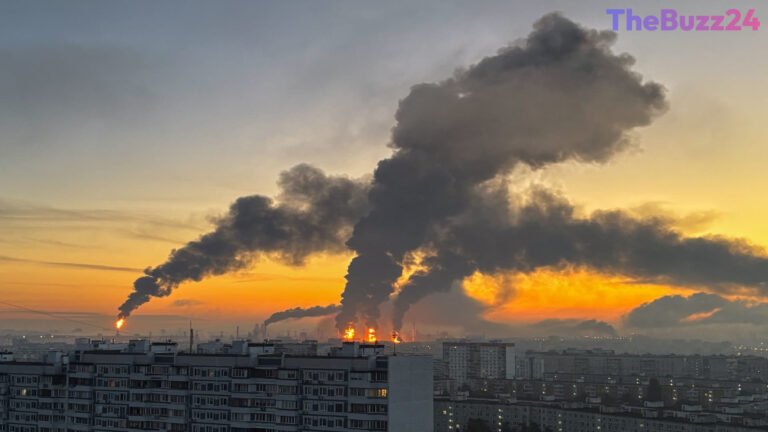
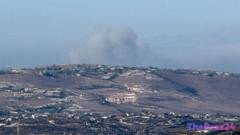
Tensions have flared once again in southern Lebanon as Israeli military forces launched a series of targeted airstrikes, marking a significant escalation and the first formal evacuation warning issued to residents in over a month. The strikes, which Israeli officials described as a response to ceasefire violations by Hezbollah, resulted in at least one fatality and left a dozen others injured when a prayer hall in the town of Tibnin was struck. Shortly before the bombardment, the Israeli military ordered residents of the western town of Mansouri to evacuate immediately, signaling a return to active hostilities in areas previously seeing a fragile calm.
The renewed military action comes amid delicate diplomatic efforts, with Israeli and Lebanese representatives attending US-sponsored talks in Rome aimed at preserving the existing ceasefire framework. Under a trilateral agreement established in late June, Israeli forces were slated to gradually withdraw from occupied southern territories in exchange for the disarmament of Hezbollah. However, Hezbollah has vehemently rejected these terms, calling the link between Israeli withdrawal and their disarmament a violation of “red lines.” The situation is further complicated by disputes over a designated ten-kilometer “security zone” along the border, where Israel claims the unauthorized return of displaced civilians—facilitated by Lebanese army checkpoints—constitutes a breach of security agreements.
The sudden escalation has triggered a fresh wave of displacement. In Mansouri, local officials reported multiple airstrikes targeting residential structures, prompting families who had recently returned to pack their belongings and flee toward the city of Tyre. While international humanitarian agencies report that over 820,000 displaced individuals have attempted to return to their homes since hostilities slowed, hundreds of thousands remain displaced. The ongoing conflict, which intensified in March following retaliatory rocket attacks, has claimed thousands of lives, raising deep concerns over the viability of any long-term peace agreement in the region.
Key Takeaways
- An Israeli airstrike in Tibnin killed one person and injured 12, while a fresh evacuation order was issued for the town of Mansouri.
- The escalation threatens a fragile US-sponsored ceasefire framework, which Hezbollah has rejected due to disarmament clauses.
- Disputes persist over the 10-kilometer border "security zone" and the deployment of the Lebanese army in areas Israel claims are restricted.
Editor’s Analysis & Impact
The resumption of airstrikes and evacuation orders in southern Lebanon underscores the extreme fragility of the US-brokered ceasefire framework. The core issue remains a fundamental mismatch in expectations: Israel demands a secure buffer zone and the complete disarmament of Hezbollah, while Hezbollah views disarmament as an existential non-starter. The Lebanese army’s positioning as a buffer force is also proving problematic, as Israel views their facilitation of returning civilians into disputed zones as a violation of security protocols. Geopolitically, this escalation threatens to derail the Rome talks and plunge the region back into full-scale conflict. For international observers, the situation highlights the limits of diplomatic agreements that lack enforceable mechanisms or mutual consensus on territorial sovereignty, suggesting that long-term stability in southern Lebanon remains highly elusive.
Frequently Asked Questions
Q: Why did Israel resume airstrikes in southern Lebanon?
A: Israel stated the strikes were a response to ceasefire violations by Hezbollah and cited security concerns regarding the return of displaced residents to the border "security zone" under the supervision of the Lebanese army.
Q: What is the trilateral framework agreed upon in June?
A: It is a US-sponsored agreement designed to facilitate the gradual withdrawal of Israeli troops from occupied southern Lebanese territory in exchange for the disarmament of Hezbollah.
Q: How has the civilian population been affected by these recent events?
A: The strikes have caused new casualties, including one death in Tibnin, and forced families in Mansouri to flee once again toward safer areas like Tyre, disrupting ongoing efforts to resettle hundreds of thousands of displaced people.
AI Disclosure: This article is based on verified data and official reports. Our Team and AI have cross-referenced every financial detail with primary sources to ensure total accuracy.
More from this Category