Stranded Whale Successfully Returns to Sea After Beaching in Queensland
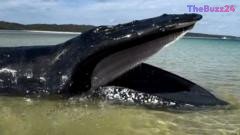
A young girl recently discovered a stranded whale on an Australian beach, sparking a swift response from local environmental authorities. The marine mammal had become grounded along the coastline, drawing immediate concern for its safety and well-being. Experts monitored the situation closely as the animal remained stuck in the shallow waters throughout the day.
By the afternoon of Sunday, August 9, the whale managed to successfully self-release and return to deeper waters. The Queensland Department of the Environment, Tourism, Science and Innovation confirmed the positive outcome, noting that the animal was able to navigate away from the shore without human intervention.
In the wake of the incident, officials have issued a strong reminder to the public regarding the proper protocol for encountering stranded marine life. Authorities emphasize that individuals should never touch, interfere with, or approach stranded animals, as these creatures can be unpredictable and easily stressed. Instead, the public is urged to report such sightings immediately to the appropriate wildlife agencies to ensure professional care and minimal disturbance to the animal.
Key Takeaways
- A stranded whale was discovered by a young girl on a Queensland beach.
- The whale successfully self-released and returned to the ocean on Sunday afternoon.
- Authorities advise the public to avoid touching or approaching stranded marine animals and to report them immediately.
Editor’s Analysis & Impact
The successful self-release of this whale highlights the importance of public awareness and non-interference in marine conservation efforts. While beachings often result in tragic outcomes, the ability of a whale to refloat itself underscores the necessity of allowing natural processes to occur under the supervision of experts. From an industry perspective, this event reinforces the need for robust environmental monitoring systems and rapid response protocols in coastal regions. As climate change and maritime traffic continue to impact marine habitats, the role of local communities in reporting incidents becomes a critical component of wildlife management. Future outlooks suggest that as public education regarding marine life improves, the survival rates of stranded animals may increase through timely professional intervention and reduced human-induced stress.
Frequently Asked Questions
Q: What should I do if I find a stranded whale?
A: Do not touch, interfere with, or get close to the animal. Report the sighting immediately to your local wildlife or environmental protection agency.
Q: Why is it dangerous to approach a stranded whale?
A: Stranded whales are often stressed, injured, or ill. Approaching them can cause further distress to the animal and poses a safety risk to humans due to the whale's size and unpredictable movements.
AI Disclosure: This article is based on verified data and official reports. Our Team and AI have cross-referenced every financial detail with primary sources to ensure total accuracy.
More from this Category