Starcloud Secures $250 Million to Power Orbital Data Centers Amidst Launch Uncertainty
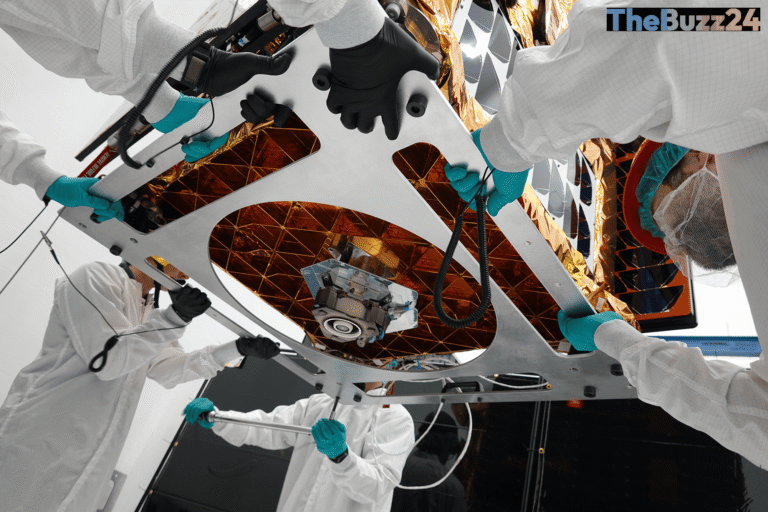
Starcloud, a pioneering startup focused on developing in-orbit data centers capable of performing artificial intelligence inference, has successfully secured an additional $250 million in funding. This significant extension to its Series A round, which initially raised $170 million in March, now values the company at $2.3 billion. The substantial influx of capital is earmarked for expanding manufacturing capabilities and accelerating the development of its flagship orbital data center spacecraft, Starcloud-3.
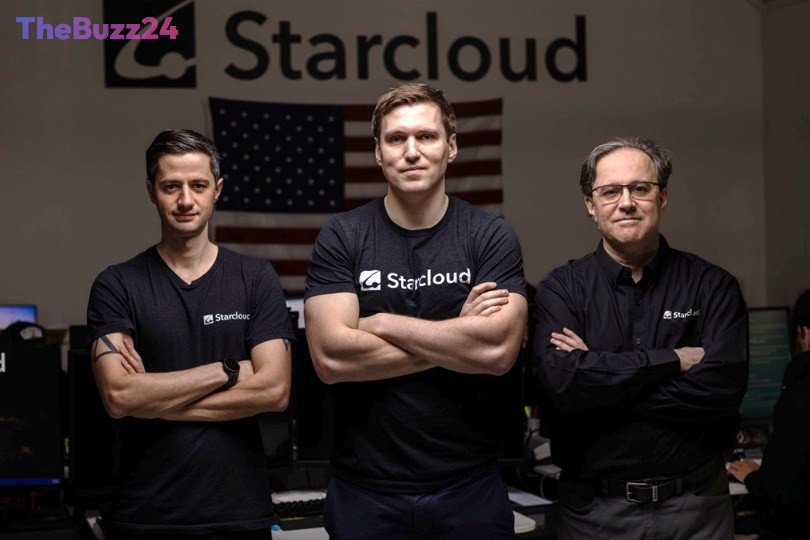
This advanced spacecraft is slated to launch aboard SpaceX’s highly anticipated Starship rocket. CEO Philip Johnston highlighted the strategic importance of this funding, emphasizing the growing challenge of securing reliable and cost-effective launch capacity. With the market for rocket transportation becoming increasingly constrained, Starcloud aims to pre-emptively book significant launch services, particularly as SpaceX’s workhorse Falcon 9 program is scheduled to conclude in 2028. The company has already initiated the process of seeking FCC approval for an ambitious constellation of 88,000 spacecraft.
Starcloud’s immediate plans involve launching two of its next-generation 8 kW compute satellites, known as Starcloud-2, on rideshare missions in 2027. These satellites will be deployed to conduct orbital inference tasks for various clients, including U.S. government agencies. To further bolster its launch strategy, Starcloud is exploring options such as dedicated Falcon 9 launches and securing contracts with multiple launch providers to ensure future mission success. The company’s long-term vision hinges on the potential of SpaceX’s Starship to drastically reduce launch costs, enabling the creation of an orbital inference infrastructure that can rival terrestrial data centers.
The recent funding round saw participation from prominent investors, including Manhattan West Ventures, Nvidia, and Cisco. Notably, Nvidia contributed $25 million, underscoring the strategic importance of Starcloud’s work in the burgeoning space compute sector. Starcloud is distinguished as the only known entity currently operating a Nvidia H100 terrestrial data center GPU in orbit and has successfully trained a model using it. This operational data is proving invaluable to Nvidia as it develops its first dedicated space GPU, the Vera Rubin Space-1 chip, with Starcloud’s engineers actively collaborating on key design considerations for space deployment.
Key Takeaways
- Starcloud has raised $250 million, bringing its total valuation to $2.3 billion, to fund its orbital data center ambitions.
- The company is prioritizing securing launch capacity, particularly with SpaceX's Starship, due to increasing market constraints.
- Starcloud's operational data from its in-orbit Nvidia H100 GPU is crucial for Nvidia's development of new space-ready chips.
Editor’s Analysis & Impact
Starcloud’s substantial funding round signals strong investor confidence in the future of in-orbit computing and AI inference. The company’s proactive approach to securing launch services, especially with the upcoming transition to SpaceX’s Starship, addresses a critical bottleneck in the space industry. This strategic move not only mitigates risk but also positions Starcloud to capitalize on potential cost reductions offered by next-generation launch vehicles. The collaboration with Nvidia highlights the growing synergy between terrestrial AI hardware development and space-based applications, potentially accelerating innovation in both fields and paving the way for a new era of space-based data processing.
Frequently Asked Questions
Q: What are orbital data centers?
A: Orbital data centers are facilities located in space that are designed to process and store data. They leverage the unique environment of space for specific computational tasks, such as AI inference, which can be challenging or less efficient to perform on Earth.
Q: Why is securing launch capacity a challenge for Starcloud?
A: The market for rocket launches is currently experiencing high demand and limited supply. With established launch vehicles like SpaceX's Falcon 9 nearing the end of their operational life and new vehicles still in development, securing reliable and timely launch slots is becoming increasingly difficult and expensive for satellite operators like Starcloud.
Q: What is the significance of Nvidia's investment and collaboration?
A: Nvidia's investment and collaboration underscore the potential of Starcloud's in-orbit AI capabilities. Starcloud is using Nvidia's advanced GPUs in space and sharing valuable performance data, which directly informs Nvidia's development of specialized GPUs for space applications, like the Vera Rubin Space-1 chip.
AI Disclosure: This article is based on verified data and official reports. Our Team and AI have cross-referenced every financial detail with primary sources to ensure total accuracy.
More from this Category