Australia’s Iconic Cuttlefish Mating Event Sees Catastrophic 97% Decline, Raising Alarm for Species Survival
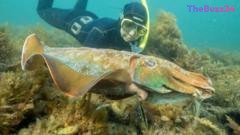
Australia’s Cuttlefish Coast, typically a vibrant hub for one of the world’s largest marine mating spectacles, has witnessed an unprecedented and alarming decline in its giant Australian cuttlefish population this year. Official estimates reveal a staggering 97% drop in numbers, with only 1,811 individuals observed gathering to breed, a stark contrast to the 63,000 recorded just last year. This drastic reduction has ignited serious concerns among scientists and conservationists, prompting urgent calls for the species to be officially listed as endangered.
The primary suspect behind this catastrophic downturn is a persistent toxic algal bloom that has plagued South Australia’s coastline for over 18 months. While naturally occurring, these blooms are exacerbated by factors such as ocean warming, marine heatwaves, and nutrient pollution, all of which are linked to broader climate change impacts. Adult cuttlefish typically perish after breeding, making each annual mating season critical for the species’ continuation. However, recent surveys conducted by divers, including Manny Katz from South Australia’s Department of Environment and Water (DEW), found a mere 440 eggs along an eight-kilometer stretch of coastline where millions are usually laid, casting a grim shadow over next year’s population prospects.
Marine experts are sounding the alarm, viewing the cuttlefish’s plight as a “canary in the coal mine” for the wider marine ecosystem. Stefan Andrews, co-founder of the Great Southern Reef Foundation, is actively advocating for the giant Australian cuttlefish to be recognized as a threatened species, emphasizing the severe impact on future generations. While the state government’s Department of Primary Industries and Regions acknowledges that cuttlefish populations naturally fluctuate and research is ongoing to definitively link the algal bloom to the entire decline, the current situation is described as “disheartening” by Prof Mike Steer, executive director of the South Australian Research and Development Institute. Despite the grim figures, Steer holds onto hope, citing the population’s historical capacity to recover under favorable conditions and observing some positive signs of continued egg-laying. However, the immediate future remains uncertain, with experts suggesting it could take a year or two to fully understand the long-term implications of this year’s devastating decline.
Key Takeaways
- Australia's annual giant cuttlefish mating event saw a 97% decline this year, with only 1,811 individuals observed compared to 63,000 last year.
- A persistent toxic algal bloom, exacerbated by climate change factors, is identified as the primary suspected cause for the drastic population drop and extremely low egg counts.
- Conservationists are calling for the species to be listed as endangered, while experts express concern for the ecosystem but hold cautious hope for potential recovery based on historical population fluctuations.
Editor’s Analysis & Impact
While not a direct financial market story, the severe decline of the giant Australian cuttlefish has significant implications for eco-tourism, particularly the diving industry that flocks to witness this unique event. A sustained absence could impact local economies reliant on marine wildlife attractions. Furthermore, as a key species, its decline signals broader distress within the marine ecosystem, potentially affecting other species and local fisheries through trophic cascade effects.
The immediate outlook for the cuttlefish population is critical, with experts uncertain if recovery is possible given the extremely low egg count. However, historical data showing past rebounds offers a glimmer of hope, contingent on the mitigation of the algal bloom and favorable environmental conditions. The next one to two years will be crucial in determining the long-term viability of the species.
This event serves as a stark warning about the escalating impact of climate change and pollution on marine biodiversity. The algal bloom, linked to ocean warming and nutrient pollution, highlights the fragility of unique ecosystems and the urgent need for comprehensive environmental policies and conservation efforts to protect vulnerable species and maintain ecological balance globally.
Frequently Asked Questions
Q: What is believed to be the main cause of the cuttlefish population decline?
A: A persistent toxic algal bloom, which has affected South Australia's coastline for over 18 months, is considered the primary suspect. These blooms are naturally occurring but are intensified by factors like ocean warming, marine heatwaves, and nutrient pollution, all exacerbated by climate change.
Q: Can the giant Australian cuttlefish population recover from this drastic decline?
A: While the current situation is dire, with extremely low egg counts, experts note that the population has shown capacity for recovery in the past following previous lows. The ability to rebound will depend heavily on future environmental conditions, the resolution of the algal bloom, and the success of upcoming breeding seasons.
AI Disclosure: This article is based on verified data and official reports. Our Team and AI have cross-referenced every financial detail with primary sources to ensure total accuracy.
More from this Category