NASA Unveils New Era of Astronomy With Successful Launch of Roman Space Telescope
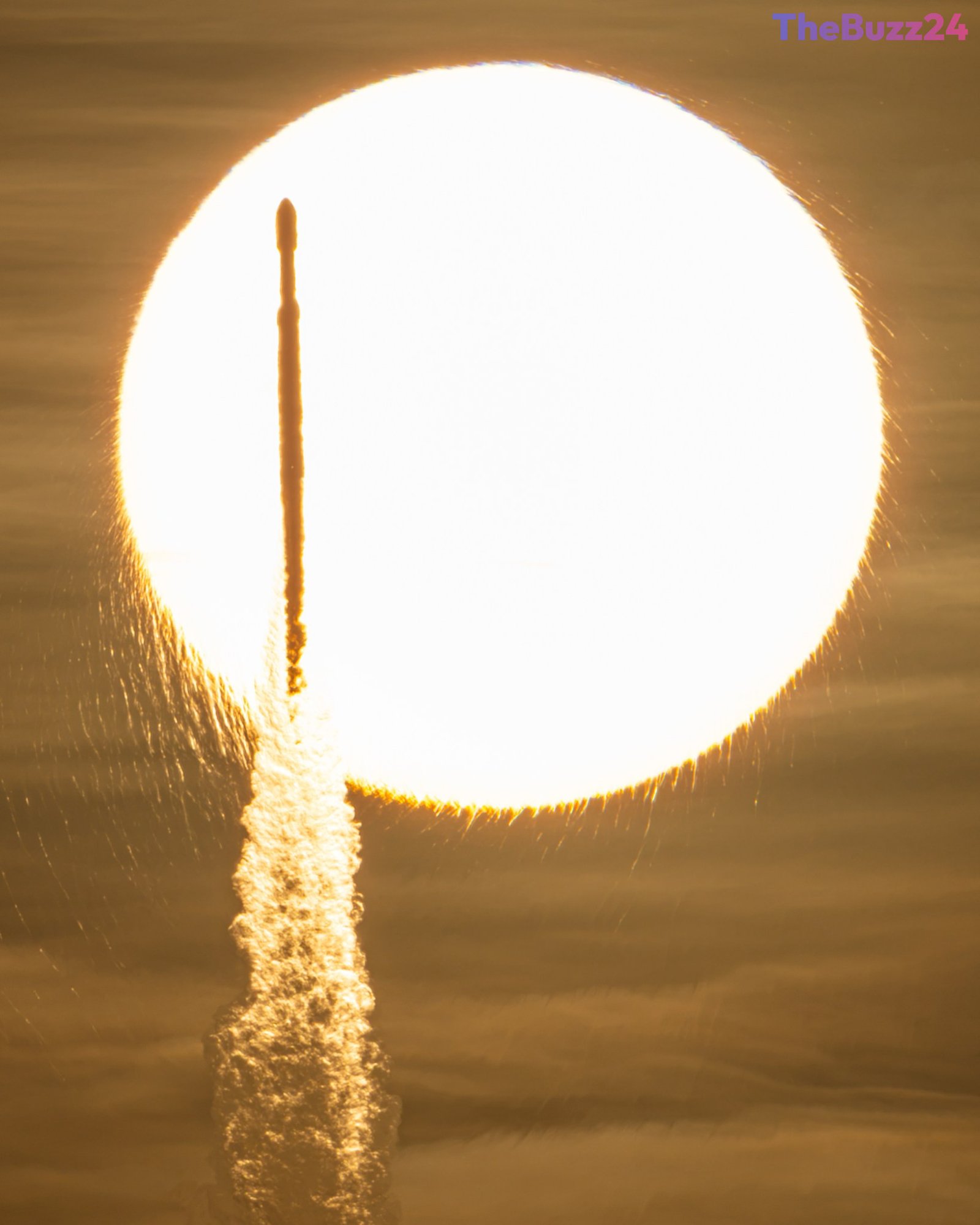
NASA has officially expanded humanity’s window into the cosmos with the successful launch of the Nancy Grace Roman Space Telescope. Blasting off from the Kennedy Space Center in Florida aboard a SpaceX Falcon Heavy rocket, the advanced observatory marks a monumental leap forward in space exploration and astrophysical research.
Named in honor of NASA’s pioneering first chief astronomer, the Roman Space Telescope is engineered to revolutionize our understanding of the universe. Equipped with a groundbreaking field of view that dwarfs the capabilities of the legendary Hubble Space Telescope, the newly launched observatory is designed to survey billions of distant stars and galaxies with unprecedented precision.
Over the course of its mission, the telescope will focus on unraveling some of the universe’s greatest mysteries, including the elusive nature of dark energy, the discovery and characterization of exoplanets beyond our solar system, and the overarching evolution of cosmic structures. This ambitious endeavor promises to reshape astrophysical models and provide researchers with an unprecedented wealth of deep-space data.
Key Takeaways
- NASA successfully launched the Nancy Grace Roman Space Telescope from Florida using a SpaceX Falcon Heavy rocket.
- The telescope features a field of view significantly larger than that of the Hubble Space Telescope.
- Primary mission objectives include studying dark energy, discovering exoplanets, and mapping the evolution of the universe.
Editor’s Analysis & Impact
The deployment of the Nancy Grace Roman Space Telescope represents a critical milestone for observational astronomy and aerospace engineering. By significantly expanding our survey capabilities, this mission bridges the gap between targeted planetary exploration and wide-field cosmological mapping. The industry impact will be profound, likely accelerating discoveries in exoplanet habitability and providing invaluable data points for theoretical physicists studying dark energy. As commercial launch providers like SpaceX continue to reliably deliver heavy payloads, the cadence of major scientific space missions is expected to increase, ultimately democratizing access to deep-space research and paving the way for even more ambitious observatories in the coming decades.
Frequently Asked Questions
Q: What is the primary mission of the Nancy Grace Roman Space Telescope?
A: The telescope's primary goals are to survey billions of galaxies and stars, study the effects of dark energy, discover new exoplanets, and help scientists understand the evolution and expansion of the universe.
Q: How does the Roman Space Telescope compare to Hubble?
A: While Hubble has provided incredible deep-space imagery for decades, the Roman Space Telescope boasts a field of view that is significantly larger, allowing it to capture vastly more data and survey larger swaths of the sky in a fraction of the time.
Q: Which rocket was used to launch the telescope into space?
A: The observatory was launched aboard a SpaceX Falcon Heavy rocket from the Kennedy Space Center in Florida.
AI Disclosure: This article is based on verified data and official reports. Our Team and AI have cross-referenced every financial detail with primary sources to ensure total accuracy.
More from this Category