High-Altitude Jet Captures Stunning Views of Solar Eclipse from Above the Clouds
During a total solar eclipse on August 12, a specialized NASA research aircraft embarked on a unique mission to observe the celestial event from an extraordinary vantage point. The WB-57F high-altitude jet soared to an altitude of 50,000 feet, positioning itself directly within the path of totality off the coast of Iceland.
The primary objective was to maximize the time spent within the Moon’s shadow, a region of darkness cast during the eclipse. Equipped with advanced high-resolution cameras, the aircraft was able to gather crucial eclipse data from above the obscuring effects of clouds, atmospheric dust, and water vapor that often hinder ground-based observations. This elevated perspective offered a clearer and more detailed view of the phenomenon.
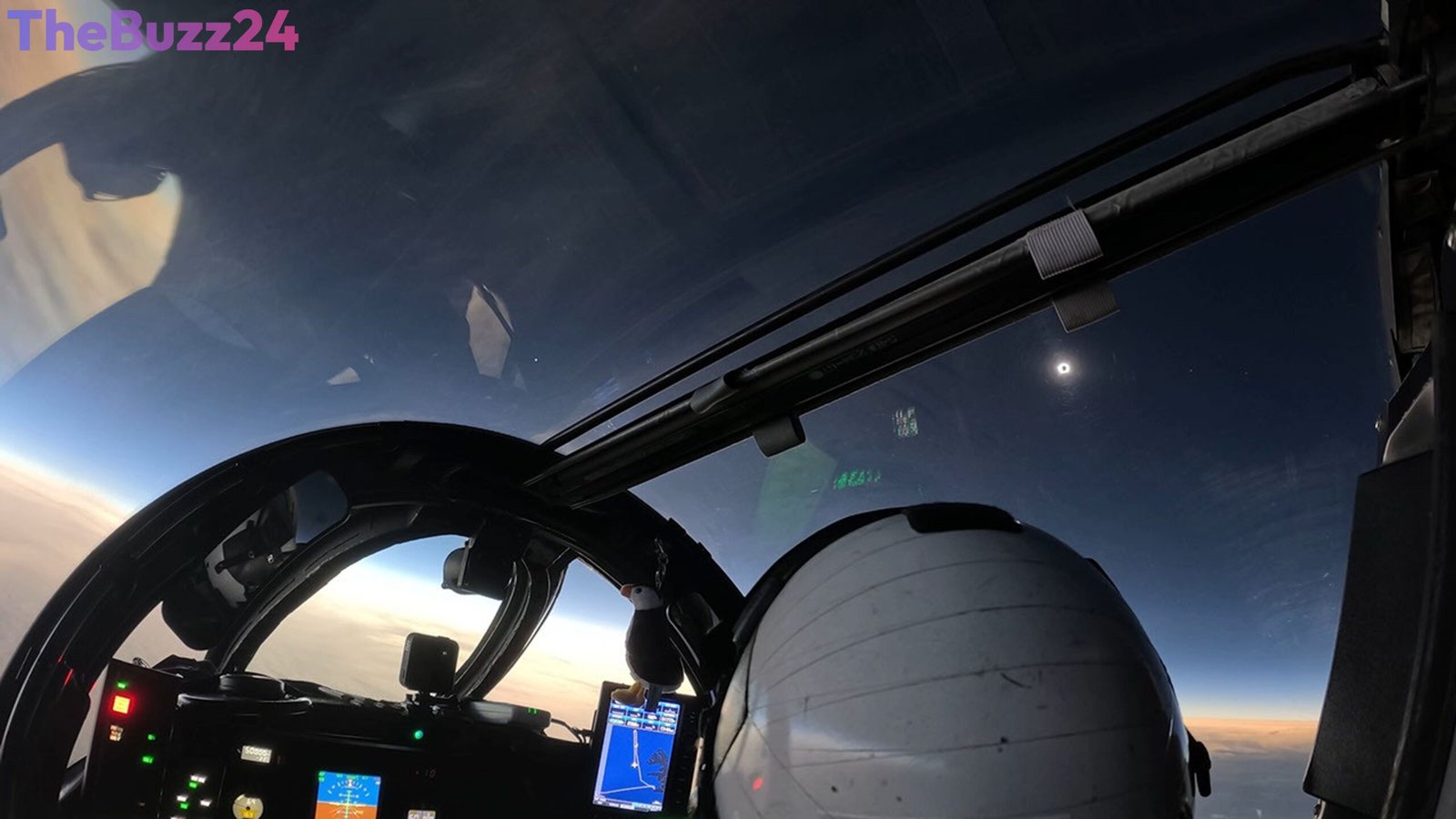
The cockpit view from an inflight video reveals the breathtaking spectacle of the solar corona, the Sun’s outer atmosphere, becoming visible as totality began. The sky within the Moon’s shadow appeared dark, creating a stark contrast with the bright horizon visible below, which remained outside the shadow’s reach. Notably, the planet Venus was clearly visible to the left of the frame, with Jupiter and Mercury also discernible near the eclipsed Sun, showcasing the clarity of the high-altitude observation.
Key Takeaways
- A NASA WB-57F jet flew at 50,000 feet to observe a total solar eclipse from above atmospheric interference.
- High-resolution cameras on board captured detailed data of the solar corona and surrounding planets.
- The mission aimed to maximize observation time within the Moon's shadow by flying along the path of totality.
Editor’s Analysis & Impact
This mission highlights the innovative use of high-altitude aviation in astronomical observation. By positioning the WB-57F jet above common atmospheric disturbances, NASA scientists were able to obtain exceptionally clear data during the solar eclipse. This approach not only provides superior imagery of phenomena like the solar corona but also demonstrates the potential for airborne platforms to overcome limitations faced by ground-based telescopes, especially for transient events. The success of this mission could pave the way for future aerial observatories, enhancing our understanding of solar activity and other celestial events.
Frequently Asked Questions
Q: What is a total solar eclipse?
A: A total solar eclipse occurs when the Moon passes directly between the Sun and Earth, completely blocking the face of the Sun. During the brief period of totality, the Sun's outer atmosphere, known as the corona, becomes visible.
Q: Why use a high-altitude aircraft for eclipse observation?
A: High-altitude aircraft, like the WB-57F, can fly above most of Earth's atmosphere, including clouds, dust, and water vapor. This allows for clearer, unobstructed views of celestial events such as solar eclipses, providing data that might be compromised by ground-based observations.
Q: What is the solar corona?
A: The solar corona is the outermost layer of the Sun's atmosphere. It is a tenuous plasma that extends millions of kilometers into space and is typically only visible during a total solar eclipse or with specialized instruments like coronagraphs.
AI Disclosure: This article is based on verified data and official reports. Our Team and AI have cross-referenced every financial detail with primary sources to ensure total accuracy.
More from this Category