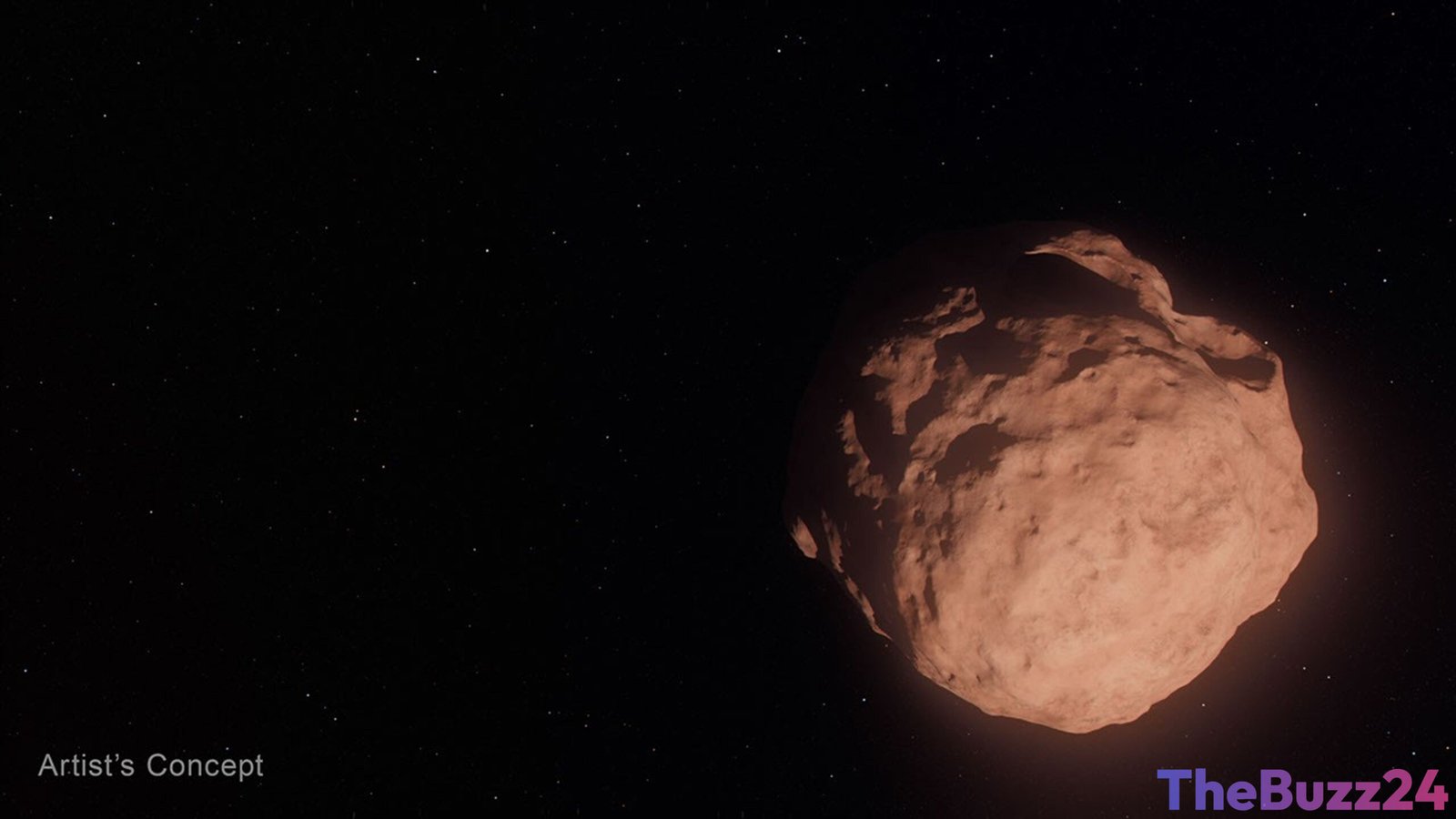
Distant Icy Worlds ‘Remember’ Their Birth, Thanks to Hubble and Webb
A groundbreaking collaboration between NASA’s Hubble and James Webb Space Telescopes has offered unprecedented insights into the most remote regions of our solar system, specifically focusing on Trans-Neptunian Objects (TNOs). These distant, icy bodies, orbiting beyond Neptune, are considered primordial remnants from the solar system’s earliest days. Scientists were surprised to discover fewer small TNOs than anticipated, and observed that the surface colors of these objects, regardless of their size, maintained a consistent relationship, hinting at a preserved history.
This extensive survey, the deepest of TNOs to date, utilized Hubble’s sensitivity to visible light and Webb’s infrared capabilities to analyze 27 newly identified, remarkably dim TNOs. Researchers meticulously measured their colors, which serve as a fingerprint of their surface composition, alongside their sizes and orbital paths. The study differentiated between dynamically “cold” TNOs, which maintain their original, relatively circular orbits, and dynamically “hot” TNOs, which were gravitationally scattered outward from closer to the Sun early in the solar system’s history, now residing in highly elliptical orbits.
Contrary to previous assumptions that smaller TNOs would show significant surface changes due to collisions, the observations revealed that these tiny bodies largely resemble their larger counterparts. This suggests that either collisions are less frequent than theorized, or TNOs possess a remarkable ability to retain their original, pre-collision compositions. This phenomenon implies that these objects are “remembering” and preserving the conditions of their formation. Both the “hot” and “cold” populations appear to have maintained their initial colors since the solar system’s inception, providing a direct window into the past.
Furthermore, the Webb data allowed for a precise measurement of the size distribution among these objects, revealing a surprising similarity between the cold and hot populations despite their different formation regions. This suggests that the process of planetesimal formation—the initial clumping of dust and pebbles into planet-building blocks—might be largely insensitive to the varying conditions of the early solar disk. The discovery of fewer very small TNOs than some planet formation models predict challenges current theories, underscoring the critical role of combined telescope observations in unraveling the mysteries of our cosmic origins.
Key Takeaways
- NASA's Hubble and James Webb Space Telescopes jointly observed Trans-Neptunian Objects (TNOs), revealing unexpected insights into their formation.
- Researchers found that small TNOs retain their primordial surface compositions, mirroring larger counterparts, suggesting fewer collisions or a unique preservation mechanism.
- The study also identified fewer very small TNOs than predicted by some planet formation models, challenging current understandings of early solar system development.
Editor’s Analysis & Impact
This collaborative research by the Hubble and Webb telescopes represents a significant leap in planetary science, offering a direct glimpse into the solar system’s infancy. The findings, particularly the ‘memory’ of TNOs’ surface compositions and the unexpected size distribution, will undoubtedly prompt a re-evaluation of existing planet formation models. For the space science community, this validates the immense value of multi-wavelength observations and the continued operation of advanced observatories. The broader implications extend to our fundamental understanding of how planets, including Earth, coalesced from a protoplanetary disk. Future research will likely focus on refining these models and exploring other distant objects to further unravel the complex processes that shaped our cosmic neighborhood.
Frequently Asked Questions
Q: What are Trans-Neptunian Objects (TNOs)?
A: Trans-Neptunian Objects (TNOs) are small, icy bodies that orbit the Sun beyond the orbit of Neptune. They are considered remnants from the early solar system and provide clues about planet formation.
Q: Why are Hubble and Webb observations crucial for studying TNOs?
A: Hubble and Webb's combined capabilities are crucial because Hubble observes in visible light, while Webb observes in infrared. This allows scientists to gather comprehensive data on TNOs' colors, compositions, and sizes, which are too faint and distant for individual telescopes or ground-based observations to fully characterize.
Q: What was the most surprising discovery about TNOs in this study?
A: The most surprising discovery was that small TNOs appear to retain their primordial surface compositions, looking much like their larger counterparts. This challenges previous assumptions that smaller objects would show significant surface changes due to collisions, suggesting either fewer collisions than expected or a unique mechanism for preserving their original state.
AI Disclosure: This article is based on verified data and official reports. Our Team and AI have cross-referenced every financial detail with primary sources to ensure total accuracy.
More from this Category