Satellite Imagery Confirms Major Damage to Saudi Oil Pipeline, Driving Oil Prices Higher Amid Regional Unrest
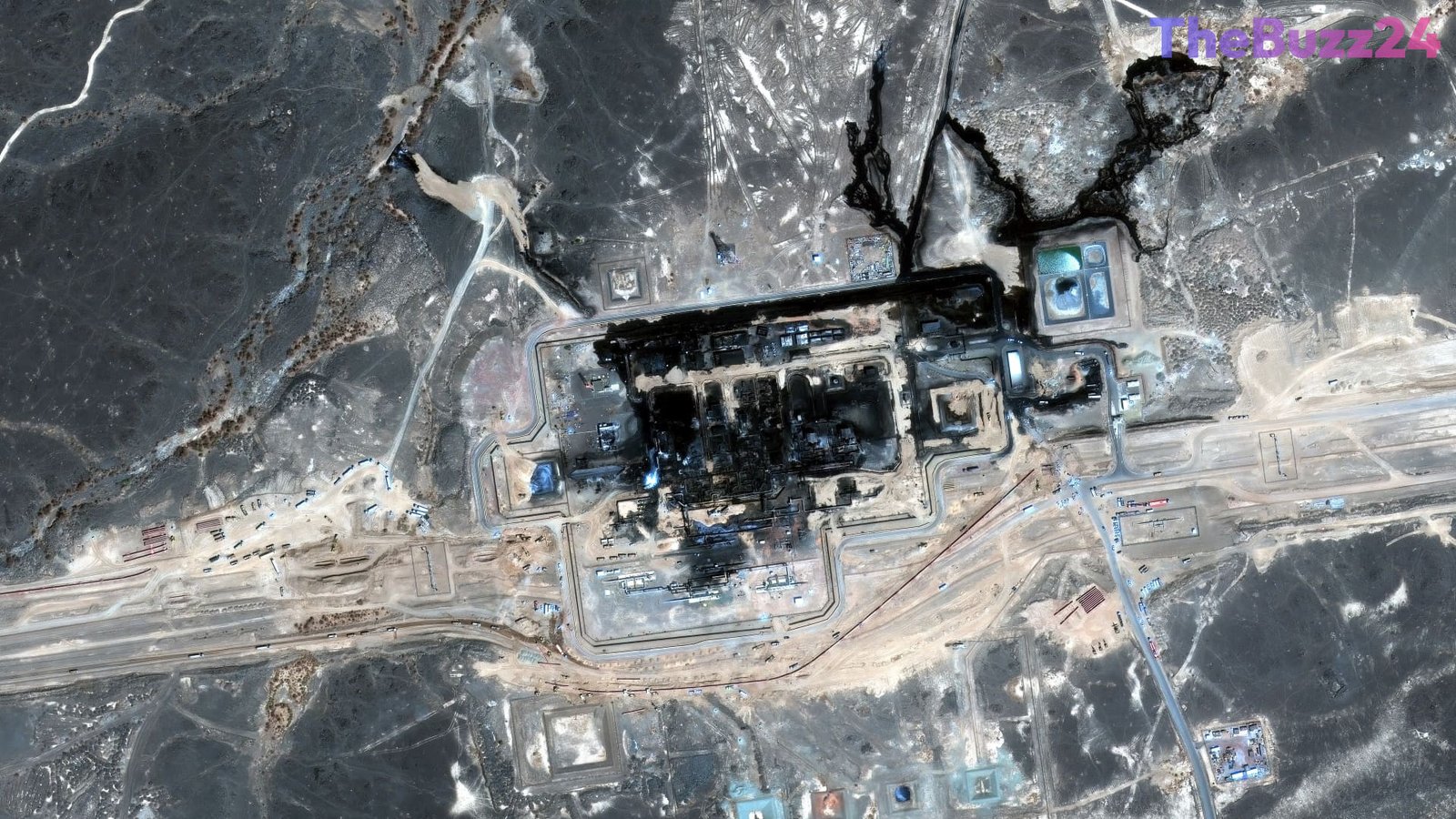
Extensive damage has been confirmed on Saudi Arabia’s strategic East-West oil pipeline following recent drone strikes, according to satellite imagery. The critical infrastructure, which serves as a vital alternative to the Strait of Hormuz, was temporarily shut down as a precautionary measure, exacerbating concerns over Middle East supply risks and sending global oil prices soaring above $100 per barrel.
The satellite photographs reveal significant fire damage and extensive blackened areas around a pumping station along the pipeline. This network, also known as Petroline, stretches approximately 750 miles, transporting crude oil from the Abqaiq facilities on the kingdom’s eastern Gulf coast to the port of Yanbu on the Red Sea. The attacks, which reportedly originated from Iraq, caused injuries and targeted key sections of the pipeline in the Riyadh and Medina regions. With a design capacity of 7 million barrels per day, the pipeline’s disruption carries substantial implications for global energy markets.
The closure comes amidst escalating regional tensions, particularly with Yemen’s Iran-backed Houthis intensifying their attacks on Saudi targets and advancing towards the Bab el-Mandeb Strait. This strait represents another critically important oil choke point on the opposite side of the Arabian Peninsula. Concerns are mounting that further Houthi actions could significantly impact energy markets and global trade, especially if threats or attacks on Red Sea shipping routes escalate.
In response to these deepening supply anxieties, international benchmark Brent crude futures for November expiry climbed 3.3% to $108.02 per barrel, extending a more than 20% gain over the past month. Similarly, U.S. West Texas Intermediate futures for October expiry traded nearly 3% higher at $102.98, having surpassed $100 for the first time since May and rising almost 25% in the last month.
Key Takeaways
- Satellite images confirm significant damage to Saudi Arabia's strategic East-West oil pipeline following drone attacks.
- The pipeline's temporary closure, a vital alternative to the Strait of Hormuz, has contributed to a sharp rise in global oil prices, with Brent and WTI crude surpassing $100 per barrel.
- Escalating regional tensions, including attacks by Iran-backed Houthis on Saudi targets and their advance towards the Bab el-Mandeb Strait, are deepening concerns over Middle East energy supply and global trade routes.
Editor’s Analysis & Impact
The drone attacks on Saudi Arabia’s East-West pipeline underscore the extreme vulnerability of critical energy infrastructure in volatile regions. The immediate market impact is evident in the sharp rise in oil prices, reflecting a heightened risk premium due to supply uncertainty. This incident, coupled with Houthi advancements towards the Bab el-Mandeb Strait, signals a potential for sustained market volatility and higher energy costs globally. The future outlook suggests that geopolitical instability in the Middle East will continue to be a dominant factor influencing oil prices and global trade routes. Broader implications include increased pressure on international diplomacy to de-escalate tensions and a renewed focus on energy security and diversification strategies for nations reliant on Middle Eastern oil.
Frequently Asked Questions
Q: What is the significance of Saudi Arabia's East-West pipeline?
A: The East-West pipeline is a crucial strategic asset for Saudi Arabia, allowing it to transport crude oil from its eastern oil fields to the Red Sea port of Yanbu, bypassing the Strait of Hormuz. This bypass is vital for maintaining oil exports if the Strait of Hormuz, a major global oil choke point, becomes disrupted.
Q: Who is responsible for the drone attacks on the pipeline?
A: The Saudi government stated the drone attacks originated from Iraq. While specific groups are not named in the provided text, the broader context points to escalating regional tensions involving Iran-backed groups, such as the Houthis, who are also targeting Saudi infrastructure and shipping routes.
Q: How have these attacks impacted global oil prices?
A: The drone attacks and subsequent temporary closure of the East-West pipeline, coupled with broader Middle East supply concerns, have led to a significant surge in global oil prices. Both international benchmark Brent crude and U.S. West Texas Intermediate futures have climbed above $100 per barrel, reflecting increased market anxiety over supply disruptions.
AI Disclosure: This article is based on verified data and official reports. Our Team and AI have cross-referenced every financial detail with primary sources to ensure total accuracy.
More from this Category