Venus Peeks Through Lunar Veil in Rare Daytime Celestial Spectacle
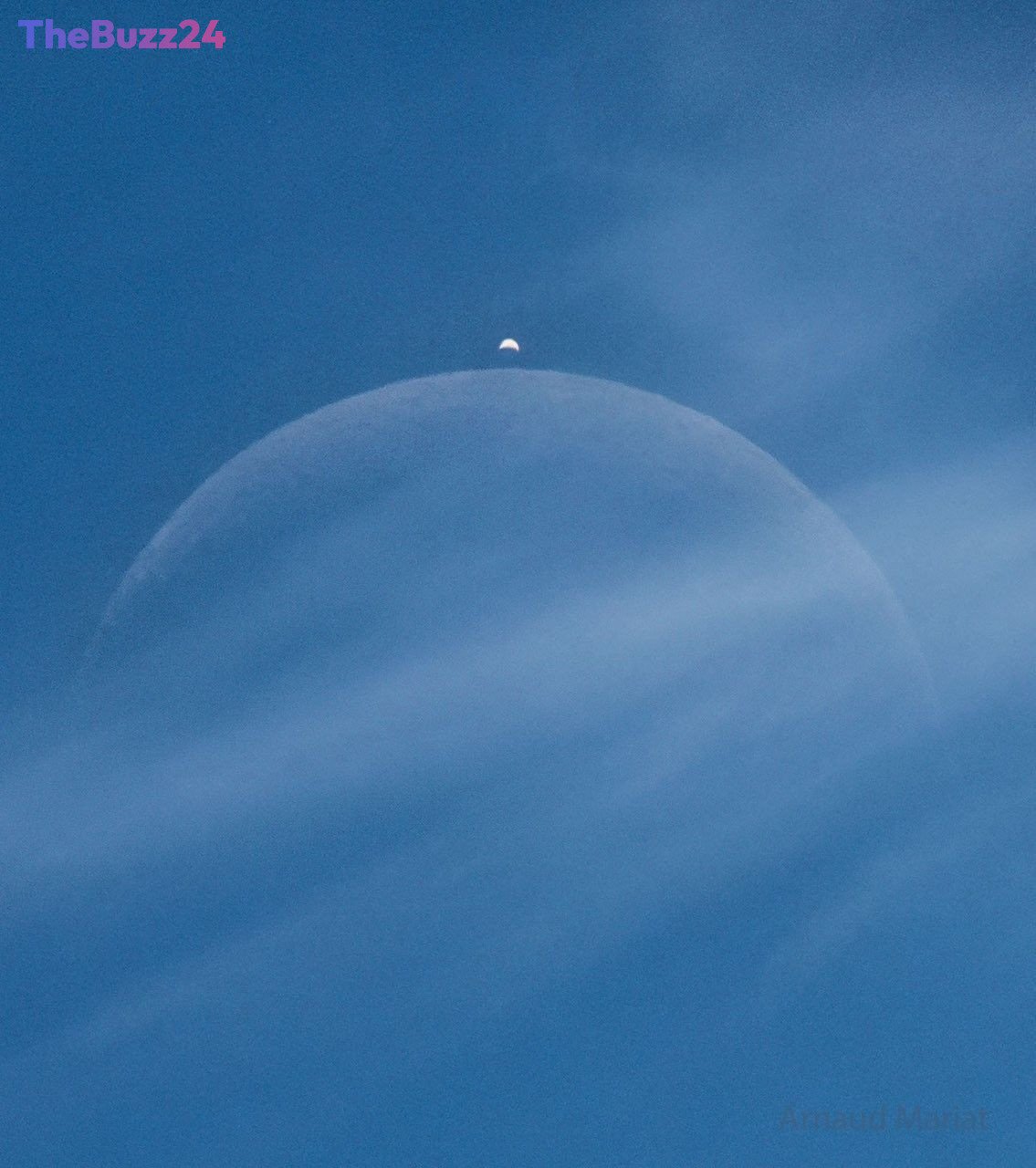
A remarkable astronomical event unfolded recently as the Moon passed in front of the planet Venus, an occurrence known as an occultation. This celestial dance was observed in broad daylight, with the Moon obscuring the bright planet from view for a period.
During the event, both the Moon and Venus presented crescent phases. The Moon displayed a slender crescent, with only about 10 percent of its surface illuminated by the Sun. In contrast, Venus appeared as a more substantial crescent, approximately 25 percent illuminated. Despite the Moon’s proximity, Venus shone brighter due to its closer position to the Sun and the highly reflective nature of its clouds, which are more effective at scattering sunlight than the Moon’s dark surface.
This particular occultation of Venus by the Moon is a relatively rare phenomenon, visible to only a small fraction of the Earth’s population. Compounding the rarity, the event took place during daytime for most observers within the visibility zone, adding another layer of challenge to its observation. The image capturing this moment was taken above the village of Cessy, France, showcasing the subtle interplay of light and shadow between these two celestial bodies.
Key Takeaways
- The Moon occulted the planet Venus during a daytime event.
- Both celestial bodies displayed crescent phases, with Venus appearing brighter due to its proximity to the Sun and reflective clouds.
- Venus-Moon occultations are rare and were visible to a limited portion of Earth, with most observers experiencing it during daylight.
Editor’s Analysis & Impact
This event highlights the dynamic nature of our solar system and the opportunities for observing celestial mechanics even during daylight hours. While occultations are not uncommon, the specific alignment and visibility conditions make this a noteworthy astronomical occurrence. Such events underscore the importance of citizen science and amateur astronomy in capturing and documenting these fleeting moments. The continued observation of planetary and lunar movements provides valuable data for understanding orbital mechanics and the broader cosmos, reminding us of the wonders that unfold above us daily.
Frequently Asked Questions
Q: What is a lunar occultation of Venus?
A: A lunar occultation of Venus occurs when the Moon passes directly in front of Venus, as seen from Earth, temporarily hiding the planet from view.
Q: Why did Venus appear brighter than the Moon?
A: Venus appeared brighter because it is closer to the Sun than the Moon is, and its thick cloud cover is highly reflective, scattering more sunlight than the Moon's dark, cratered surface.
Q: Are daytime occultations common?
A: While lunar occultations happen regularly, observing them during the daytime is less common due to the challenge of spotting fainter objects against the bright sky. This specific event was further distinguished by its visibility to a limited geographical area.
AI Disclosure: This article is based on verified data and official reports. Our Team and AI have cross-referenced every financial detail with primary sources to ensure total accuracy.
More from this Category