Late-Season Heat Dome Triggers Record-Breaking Temperatures Across the South-Central U.S.
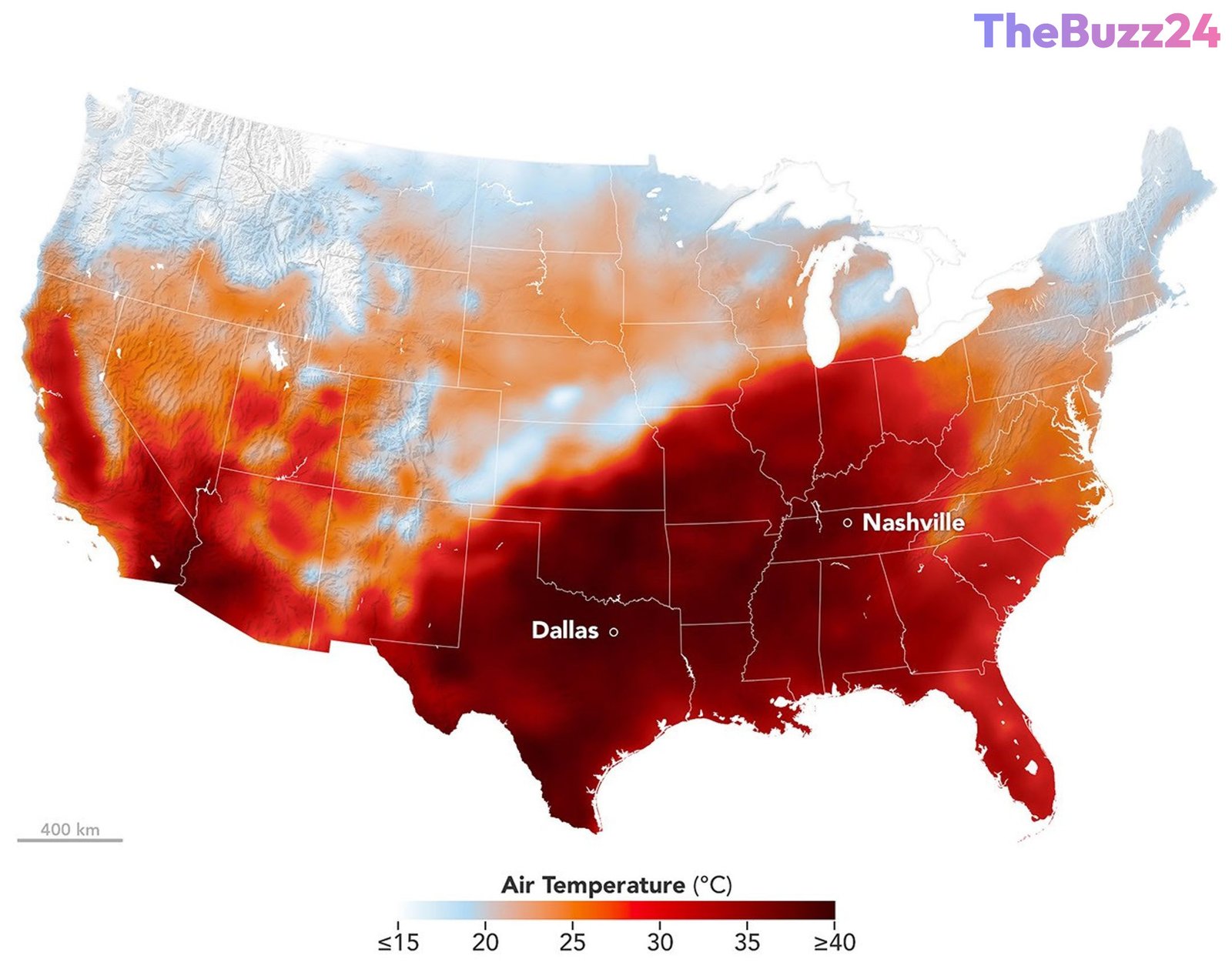
As the calendar prepared to transition into astronomical autumn, millions of residents across the south-central United States found themselves sweltering under a powerful and unseasonable heat dome in mid-September 2026. High-resolution atmospheric modeling maps revealed alarming temperatures, with the darkest red zones indicating areas where thermometer readings approached or exceeded 40 degrees Celsius, translating to over 104 degrees Fahrenheit.
The intense weather event placed more than 41 million Americans—roughly 12 percent of the nation’s population—under official National Weather Service extreme heat advisories, watches, or warnings. The oppressive conditions stretched across multiple states, heavily impacting Texas, Oklahoma, Arkansas, Missouri, and Tennessee. Forecasters noted that a dangerous combination of high humidity, clear skies, and calm winds significantly exacerbated the perceived heat, elevating the risk of heat-related illnesses for vulnerable populations.
Numerous municipalities shattered long-standing daily temperature records during the peak of the event. Dallas hit 101 degrees Fahrenheit, while Memphis reached 99 degrees. Meanwhile, Nashville soared to 100 degrees, easily surpassing a previous daily high record that had stood since 1927. These readings were roughly 12 degrees above normal for mid-September, capping off a summer season that federal climate data already ranked as the warmest in 132 years of record-keeping.
Meteorologists explain that such heat domes form when a stubborn ridge of high pressure stalls in the upper atmosphere, acting as a lid that pushes hot air downward and traps it near the surface. This atmospheric pressure system suppresses cloud formation and precipitation, allowing uninterrupted sunlight to continuously bake the landscape and intensify the trapped heat.
Key Takeaways
- A powerful heat dome brought record-breaking, unseasonable warmth to the south-central United States in mid-September 2026.
- Over 41 million people across several states, including Texas, Tennessee, and Oklahoma, were placed under extreme heat advisories.
- Major cities like Nashville and Dallas shattered historical temperature records that had stood for nearly a century.
Editor’s Analysis & Impact
The recurrence of extreme late-season heat domes highlights shifting climatic baselines and the growing intensity of temperature anomalies worldwide. As record-breaking summers increasingly bleed into traditional autumn months, metropolitan areas face mounting infrastructure strain, particularly regarding energy grids and urban heat island effects. For industries ranging from agriculture and construction to public utilities, these prolonged heat events necessitate adaptive strategies to mitigate economic disruptions and safeguard public health. The ability of advanced modeling systems to accurately map and forecast these localized thermal traps will play a critical role in future disaster preparedness and early warning frameworks.
Frequently Asked Questions
Q: What is a heat dome?
A: A heat dome occurs when an area of high pressure traps hot ocean and air currents over a large landmass, acting as a lid that prevents heat from escaping and blocks cloud formation.
Q: Which states were most affected by the mid-September 2026 heat event?
A: The south-central U.S. bore the brunt of the heat wave, with states like Texas, Oklahoma, Arkansas, Missouri, and Tennessee experiencing severe, record-breaking temperatures.
AI Disclosure: This article is based on verified data and official reports. Our Team and AI have cross-referenced every financial detail with primary sources to ensure total accuracy.
More from this Category