Defiant Iran President Blames U.S., Israel for Global Turmoil at UN Assembly
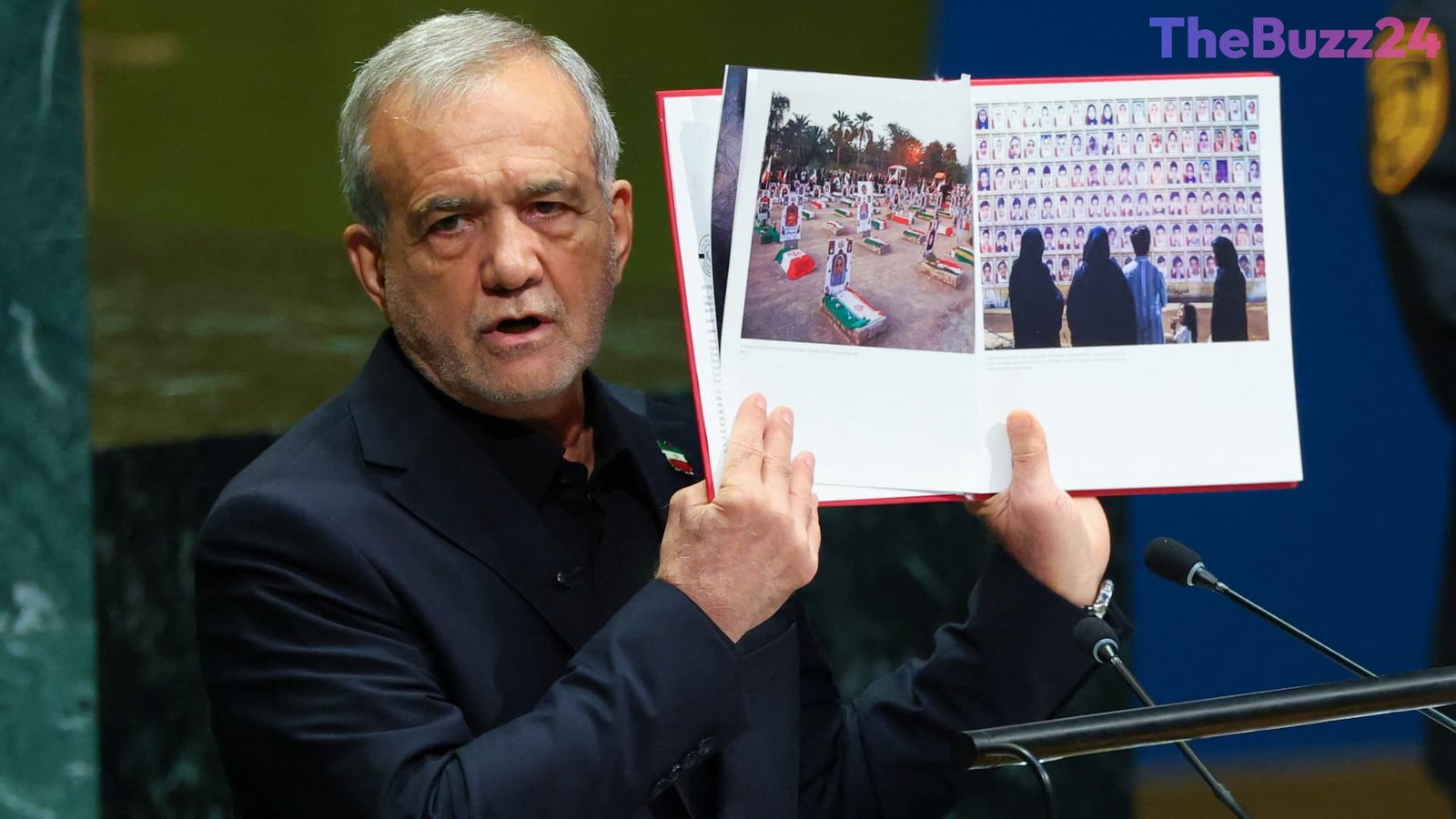
Iranian President Masoud Pezeshkian delivered a forceful address to the United Nations General Assembly, directly accusing the United States and Israel of fueling global instability. His remarks came amidst ongoing conflict and followed strong rhetoric from U.S. President Donald Trump regarding Iran’s future. Pezeshkian characterized his nation as a victim of aggression, asserting Iran’s right to self-defense “until our last breath.”
The Iranian leader’s speech served as a direct rebuttal to President Trump’s earlier statements at the UN, where Trump had indicated he was considering whether to “annihilate” Iran. Pezeshkian challenged Trump’s narrative, which suggested Iran was desperate for a peace deal, by highlighting alleged illegal attacks on Iranian civilians and infrastructure. He presented photographs of children he claimed were casualties of U.S. and Israeli bombardments, including a Tomahawk missile strike on a primary school in Minab, which reportedly killed over 150 people. An independent UN fact-finding mission has since indicated “reasonable grounds” to believe the U.S. committed a war crime through indiscriminate attacks.
Despite the heated exchanges, discussions reportedly took place between U.S. and Iranian envoys on the sidelines of the UN, though accounts of their duration varied. Iranian Foreign Ministry spokesman Esmail Baghaei outlined Tehran’s conditions for reviving diplomacy, which included ending the naval blockade in the Gulf of Oman, ceasing “economic terrorism” (referring to sanctions), releasing restricted assets, and securing a safe shipping route in the Strait of Hormuz. While the U.S. maintains its primary goal is to prevent Iran from acquiring nuclear weapons, Iran consistently asserts its right to develop a peaceful nuclear program without external limitations, dismissing threats as “strategic desperation” and vowing to escalate its own defensive measures.
Key Takeaways
- Iranian President Masoud Pezeshkian accused the U.S. and Israel of causing global instability and committing war crimes against Iranian civilians during his UN General Assembly speech.
- Pezeshkian's defiant address directly challenged U.S. President Donald Trump's earlier threats to "annihilate" Iran and his narrative about Iran seeking a peace deal.
- Despite escalating rhetoric, diplomatic talks occurred, with Iran outlining conditions for renewed diplomacy, while both nations reiterated their stances on nuclear programs and regional security.
Editor’s Analysis & Impact
The ongoing tensions and rhetoric, particularly concerning the Strait of Hormuz and sanctions, significantly impact global oil markets and shipping. Any escalation could lead to price volatility and supply chain disruptions. The mention of “economic terrorism” by Iran underscores the impact of sanctions on its economy, affecting international trade partners. The deep ideological divide and conflicting narratives suggest a challenging path for de-escalation. While diplomatic talks are occurring, the conditions set by Iran are likely non-starters for the U.S., indicating continued stalemate. The risk of miscalculation remains high, potentially leading to further military engagements or proxy conflicts in the region. This confrontation highlights the fragility of international diplomacy and the limitations of multilateral institutions like the UN in resolving deep-seated geopolitical conflicts. It also underscores the complex interplay between domestic politics and international relations, where leaders use global platforms to project strength and influence public opinion. The accusations of war crimes further complicate international law and accountability.
Frequently Asked Questions
Q: What were the main accusations made by Iranian President Pezeshkian at the UN?
A: President Pezeshkian accused the United States and Israel of being the primary sources of global instability and of launching illegal attacks against Iranian civilians and infrastructure, including a missile strike on a school.
Q: How did President Pezeshkian's speech relate to U.S. President Donald Trump's earlier remarks?
A: Pezeshkian's speech was a direct rebuttal to President Trump's earlier statement at the UN, where Trump had threatened to "annihilate" Iran. Pezeshkian also contradicted Trump's assertion that Iran was desperately seeking a peace deal.
Q: What conditions did Iran propose for reviving diplomatic relations with the U.S.?
A: Iran's conditions included ending the naval blockade in the Gulf of Oman, ceasing "economic terrorism" (sanctions), releasing Iran's restricted assets, and establishing a safe shipping route in the Strait of Hormuz.
AI Disclosure: This article is based on verified data and official reports. Our Team and AI have cross-referenced every financial detail with primary sources to ensure total accuracy.
More from this Category