Uzbekistan Enters Global Lunar Exploration Coalition as 77th Artemis Accords Signatory
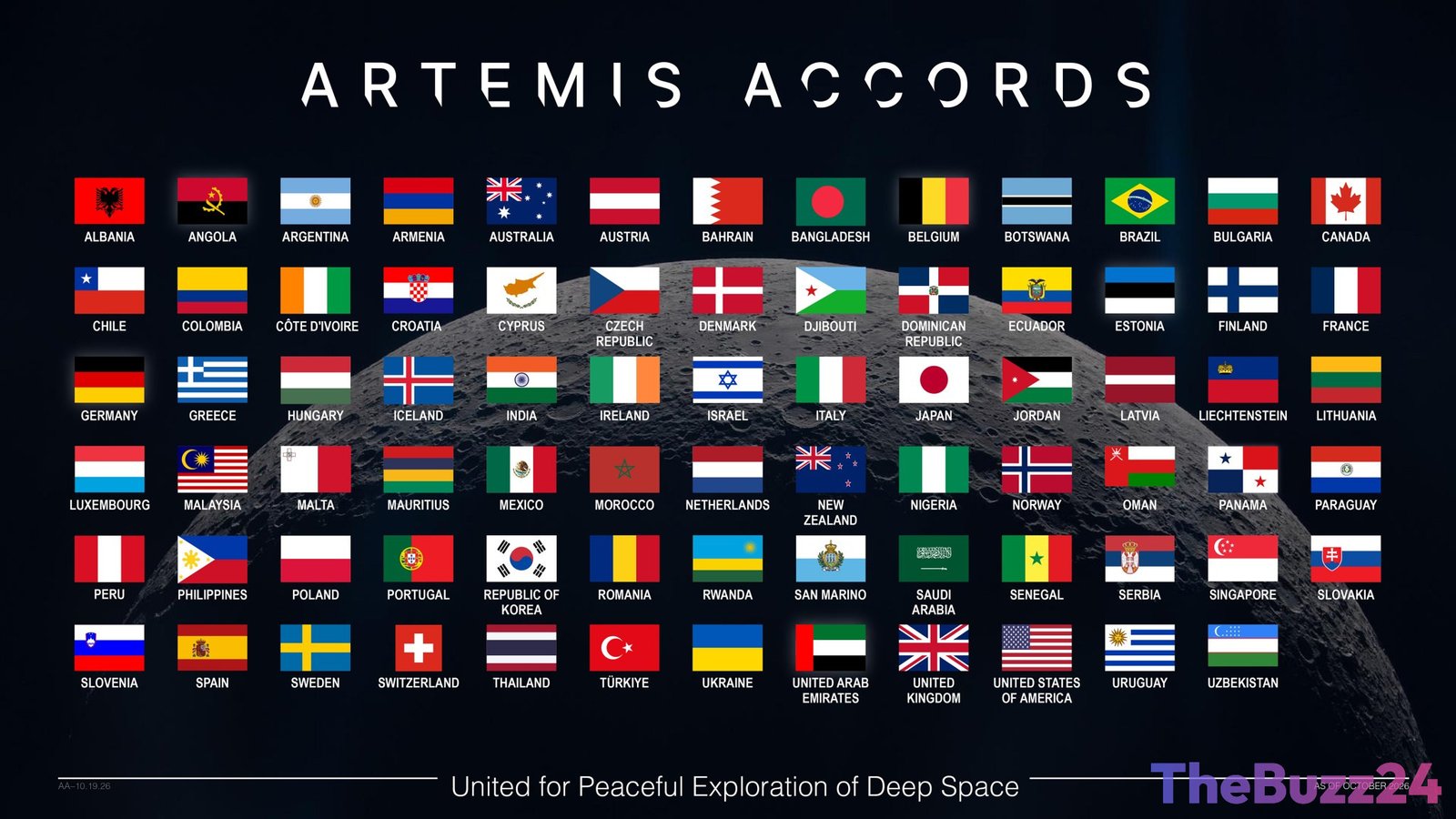
Uzbekistan has officially joined the international effort for peaceful and sustainable space exploration by becoming the 77th nation to sign the Artemis Accords. The signing ceremony took place in Samarkand, where Uzbek Foreign Minister Bakhtiyor Saidov formally endorsed the framework during a diplomatic meeting alongside U.S. Secretary of State Marco Rubio and senior space officials.
The Artemis Accords, established in 2020 by NASA and the U.S. State Department alongside seven founding partner nations, establish a framework of principles to ensure safety, operational transparency, and scientific cooperation in outer space. By signing the agreement, participating nations commit to peaceful exploration, open data sharing, emergency assistance across missions, and the protection of historic lunar sites as international efforts focus on establishing a permanent presence on the Moon and preparing for future crewed trips to Mars.
This agreement represents a major step forward for Uzbekistan’s expanding national space program, led by its space agency, Uzcosmos. The Central Asian nation is accelerating its technical development, with university students currently building the country’s first CubeSat demonstration satellite for a planned 2028 launch. Furthermore, Uzbekistan is scheduled to host the global space community when it holds the International Astronautical Congress in 2028.
The growing roster of Artemis signatories comes at a critical juncture as efforts intensify to build sustained lunar infrastructure and a functional Moon base. As both government agencies and private commercial entities increase their lunar ambitions, the Artemis principles aim to establish peaceful norms of behavior and mitigate potential conflicts in deep space exploration.
Key Takeaways
- Uzbekistan has formally signed the Artemis Accords, becoming the 77th nation to join the international civil space exploration framework.
- The agreement commits signatories to peaceful, transparent space activities, open data sharing, and mutual assistance in lunar and deep space operations.
- Uzbekistan is rapidly developing its domestic space capabilities, targeting its first CubeSat satellite launch and hosting the International Astronautical Congress in 2028.
Editor’s Analysis & Impact
Uzbekistan’s accession to the Artemis Accords reflects a broader global shift where emerging economies view space technology as a vital vehicle for technological development, economic diversification, and international standing. For Uzbekistan, aligning with the framework helps integrate its space agency, Uzcosmos, into global research networks and international supply chains. From a governance perspective, expanding the Artemis coalition is essential as lunar commercialization and exploration accelerate. Establishing common operational rules, open data standards, and conflict-prevention mechanisms early on ensures a stable and cooperative environment for both state actors and private commercial ventures looking to operate on the Moon and beyond.
Frequently Asked Questions
Q: What are the Artemis Accords?
A: The Artemis Accords are a set of practical principles and guidelines created to govern international civil space exploration. They emphasize peaceful cooperation, transparency, scientific data sharing, and safe operations on the Moon, Mars, and beyond.
Q: What progress is Uzbekistan making in the space sector?
A: Uzbekistan is expanding its national space program via Uzcosmos. Key upcoming milestones include launching its first student-built CubeSat satellite by 2028 and hosting the International Astronautical Congress that same year.
Q: How many countries have signed the Artemis Accords?
A: With Uzbekistan's recent accession during the ceremony in Samarkand, 77 nations have now signed the Artemis Accords.
AI Disclosure: This article is based on verified data and official reports. Our Team and AI have cross-referenced every financial detail with primary sources to ensure total accuracy.
More from this Category