Webb Telescope Unveils Hidden Stellar Nursery in Stunning Detail
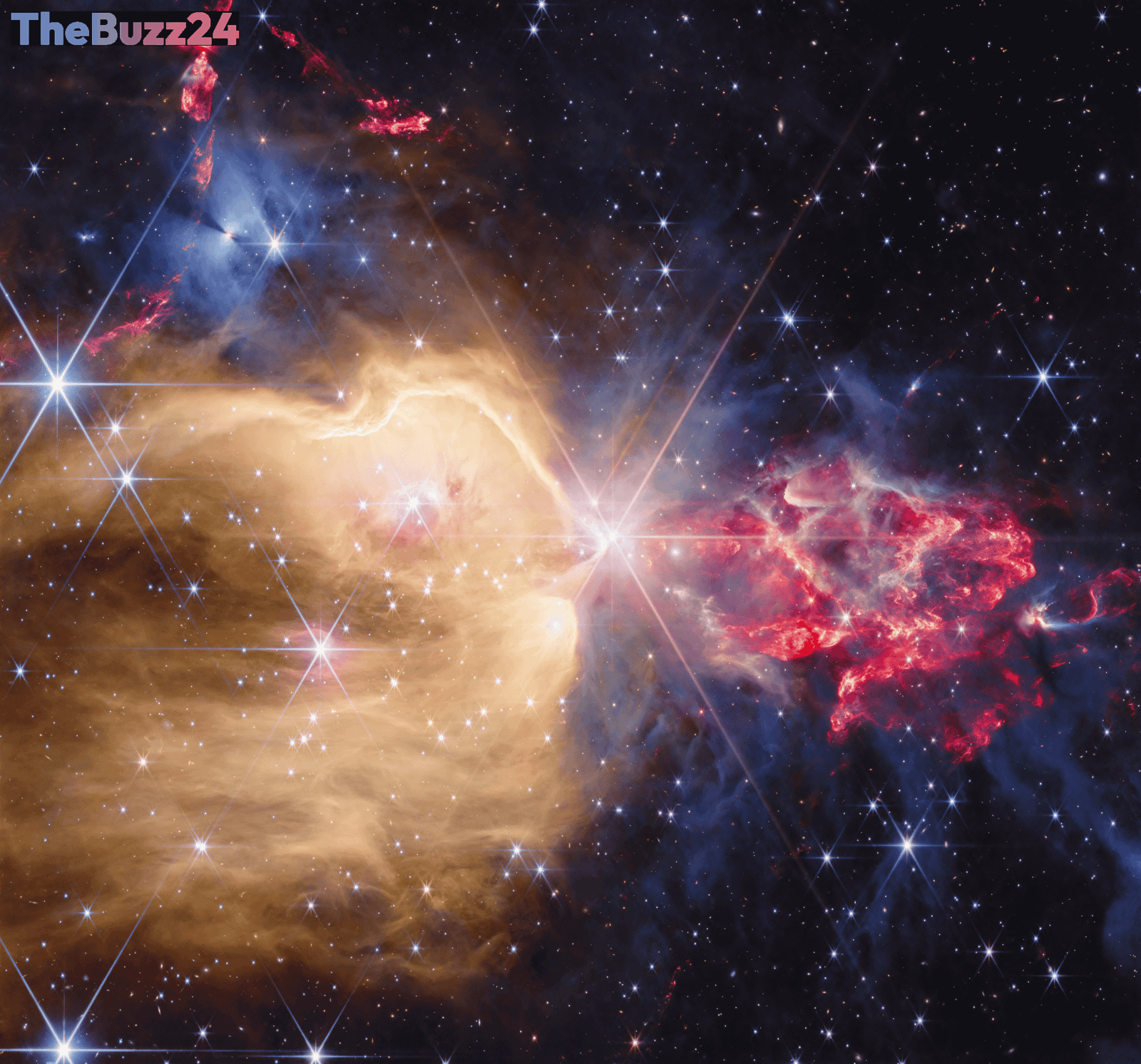
The James Webb Space Telescope (JWST) has captured an awe-inspiring image of NGC 7129, a vibrant stellar nursery located approximately 3,300 light-years away from Earth. This advanced observatory has pierced through the obscuring dust clouds that previously concealed numerous young stars, revealing a dynamic scene of cosmic birth.
The newly released image showcases a multitude of protostars and newly formed stars nestled within the glowing gases of NGC 7129. Webb’s sensitive instruments have differentiated between various forms of hydrogen gas, with hot, atomic hydrogen appearing in golden hues and cooler, molecular hydrogen, energized by embedded protostars, depicted in striking red.
This detailed view provides astronomers with unprecedented insights into the complex processes of star formation. By observing these nascent stars and their surrounding environments, scientists can better understand the conditions necessary for stars to ignite and evolve, shedding light on the early stages of stellar lifecycles within this active cosmic region.
Key Takeaways
- The James Webb Space Telescope has captured a detailed image of the NGC 7129 stellar nursery.
- The image reveals previously hidden protostars and young stars within dust clouds.
- Webb's observations differentiate between hot atomic and cooler molecular hydrogen, offering insights into star formation processes.
Editor’s Analysis & Impact
The James Webb Space Telescope continues to revolutionize our understanding of the cosmos, and its latest revelations from NGC 7129 are no exception. By penetrating dense dust clouds, Webb is providing unparalleled views of star formation, a fundamental process in the universe. This data will be crucial for refining models of stellar evolution and understanding the conditions under which planetary systems may form. The ability of JWST to distinguish between different gas compositions and temperatures in such detail promises further groundbreaking discoveries in astrophysics, solidifying its role as a pivotal instrument for exploring the universe’s most enigmatic phenomena.
Frequently Asked Questions
Q: What is NGC 7129?
A: NGC 7129 is a stellar nursery, a region of space where new stars are being born, located about 3,300 light-years from Earth.
Q: What makes the James Webb Space Telescope's image of NGC 7129 significant?
A: The image is significant because the Webb telescope's advanced infrared capabilities allowed it to see through the dust that typically hides young stars, revealing previously unseen protostars and offering detailed insights into the star formation process.
Q: How does the image represent different types of hydrogen gas?
A: The image uses color to represent different states of hydrogen gas: golden regions indicate hot, atomic hydrogen, while red regions show cooler, molecular hydrogen that has been energized by embedded protostars.
AI Disclosure: This article is based on verified data and official reports. Our Team and AI have cross-referenced every financial detail with primary sources to ensure total accuracy.
More from this Category