Beyond Ingenuity: NASA’s Next-Gen Blades Set to Transform Mars Exploration
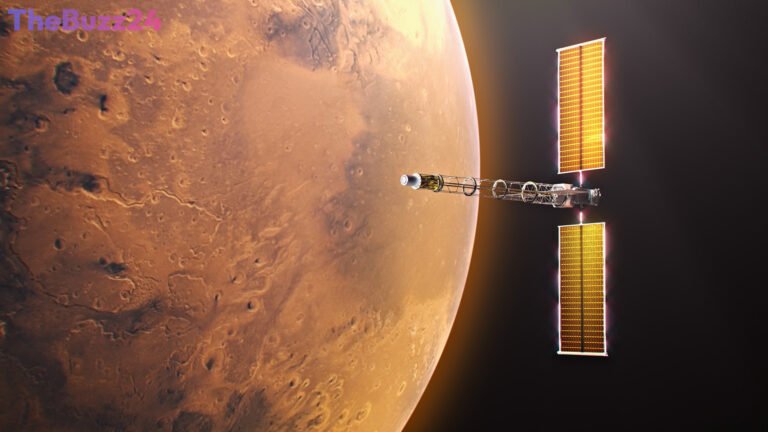
NASA researchers are forging the path for the next generation of aerial exploration on Mars, building upon the groundbreaking success of the Ingenuity helicopter. Engineers are reimagining rotorcraft blades to enable future Martian flyers to achieve unprecedented altitudes and distances, significantly expanding scientific discovery capabilities on the Red Planet. This ambitious endeavor involves high-fidelity computer simulations and rigorous wind tunnel tests, pushing the boundaries of aerodynamic design for extraterrestrial environments.
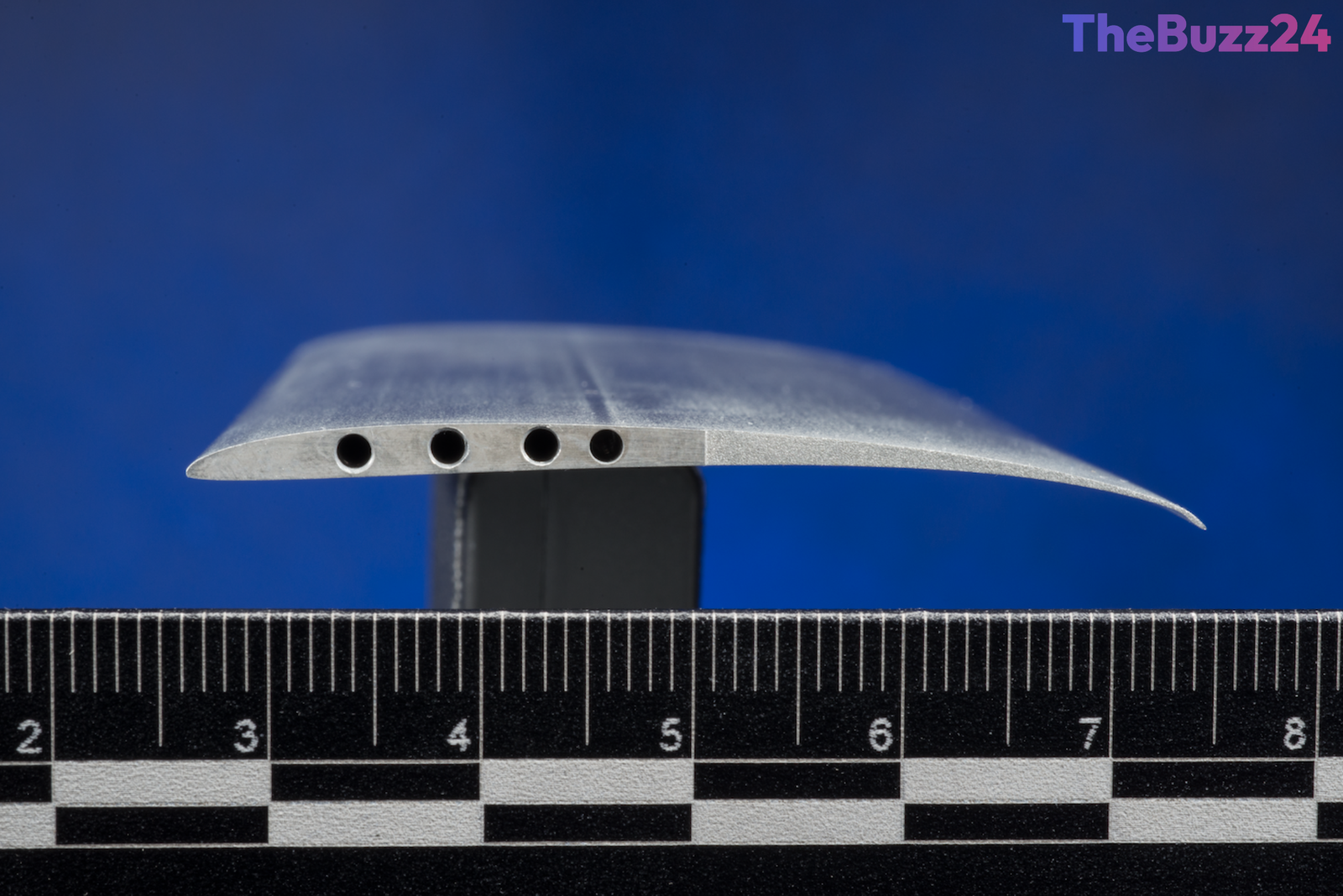
A collaborative team, including experts from NASA’s Ames Research Center, Imperial College London, and Nagoya University, has developed a revolutionary new blade cross-section, or airfoil, dubbed roamx-0201. This design departs from the more traditional, curved profiles seen in earlier Mars helicopters, including Ingenuity and those planned for the 2028 SkyFall mission. The roamx-0201 features a thinner, asymmetrical shape, meticulously optimized through advanced simulations and algorithms specifically tuned for Mars’ thin atmosphere. Initial wind tunnel tests have confirmed its superior aerodynamic performance and enhanced recovery capabilities in challenging flight conditions.
The performance leap offered by the roamx-0201 is substantial. Simulations indicate that these redesigned blades could empower future Mars helicopters to extend their single-flight range from Ingenuity’s record of 0.7 kilometers to an astonishing 18.7 kilometers, all while carrying vital scientific instruments. This dramatic increase in range is attributed to several key innovations. The roamx-0201 blades can operate at higher speeds for longer periods before encountering “drag divergence,” a phenomenon where performance sharply declines as rotors approach the speed of sound, which is lower on Mars. Furthermore, the new airfoil employs a novel method of lift generation by intentionally disrupting the boundary layer at its leading edge, counter-intuitively pulling the blade upward more effectively.
Another critical advantage of the roamx-0201 design is its significantly improved behavior during “stall,” an aerodynamic condition that can lead to sharp performance drops and flight instability. Unlike Ingenuity’s blades, which experienced steep degradation at stall, the new design maintains better stability, allowing future helicopters to operate safely across a wider range of flight angles. While this cutting-edge technology is still undergoing testing and refinement, the ongoing research aims to bridge any gaps between computational predictions and real-world performance, ultimately paving the way for more efficient, longer-range Mars helicopters capable of carrying heavier payloads and unlocking new frontiers in planetary science.
Key Takeaways
- NASA researchers have developed a new rotor blade design, roamx-0201, for future Mars helicopters, promising significantly enhanced flight capabilities.
- The roamx-0201 design could extend a single Mars helicopter flight range from Ingenuity's 0.7 km to an impressive 18.7 km, even while carrying scientific instruments.
- Key aerodynamic improvements include better performance at high speeds (delaying drag divergence), novel lift generation through boundary layer disruption, and enhanced stability during stall conditions.
Editor’s Analysis & Impact
This advancement in Mars rotorcraft technology represents a pivotal step for space exploration and the aerospace industry. The ability to dramatically increase the range and payload capacity of Martian helicopters opens up unprecedented opportunities for scientific discovery, allowing for broader geological surveys, atmospheric sampling, and reconnaissance of previously inaccessible terrains. This innovation could lead to more complex and autonomous aerial platforms, potentially reducing the reliance on slower, ground-based rovers for certain tasks. For the broader industry, it highlights the critical role of advanced simulation and international collaboration in pushing technological boundaries for extreme environments. While the technology is still in development, its successful implementation would solidify aerial mobility as a cornerstone of future planetary missions, inspiring further innovation in drone and robotics applications both on Earth and beyond.
Frequently Asked Questions
Q: What is the primary advantage of the new roamx-0201 blade design for Mars helicopters?
A: The main advantage is a significant increase in flight range. Simulations suggest that future Mars helicopters equipped with roamx-0201 blades could fly up to 18.7 kilometers in a single mission, a substantial improvement over Ingenuity's 0.7-kilometer record, while also carrying scientific instruments.
Q: How does the roamx-0201 blade achieve its improved aerodynamic performance?
A: The roamx-0201 blade achieves this through several innovations: it can operate at higher speeds for longer before experiencing "drag divergence," it generates lift more effectively by intentionally disrupting the boundary layer at its leading edge, and it demonstrates significantly improved stability and recovery during "stall" conditions.
Q: Is the roamx-0201 blade technology ready for immediate deployment on Mars?
A: No, while the roamx-0201 blade design has shown exceptional promise in high-fidelity simulations and wind tunnel tests, it is not yet ready for deployment on Mars. Ongoing research is focused on further refining the design and ensuring its reliability and performance in real-world Martian conditions for future missions beyond the planned SkyFall mission.
AI Disclosure: This article is based on verified data and official reports. Our Team and AI have cross-referenced every financial detail with primary sources to ensure total accuracy.
More from this Category