D.C. Poised for Democratic Socialist Mayor, Bracing for Federal Showdown
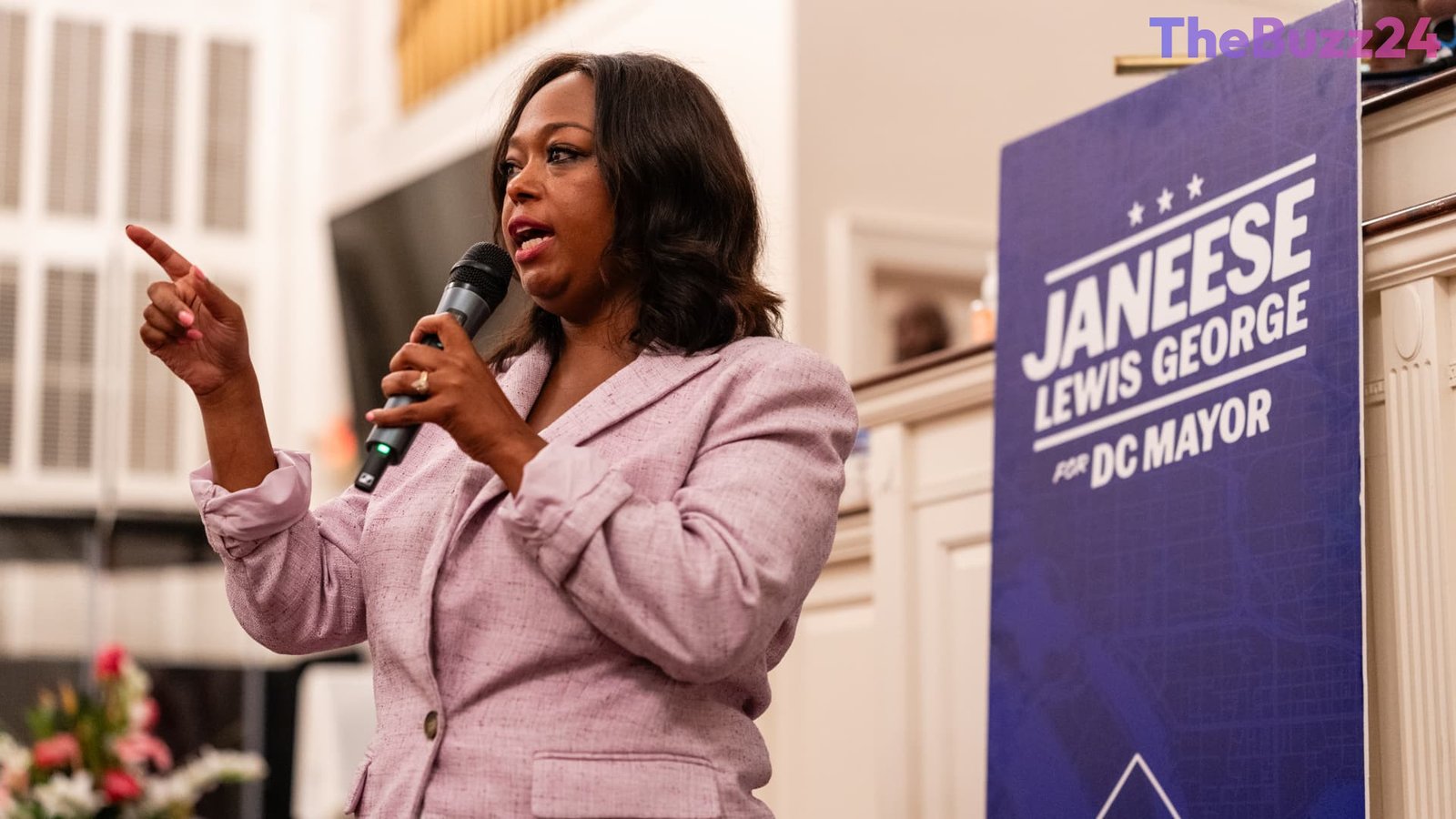
Janeese Lewis George, a prominent democratic socialist, is poised to assume the mayoral office in Washington, D.C., marking a significant shift in leadership for the nation’s capital after more than a decade under a moderate Democrat. Her anticipated victory places her at the forefront of a city with unique governance challenges, where the mayor’s authority is inherently constrained by the federal government’s overarching control. This transition comes amidst a broader national trend of progressive candidates gaining influence in local politics.
Central to Lewis George’s platform are ambitious policy proposals aimed at addressing key urban issues. Her agenda includes advocating for universal childcare, expanding access to affordable housing, and implementing measures to lower utility costs for residents. A cornerstone of her economic strategy is the introduction of a new Business Activity Tax (BAT). This proposed tax would specifically target unincorporated partnerships, such as law firms and lobbying groups, whose owners reside outside the district and currently avoid certain local business taxes. Proponents suggest a 2% BAT could generate an estimated $500 million annually, revenue that Lewis George intends to allocate towards funding her policy initiatives. The D.C. City Council is currently exploring the feasibility of this tax as it seeks solutions for projected budget shortfalls.
Lewis George’s impending tenure is expected to be met with considerable federal scrutiny and potential opposition, particularly from President Donald Trump and the Republican-controlled Congress. Concerns have been raised regarding legislative efforts to limit D.C.’s fiscal autonomy, including a bill introduced in the House that would allow Congress to block local tax increases. President Trump has a history of asserting federal authority over the capital, having previously federalized the city’s police department and deployed National Guard troops, actions that underscore the ongoing tension between D.C.’s aspirations for self-governance and federal oversight. Lewis George has publicly affirmed her commitment to defending the district’s autonomy against such federal interventions.
While the D.C. mayor’s executive powers are often described as limited compared to those in other major U.S. cities, Lewis George’s leadership is anticipated to carry significant symbolic weight. Her supporters believe her willingness to challenge federal overreach will resonate deeply with residents advocating for greater local control. Her rise reflects a national movement of democratic socialists securing local and state offices, signaling a shift in political priorities and a renewed focus on progressive urban policies. Navigating the complex interplay between local governance and federal authority will define her administration, as she endeavors to implement her agenda within the unique political landscape of the nation’s capital.
Key Takeaways
- Janeese Lewis George, a democratic socialist, is set to become Washington, D.C.'s next mayor, marking a significant shift in local leadership.
- Her policy agenda includes universal childcare, affordable housing, and a new Business Activity Tax (BAT) targeting unincorporated partnerships to generate revenue.
- Her administration is expected to face considerable federal opposition, including potential legislative blocks from Congress and challenges from President Trump regarding D.C.'s self-governance and fiscal policies.
Editor’s Analysis & Impact
Janeese Lewis George’s anticipated mayoral victory in Washington, D.C., signals a notable shift towards progressive governance in the capital. Her proposed Business Activity Tax (BAT) could significantly impact the local business landscape, particularly for professional services firms, potentially altering D.C.’s economic structure and revenue streams. The looming federal opposition, including legislative attempts to curb D.C.’s taxing authority and historical interventions by the presidency, introduces substantial uncertainty regarding the city’s fiscal autonomy and its ability to implement independent policy. This situation highlights the unique constitutional status of D.C. and the ongoing national debate about local control versus federal oversight. Her tenure will serve as a critical test case for how progressive local leaders can navigate and potentially challenge federal power, with broader implications for urban policy and self-governance movements across the United States.
Frequently Asked Questions
Q: What are Janeese Lewis George's primary policy goals as D.C. mayor?
A: Her main policy goals include establishing universal childcare, increasing affordable housing options, lowering utility costs for residents, and implementing a new Business Activity Tax (BAT) to generate revenue for these initiatives.
Q: Why is the D.C. mayor's power considered limited compared to other major cities?
A: The D.C. mayor's authority is constrained because Washington, D.C., as the nation's capital, falls under the ultimate jurisdiction of the U.S. federal government. Congress retains significant oversight and can intervene in local governance, including fiscal matters and legislative decisions.
Q: What is the proposed Business Activity Tax (BAT) and who would it affect?
A: The Business Activity Tax (BAT) is a proposed 2% tax on the economic activity of unincorporated partnerships, such as law offices and lobbying firms, whose owners reside outside Washington, D.C., and currently avoid certain local business taxes. It aims to generate additional revenue for the city's policy goals.
AI Disclosure: This article is based on verified data and official reports. Our Team and AI have cross-referenced every financial detail with primary sources to ensure total accuracy.
More from this Category