Orion’s Cosmic Cradle: Unveiling the Majestic M42 Nebula
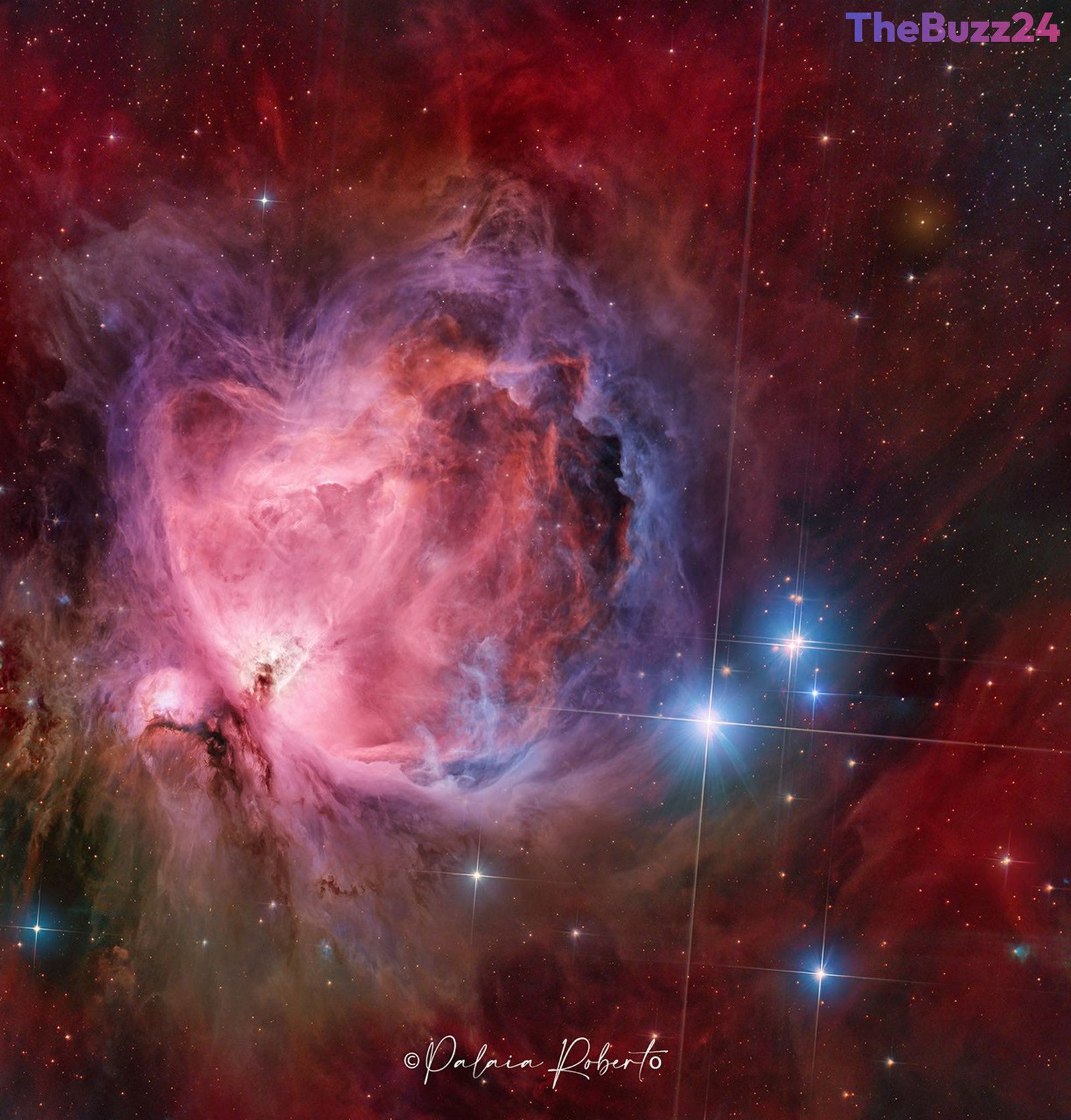
The Great Nebula in Orion, officially designated M42, stands as one of the most celebrated and visually stunning astronomical objects in our night sky. This immense celestial nursery, located approximately 1500 light-years from Earth, is a vibrant region where new stars are actively forming. Easily discernible to the unaided eye, M42 can be found nestled within the popular constellation Orion, just below its distinctive three-star belt, offering a breathtaking glimpse into the dynamic processes of cosmic creation.
Spanning an impressive 40 light-years, the Orion Nebula is a spectacular tapestry of glowing gas and intricate dust structures. Deep imaging reveals wisps and sheets of interstellar material, particularly vibrant due to the emission of hydrogen gas, which is energized by the intense radiation from the hot, young stars embedded within. This vast cloud of gas and dust represents the edge of an even larger interstellar molecular cloud, providing the raw material for ongoing stellar birth.
Within M42, astronomers observe a wealth of fascinating phenomena. It hosts the bright open cluster of stars known as the Trapezium, a stellar grouping that illuminates much of the surrounding nebula. Beyond this prominent cluster, the nebula is dotted with numerous stellar nurseries—dense pockets rich in hydrogen gas, nascent stars, protoplanetary disks (proplyds), and powerful stellar jets that eject material at incredible velocities. These features collectively paint a picture of a dynamic and fertile environment, continuously shaping the future of our galaxy’s stellar population. The nebula resides in the same spiral arm of the Milky Way as our Sun, making it a relatively close and invaluable laboratory for studying star formation.
Key Takeaways
- M42, the Great Nebula in Orion, is a vast and active star-forming region located 1500 light-years away.
- It is visible to the unaided eye and characterized by glowing gas, dust, and hot young stars, particularly rich in hydrogen emission.
- The nebula contains significant features like the Trapezium star cluster, numerous stellar nurseries, protoplanetary disks, and high-velocity stellar jets.
Editor’s Analysis & Impact
The study and observation of nebulae like M42 are fundamental to our understanding of stellar evolution and galactic dynamics. As a nearby and highly active star-forming region, M42 serves as a crucial natural laboratory for astrophysicists. Continued research, leveraging advanced telescopic technologies, will provide deeper insights into the complex processes of star birth, the formation of planetary systems, and the lifecycle of interstellar matter. The data gathered from such regions informs models of galaxy evolution and helps contextualize our own solar system’s origins. This ongoing exploration not only expands scientific knowledge but also inspires public interest in astronomy and space science, potentially driving future investment in space exploration and related technologies.
Frequently Asked Questions
Q: What is M42?
A: M42, also known as the Great Nebula in Orion, is an immense and active star-forming region located in the constellation Orion, approximately 1500 light-years from Earth.
Q: Can the Orion Nebula be seen without a telescope?
A: Yes, the Great Nebula in Orion is one of the few nebulae visible to the unaided eye. It appears as a fuzzy patch of light below Orion's belt in dark sky conditions.
Q: What makes the Orion Nebula glow?
A: The nebula glows primarily due to the intense ultraviolet radiation emitted by the hot, young stars within it. This radiation ionizes the surrounding hydrogen gas, causing it to emit light as electrons recombine with protons, creating the vibrant colors observed.
AI Disclosure: This article is based on verified data and official reports. Our Team and AI have cross-referenced every financial detail with primary sources to ensure total accuracy.
More from this Category