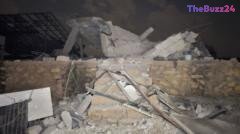
Jordanian Airstrikes Target Southern Syria Following Deadly Church Massacre
The Jordanian military has launched retaliatory airstrikes targeting armed factions in southern Syria, following a tragic shooting at a Christian funeral last week that claimed nine lives. The military operation focused on locations in the Daraa province, with Amman asserting that the strikes successfully neutralized several hostile operatives. However, local health officials in Syria reported that five civilians, including women, children, and an elderly individual, perished in the bombardment.
The military action has heightened diplomatic tensions between the neighboring nations. While Jordanian officials maintained that the operation was coordinated with Damascus, Syrian authorities disputed this claim, stating they received no prior notice regarding the airstrikes. In immediate response to the military action, Damascus announced the complete suspension of passenger and commercial traffic at the Nassib border crossing, the primary artery between the two countries, citing safety concerns for travelers and workers.
Meanwhile, domestic security operations within Jordan have yielded swift arrests connected to the initial church attack. Jordanian security forces apprehended three suspects—two brothers and their brother-in-law—who were located hiding in an abandoned structure in Karak prior to the airstrikes. The nation’s interior ministry confirmed that the apprehended individuals are Jordanian nationals, as investigators continue to unravel the broader security implications of the violence.
Key Takeaways
- Jordanian military launched airstrikes in southern Syria's Daraa province following a deadly church funeral attack.
- Syria disputed coordination claims and shut down the critical Nassib passenger and commercial border crossing.
- Jordanian security forces successfully arrested three local suspects linked to the initial Karak church shooting.
Editor’s Analysis & Impact
The recent military escalation between Jordan and Syria underscores the fragile security dynamics characterizing the southern Syrian border region. The retaliatory strikes reflect Amman’s zero-tolerance policy toward cross-border threats and domestic extremist violence, particularly incidents targeting minority religious communities. However, the resulting closure of the Nassib border crossing highlights the immediate economic and logistical fallout for both nations, which rely on the corridor for bilateral trade and regional mobility. Moving forward, diplomatic channels will be heavily tested as both governments attempt to balance counter-terrorism imperatives with regional stability. The incident also serves as a stark reminder of how localized sectarian violence can rapidly cascade into interstate diplomatic crises, necessitating heightened intelligence sharing and cooperative border management to prevent further deterioration of bilateral relations.
Frequently Asked Questions
Q: Why did Jordan launch airstrikes in Syria?
A: Jordan targeted what its military described as terrorist organizations in retaliation for a deadly shooting at a Christian funeral in Karak that killed nine people.
Q: What was Syria's response to the Jordanian airstrikes?
A: Syria denied receiving prior notification of the strikes and responded by completely closing the Nassib border crossing, halting all passenger and commercial traffic.
Q: Have any suspects been arrested in connection with the church attack?
A: Yes, Jordanian security forces arrested three Jordanian nationals—two brothers and their brother-in-law—hiding in an abandoned house in Karak.
AI Disclosure: This article is based on verified data and official reports. Our Team and AI have cross-referenced every financial detail with primary sources to ensure total accuracy.
More from this Category