Teghaza 001: Ancient Martian Meteorite Unlocks Secrets of the Red Planet’s Past
Scientists are meticulously examining a rare fragment of Teghaza 001, one of the most ancient Martian meteorites ever discovered on Earth. This invaluable extraterrestrial rock offers a unique window into the early geological history of Mars, providing crucial data for understanding the formation of the Red Planet’s crust and mantle. Its journey from Mars to Earth involved a violent impact event that ejected it from its home planet, eventually leading to its discovery.
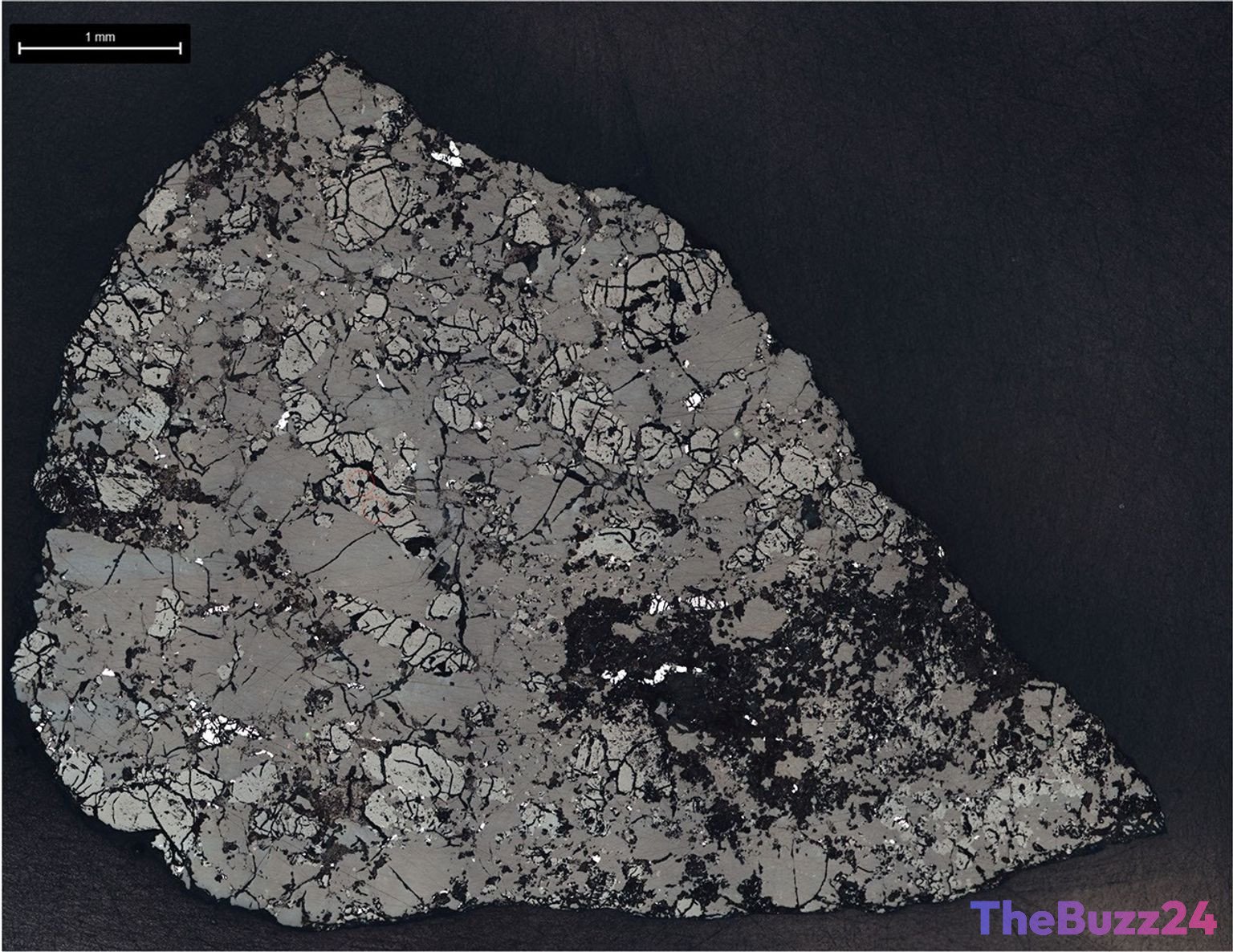
The analysis of Teghaza 001 involves sophisticated techniques, including the study of reflected light images. These detailed visual maps guide researchers in identifying and analyzing specific minerals within the meteorite’s structure. By pinpointing areas of interest, scientists can then employ various instruments to delve deeper into the rock’s composition and age.
Key mineralogical findings within the meteorite include iron-titanium oxides and pyroxene, which are vital indicators of how Mars’ crust and mantle developed billions of years ago. The presence of shocked plagioclase is particularly significant, as it forms under extreme pressures, directly evidencing the powerful cosmic impacts that launched Teghaza 001 into space. Furthermore, alterations observed in the meteorite, such as fine-grain carbonate, sulfate, and clay minerals, indicate interactions with Earth’s environment after its arrival.
This ongoing research into Teghaza 001 underscores the profound insights meteorites can offer into planetary evolution, not just for Mars but for understanding the broader solar system. Each microscopic detail within this ancient rock contributes to a larger narrative of cosmic events and geological processes that shaped our neighboring planet.
Key Takeaways
- Teghaza 001 is one of the oldest Martian meteorites found on Earth, offering insights into Mars' early geological history.
- Scientists utilize reflected light imaging to identify key minerals like iron-titanium oxides, pyroxene, and shocked plagioclase within the meteorite.
- These mineralogical findings provide crucial information about the formation of Mars' crust and mantle, as well as the high-pressure impact events that ejected the rock from the planet.
Editor’s Analysis & Impact
The study of meteorites like Teghaza 001 is foundational for planetary science, providing tangible samples of other celestial bodies that are otherwise inaccessible. This research directly impacts our understanding of planetary formation and evolution, offering ground truth for data gathered by Mars orbiters and rovers. The future outlook involves continued advancements in analytical techniques, allowing for even more detailed examination of these ancient rocks. Broader implications extend to astrobiology, as understanding Mars’ geological past can inform where and when life might have potentially emerged or been sustained. Such discoveries also fuel public interest in space exploration and justify missions aimed at bringing back pristine Martian samples, which would further revolutionize our knowledge of the Red Planet.
Frequently Asked Questions
Q: What is Teghaza 001?
A: Teghaza 001 is an ancient Martian meteorite, considered one of the oldest ever discovered on Earth, providing valuable insights into the early geological history of Mars.
Q: How do scientists study Teghaza 001?
A: Scientists use reflected light imaging to create detailed maps of the meteorite, identifying specific minerals. These minerals are then analyzed with various instruments to determine the rock's composition, age, and formation conditions.
Q: What can Teghaza 001 tell us about Mars?
A: The meteorite's mineral composition, including iron-titanium oxides, pyroxene, and shocked plagioclase, reveals information about the formation of Mars' crust and mantle, as well as the powerful impact events that ejected it from the planet.
AI Disclosure: This article is based on verified data and official reports. Our Team and AI have cross-referenced every financial detail with primary sources to ensure total accuracy.
More from this Category