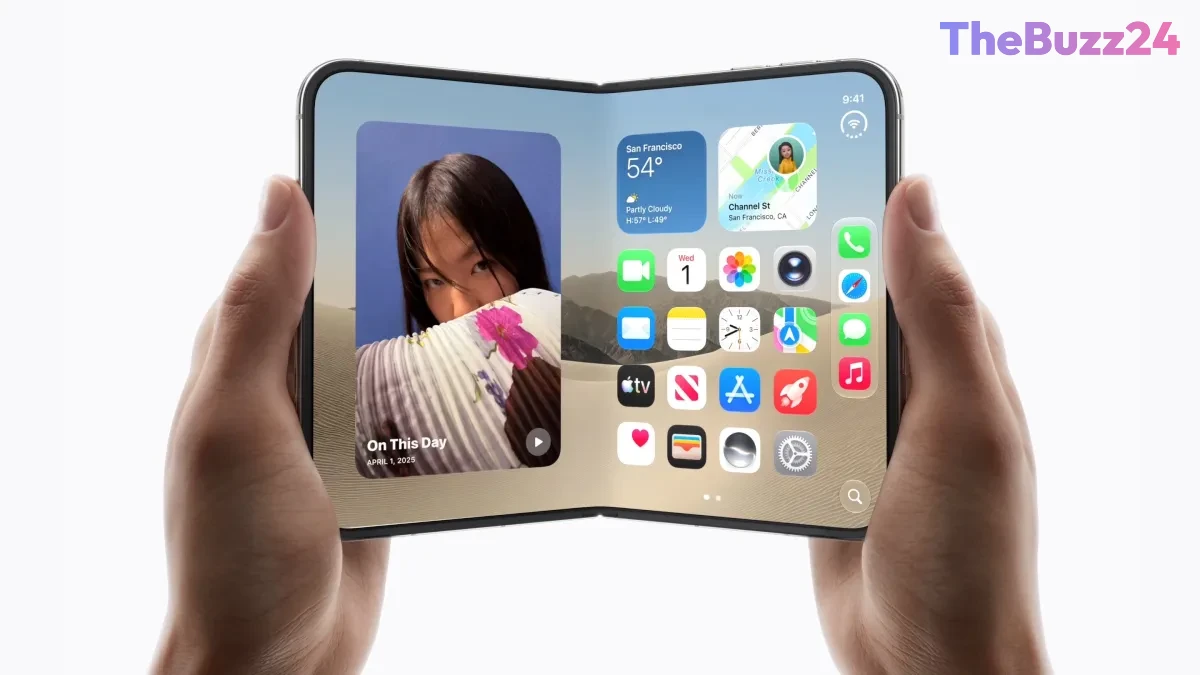
Apple’s Foldable iPhone Duo: A Bold Shift in Form, Function, and Digital Habits
Apple’s long-anticipated foray into foldable devices has arrived with the iPhone Duo, a device that challenges the established design principles of traditional flagship smartphones. Priced around the $2,000 threshold, the hardware presents a dramatic departure from standard rectangular handsets such as the iPhone Pro Max series. Instead of prioritizing endless vertical screen space, the Duo introduces a squat, compact silhouette that unfolds into a mini-tablet layout, pushing iOS users into an entirely new interaction paradigm.
From a hardware standpoint, the device proves unexpectedly resilient. Despite historical anxieties regarding the structural integrity of folding glass, the Duo features a robust build with an IP68 rating, delivering significant protection against both water and dust. The interior folding display incorporates a matte, nano-texture coating that effectively minimizes glare, paired with an engineered hinge that keeps the central crease virtually imperceptible during daily operations. The compact exterior makes it remarkably pocket-friendly, resisting everyday drops and pressure far better than early generations of foldable competitors.
However, pioneering a new form factor involves noticeable compromises. Most prominent among them is the absence of Face ID, replaced instead by a capacitive Touch ID sensor. For consumers accustomed to seamless facial authentication, returning to finger-placement verification creates friction during transactions like Apple Pay or instant app logins. Furthermore, the camera hardware is noticeably scaled back compared to top-tier Pro models, offering a standard dual-lens system without dedicated telephoto capabilities or pro-tier RAW imaging codecs. Early software adoption also shows growing pains; several third-party applications still display letterboxed borders on the outer screen, and certain heavy web services experience occasional rendering and stability hiccups.
Yet, the true differentiator of the iPhone Duo lies in how it subtly reshapes user behavior. When closed, the reduced external display naturally discourages prolonged, mindless scrolling on social feeds and casual applications. Unfolding the device acts as a deliberate gesture reserved for focused productivity, video streaming, or side-by-side app multitasking. By transforming the smartphone from a constant digital sponge into an intentional workspace, Apple’s foldable demonstrates that the future of mobile design may not just be about larger screens, but about smarter engagement.
Key Takeaways
- The iPhone Duo represents Apple's entry into the foldable market, combining a compact closed footprint with a wider, glare-resistant unfolded display.
- Hardware trade-offs include the omission of Face ID in favor of Touch ID, along with a dual-camera system that foregoes advanced telephoto capabilities.
- The physical design encourages more intentional device usage, reducing reflexive social media scrolling on the exterior screen.
Editor’s Analysis & Impact
Apple’s entrance into the foldable category validates a hardware form factor that competitors spent years refining. While traditional smartphones have plateaued in both physical novelty and year-over-year performance jumps, foldables create a distinct premium category capable of revitalizing consumer upgrade cycles. The decision to omit Face ID and high-end camera sensors likely stems from internal volume constraints and thermal management, but it also establishes clear room for future product iterations. By delivering an IP68 dust-resistant hinge and an unobtrusive display crease, Apple has set a formidable engineering benchmark for the foldable segment. The long-term commercial success of the Duo will hinge on developer momentum in redesigning applications for split-screen workflows, potentially cementing foldables as a mainstream computing format rather than a luxury niche.
Frequently Asked Questions
Q: Does the iPhone Duo support Face ID?
A: No. The iPhone Duo replaces Face ID with a physical Touch ID sensor for biometric authentication, requiring users to manually verify with a fingerprint for unlocks and payment processing.
Q: How durable is the iPhone Duo's folding display?
A: The device features an IP68 rating for water and dust resistance, making it significantly more resilient to particulate damage than many earlier foldables, and utilizes an interior nano-texture matte screen with an almost invisible crease.
Q: Are regular iPhone apps compatible with the foldable layout?
A: Yes, standard iOS apps run on the device; however, applications that have not yet been updated for the Duo's unique dimensions may display black bars on the sides when the phone is folded until developers issue optimized updates.
AI Disclosure: This article is based on verified data and official reports. Our Team and AI have cross-referenced every financial detail with primary sources to ensure total accuracy.
More from this Category