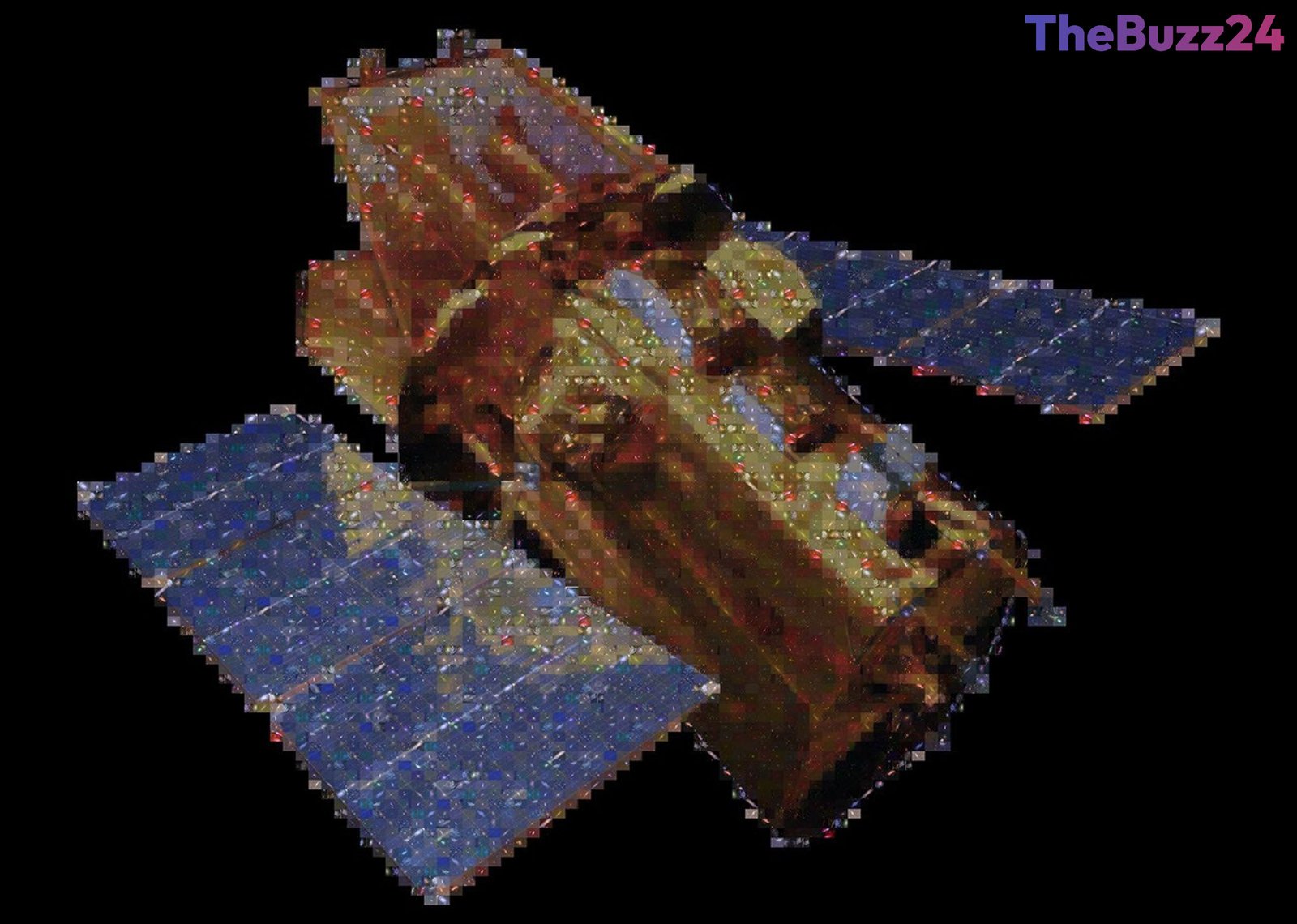
NASA’s Legendary Swift Observatory De-Orbits After 22 Years of Cosmic Discovery
After more than two decades of groundbreaking astronomical observations, NASA’s Neil Gehrels Swift Observatory officially ended its mission on November 4, 2026. The satellite re-entered Earth’s atmosphere at approximately 7:39 a.m. EST, burning up over the North Sumatra region of Indonesia. Its descent marks the conclusion of a highly successful 22-year tenure dedicated to studying the most violent and rapid energy releases in the universe.
Launched to monitor high-energy cosmic phenomena, Swift was equipped with a versatile suite of scientific instruments, including gamma-ray, X-ray, and ultraviolet/optical telescopes. Working in tandem, these instruments allowed researchers to detect and analyze gamma-ray bursts and extreme stellar explosions in unprecedented detail. Over its lifespan, the space telescope captured hundreds of thousands of images, providing pivotal data on black hole formations, supernovae, and cosmic radiation.
The satellite’s operational life came to an accelerated end due to heightened solar activity during the recent solar maximum, which increased atmospheric drag and hastened orbital decay. Despite an ambitious effort to execute an orbit-boosting rescue maneuver, technical teams were unable to elevate the spacecraft to a higher, safe altitude.
While the physical observatory burned upon atmospheric re-entry, its scientific legacy remains intact. Decades of archived observation data will continue to serve as a vital resource for astrophysicists worldwide, shaping future space exploration projects and deep-space observation missions for generations to come.
Key Takeaways
- NASA's Neil Gehrels Swift Observatory completed its 22-year mission, re-entering Earth's atmosphere over Indonesia on November 4, 2026.
- Increased atmospheric drag caused by recent solar maximum activity accelerated the satellite's orbital decay, rendering rescue attempts unsuccessful.
- The multi-instrument space telescope was vital in advancing global understanding of gamma-ray bursts and high-energy cosmic explosions.
Editor’s Analysis & Impact
The retirement of the Neil Gehrels Swift Observatory marks the end of a pivotal era for high-energy astrophysics while highlighting the growing impact of space weather on low-Earth orbit satellite sustainability. Swift’s 22-year tenure delivered invaluable insights into gamma-ray bursts and cosmic phenomena, establishing a foundation for modern multi-messenger astronomy. However, its orbital decay driven by solar maximum activity underscores the operational vulnerabilities created by solar cycles. As space agencies plan future deep-space observatories, integrating robust propulsion systems and adaptive orbital maintenance strategies will be essential to protect high-value scientific assets from unexpected atmospheric expansion.
Frequently Asked Questions
Q: What was the main purpose of the Neil Gehrels Swift Observatory?
A: The Swift Observatory was designed to detect and study high-energy cosmic events, particularly gamma-ray bursts and rapid space explosions, using a combination of gamma-ray, X-ray, and ultraviolet/optical telescopes.
Q: Why did the Swift satellite re-enter Earth's atmosphere?
A: Increased solar activity during the solar maximum expanded Earth's upper atmosphere, creating extra drag that accelerated the spacecraft's orbital decay beyond what rescue maneuvers could correct.
Q: Where did the Swift satellite fall?
A: The satellite re-entered the atmosphere and burned up over the North Sumatra region of Indonesia on November 4, 2026.
AI Disclosure: This article is based on verified data and official reports. Our Team and AI have cross-referenced every financial detail with primary sources to ensure total accuracy.
More from this Category