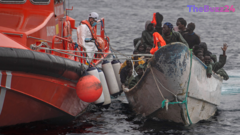
Tragedy Off Senegal Coast Claims Dozens of Lives as Migrant Atlantic Crossings Surge
A devastating maritime incident off the coast of Senegal has left at least 34 people dead after a wooden boat carrying migrants capsized. The vessel went down in the waters between the capital city of Dakar and the northern hub of Saint-Louis while attempting the perilous journey toward Spain’s Canary Islands. Local authorities confirmed that only a single survivor has been successfully rescued thus far, while rescue teams continue combing the area to determine the exact number of individuals still missing.
President Bassirou Diomaye Faye publicly extended his condolences to the bereaved families and issued a stern warning urging citizens to avoid risking their lives on dangerous marine voyages. In a public statement, the administration committed to stepping up law enforcement operations aimed at dismantling the human-smuggling rings that facilitate these unauthorized departures. The tragedy underscores a broader, persistent crisis along the West African migration corridor, where thousands continue to brave the Atlantic despite staggering fatality rates.
Advocacy organizations tracking the route estimate that roughly 21 individuals lose their lives for every 100 people who successfully reach the Canary Islands. The Atlantic passage has increasingly become a primary gateway for individuals seeking entry into Europe, driven by a combination of high domestic youth unemployment, economic pressures, and limited local opportunities. Meanwhile, security forces in the region remain on high alert, recently intercepting additional vessels and grappling with mounting pressures as authorities strive to address the root socioeconomic causes of irregular migration.
Key Takeaways
- At least 34 people died after a migrant boat capsized off the coast of Senegal.
- The vessel was headed toward Spain's Canary Islands, a major entry point for West African migrants.
- Senegalese leadership has pledged to crack down on human-smuggling networks and create domestic economic opportunities.
Editor’s Analysis & Impact
The ongoing migrant crisis along the West Atlantic route highlights the severe socioeconomic challenges facing West Africa, particularly high youth unemployment and limited upward mobility. As European nations tighten borders in the Mediterranean, desperate travelers increasingly rely on the Atlantic route—one of the most dangerous maritime paths in the world. For the administration under President Bassirou Diomaye Faye, combating this crisis requires a delicate two-pronged approach: aggressively dismantling transnational smuggling syndicates while rapidly accelerating domestic job creation. Without substantial economic reform and expanded local prospects for young populations, deterrence strategies alone are unlikely to halt the flow of desperate departures toward European shores.
Frequently Asked Questions
Q: Where did the migrant boat sink?
A: The boat sank off the coast of Senegal, specifically between the capital city of Dakar and the northern city of Saint-Louis.
Q: What is the primary destination for these migrant boats?
A: The vessels are typically attempting to reach Spain's Canary Islands, which serve as a major gateway into Europe from West Africa.
Q: What factors are driving people to leave Senegal?
A: Key driving factors include high youth unemployment, limited local employment opportunities, family pressures, and the influence of established migration networks.
AI Disclosure: This article is based on verified data and official reports. Our Team and AI have cross-referenced every financial detail with primary sources to ensure total accuracy.
More from this Category