Advancing Regenerative Medicine: 3D Bioprinting Breakthroughs Aboard the ISS
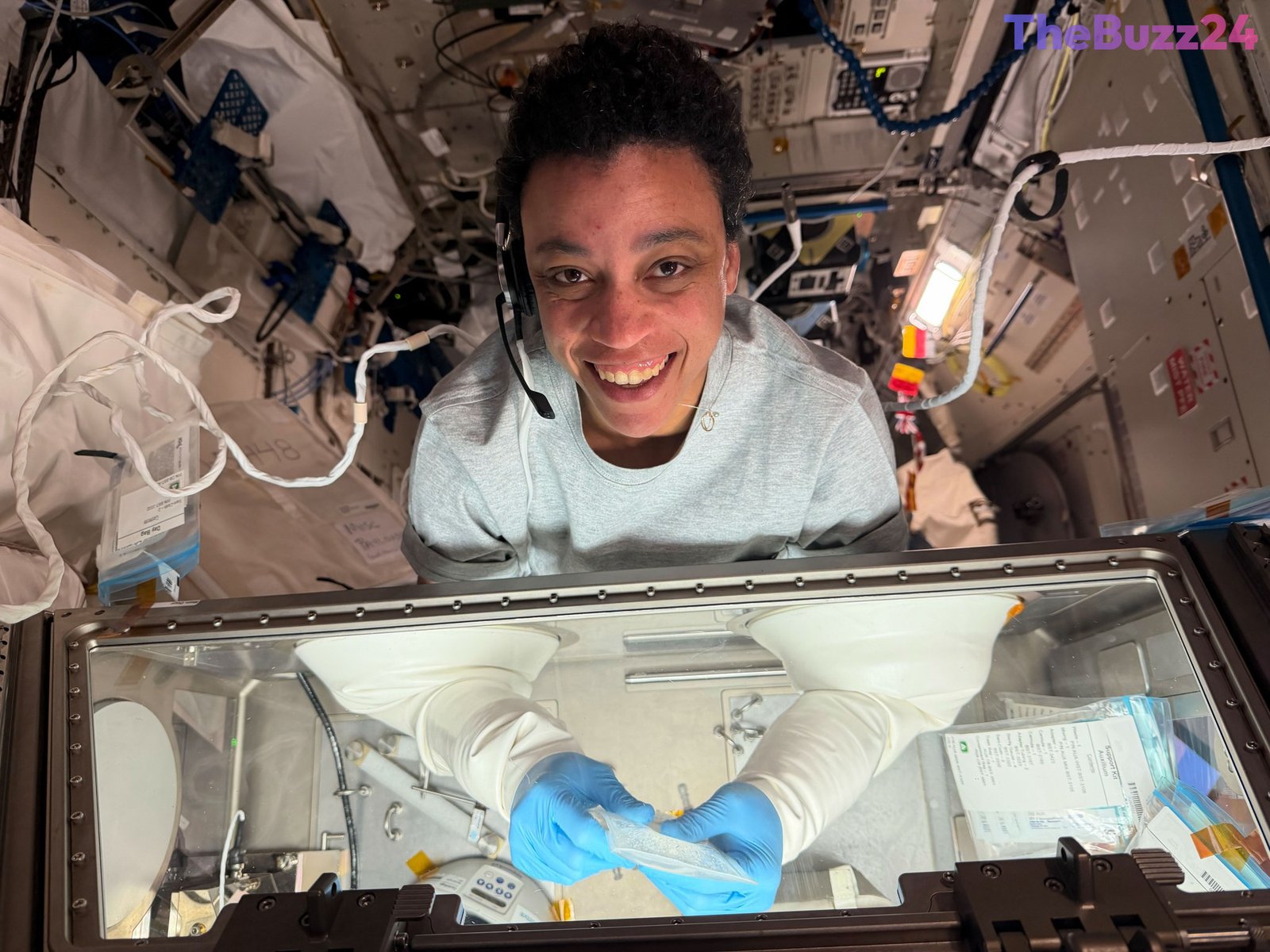
NASA astronaut and Expedition 75 flight engineer Jessica Watkins has successfully conducted a series of advanced biological experiments within the International Space Station’s Kibo laboratory module. Working inside the station’s specialized Life Science Glovebox, Watkins performed precise procedures involving the mixing of living cell samples with a proprietary bioink, which was then loaded into a specialized cartridge for further analysis.
This research is part of the InSPA-Auxilium Bioprinter-Cell Printing investigation, a project dedicated to exploring the potential of 3D bioprinting in a microgravity environment. By removing the constraints of Earth’s gravity, researchers aim to produce cartilage tissue of significantly higher quality and structural integrity than what is currently achievable through ground-based manufacturing methods.
The implications of this study are far-reaching for both medical science and future space exploration. Successful biomanufacturing of cartilage could lead to revolutionary treatments for patients suffering from joint degradation and other orthopedic conditions on Earth. Furthermore, the ability to print biological tissues in space provides a critical capability for maintaining the health of astronauts during long-duration missions, where medical supplies are limited and resupply missions are not feasible.
Key Takeaways
- Astronaut Jessica Watkins utilized the Life Science Glovebox on the ISS to conduct advanced 3D bioprinting experiments.
- The InSPA-Auxilium investigation focuses on creating higher-quality cartilage tissue by leveraging the unique properties of microgravity.
- The research aims to improve orthopedic medical treatments on Earth and support the health of crews on long-term space missions.
Editor’s Analysis & Impact
The InSPA-Auxilium Bioprinter-Cell Printing investigation represents a significant milestone in the intersection of space technology and regenerative medicine. By utilizing the microgravity environment of the International Space Station, researchers are overcoming the physical limitations that often lead to structural defects in Earth-based bioprinting. This research is not merely an academic exercise; it is a foundational step toward ‘on-demand’ medical manufacturing. As space agencies look toward Mars and beyond, the ability to print biological materials will be essential for crew survival. Simultaneously, the commercial potential for high-fidelity tissue engineering could disrupt the global orthopedics market, offering new solutions for chronic conditions that currently rely on invasive surgeries or synthetic implants. The future of this technology suggests a shift toward space-based manufacturing hubs that serve both orbital and terrestrial medical needs.
Frequently Asked Questions
Q: Why is microgravity better for 3D bioprinting than Earth's gravity?
A: On Earth, gravity can cause cells to settle or collapse during the printing process, often requiring the use of structural scaffolds that may not be ideal. In microgravity, cells can be suspended more effectively, allowing for the creation of more complex and higher-quality tissue structures without the same gravitational interference.
Q: What are the primary medical applications for this bioprinted cartilage?
A: The primary goal is to develop advanced treatments for cartilage repair, which could benefit patients suffering from osteoarthritis, sports injuries, or other degenerative joint diseases that currently have limited long-term treatment options.
AI Disclosure: This article is based on verified data and official reports. Our Team and AI have cross-referenced every financial detail with primary sources to ensure total accuracy.
More from this Category