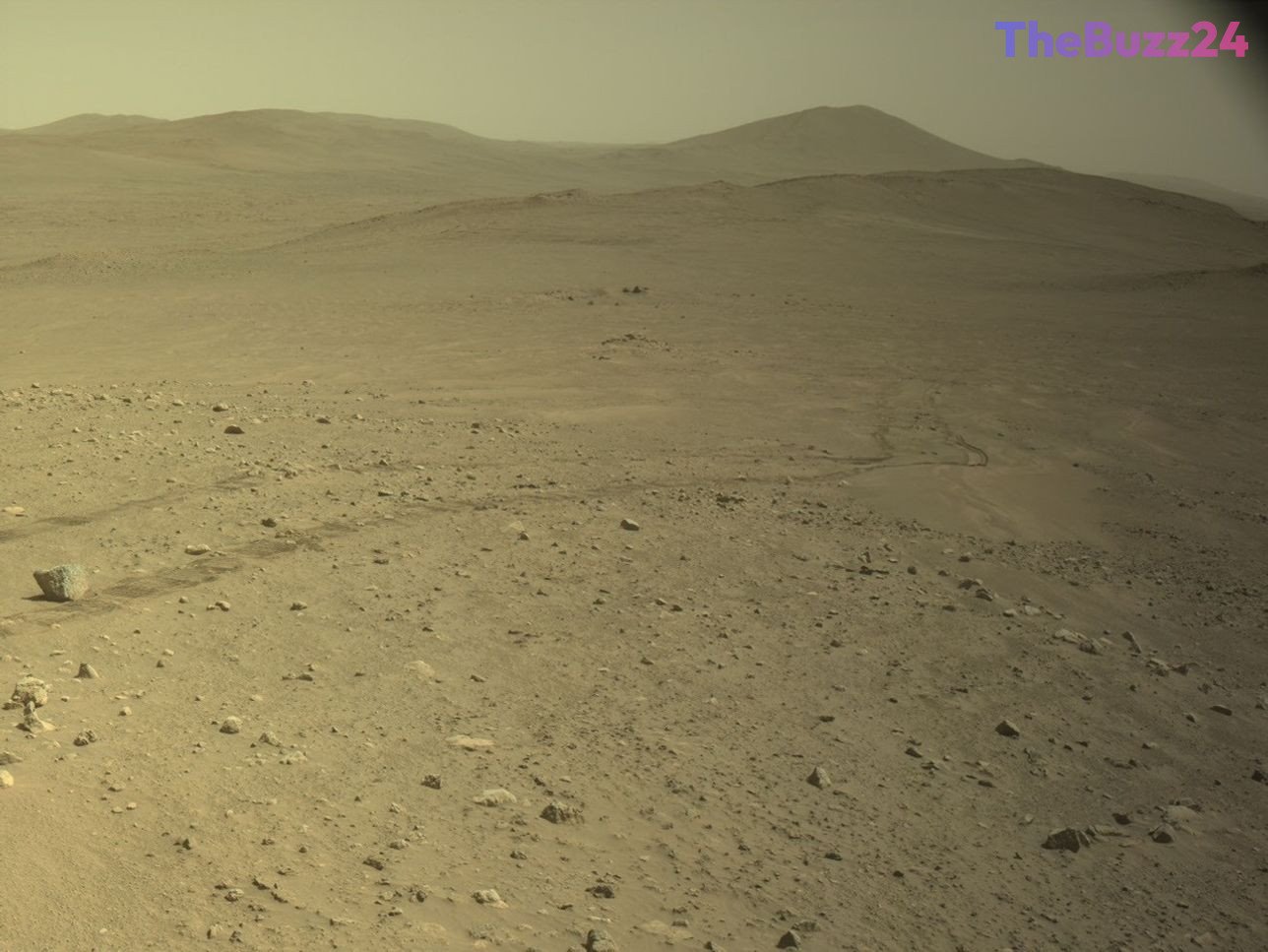
Perseverance Rover Shatters Distance Record on the Martian Surface
The Perseverance rover has officially etched its name into history, setting a new record for the longest distance ever traveled by a vehicle on another celestial body. On October 11, 2026, the rover’s odometer surpassed 45.22 kilometers (28.10 miles), marking a significant milestone in interplanetary exploration. This achievement was confirmed as the rover navigated the complex terrain of the Martian surface, surpassing previous records held by earlier robotic explorers.
Reaching this milestone was not a straightforward journey. While the rover was within striking distance of the record months ago, mission operators prioritized scientific discovery, pausing to conduct detailed rock abrasions and proximity analysis on ancient outcrops. To facilitate this record-breaking drive, the engineering team implemented a series of sophisticated software and hardware optimizations. These included raising the rover’s tilt limit to 24 degrees, refining braking protocols to avoid hazards, and updating flight software to better manage wheel slip on uneven bedrock.
Central to this success is the implementation of onboard Global Localization (GBLC), a navigation system that allows the rover to determine its position without the benefit of GPS. By utilizing a high-speed commercial processor—originally intended for the Ingenuity helicopter—the rover can compare ground-level imagery with orbital data to map its path autonomously. Despite the challenges posed by the harsh radiation environment, which can cause memory errors, the team developed robust software-based solutions to ensure the system remains operational.
As Perseverance continues its ascent along the crater rim, the mission is shifting toward even greater levels of autonomy. By integrating generative artificial intelligence to assist in path planning, the team aims to maximize the rover’s efficiency. These advancements not only extend the operational life and range of current missions but also provide a blueprint for future autonomous exploration across the solar system.
Key Takeaways
- Perseverance set a new record for the longest distance driven on another planet, exceeding 45.22 kilometers.
- The mission team successfully implemented autonomous navigation upgrades, including Global Localization (GBLC), to allow for longer, more efficient drives.
- Engineers overcame radiation-related hardware risks through innovative software-based hardening, paving the way for future AI-assisted exploration.
Editor’s Analysis & Impact
The achievement of the Perseverance rover represents a paradigm shift in autonomous robotics. By successfully repurposing commercial, non-hardened processors for critical navigation tasks in a high-radiation environment, the mission has demonstrated that complex AI and advanced computing can be deployed effectively in deep space. This move away from traditional, heavy-duty radiation-hardened hardware toward software-defined resilience is likely to reduce costs and increase the capabilities of future interplanetary missions. Furthermore, the integration of generative AI for path planning suggests that future rovers will require significantly less human intervention, allowing for more ambitious scientific surveys. This milestone is not merely a record of distance; it is a validation of the next generation of autonomous systems that will be essential for future crewed missions to Mars and beyond.
Frequently Asked Questions
Q: How does the rover navigate without GPS?
A: The rover uses a system called Global Localization (GBLC), which compares ground-level imagery captured by its cameras with existing orbital maps to determine its precise location.
Q: Why was the rover's tilt limit increased?
A: Engineers increased the tilt limit to 24 degrees after extensive simulations, allowing the rover to safely traverse steeper and more rugged terrain that it previously would have avoided.
AI Disclosure: This article is based on verified data and official reports. Our Team and AI have cross-referenced every financial detail with primary sources to ensure total accuracy.
More from this Category