California Reassesses Labor History Amidst Allegations Against Cesar Chavez
California is currently navigating a significant cultural and political transition as the state re-evaluates the historical legacy of labor activist Cesar Chavez. Once widely celebrated as the primary architect of the American farmworkers’ movement, Chavez is now facing intense scrutiny following serious allegations of sexual misconduct. These claims, which include testimony from long-time collaborator Dolores Huerta, have sparked a statewide movement to reconsider the public honors, monuments, and holidays previously dedicated to his name.
The allegations have forced a difficult reckoning regarding the history of the farm labor movement. Huerta, who worked alongside Chavez for decades, has publicly accused him of sexual assault, noting that she remained silent for years out of fear that speaking out would undermine the progress of the labor cause. Her testimony, supported by additional accounts from women who allege they were molested by Chavez as minors during the 1970s, has prompted a swift legislative response. California lawmakers recently voted to rename the state holiday previously dedicated to Chavez to ‘Farmworkers Day,’ a move intended to decouple the identity of the labor movement from a single, increasingly controversial figure.
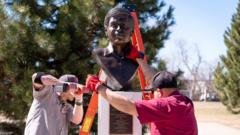
This shift is also manifesting in public spaces across the state, where communities are grappling with how to reconcile historical contributions with modern standards of accountability. From the removal of statues to the modification of murals, the public is debating how to honor the movement without centering it on a figure now associated with abuse. Some artists are replacing existing murals with tributes to other activists, while others advocate for preserving the works as historical artifacts that can be contextualized to better represent the collective, diverse efforts of all farmworkers, including those of Filipino and other backgrounds.
Ultimately, this ongoing discourse reflects a broader effort to ensure that the history of labor rights in the United States remains inclusive and representative of the families who built it. As public officials and citizens navigate this complex period of reflection, the focus has shifted toward institutionalizing the collective contributions of the workforce rather than centering the narrative on any single individual. The debate underscores the persistent tension between historical recognition and the modern demand for institutional integrity.
Key Takeaways
- California has renamed the state holiday previously dedicated to Cesar Chavez to 'Farmworkers Day' following serious allegations of sexual misconduct.
- Prominent labor activist Dolores Huerta and other accusers have come forward with claims of sexual assault and abuse dating back to the 1970s.
- The state is shifting its focus from individual-centric historical narratives to a more inclusive recognition of the collective contributions of all farmworkers.
Editor’s Analysis & Impact
The re-evaluation of Cesar Chavez’s legacy represents a broader societal trend where historical figures are increasingly judged through the lens of contemporary ethics and accountability. This shift poses a significant challenge for institutions that have built their branding and historical narratives around specific icons. By moving toward a ‘collective’ model of history, California is attempting to preserve the integrity of the labor movement while distancing it from the personal failings of its former leader. This transition will likely serve as a blueprint for other states and organizations currently grappling with how to handle historical monuments and public honors in the wake of modern revelations. The long-term implication is a more critical, nuanced approach to historical education that prioritizes the movement over the individual, potentially leading to a more diverse and representative public history.
Frequently Asked Questions
Q: Why did California rename the Cesar Chavez state holiday?
A: The state renamed the holiday to 'Farmworkers Day' to distance the labor movement's identity from Cesar Chavez following serious allegations of sexual misconduct and abuse.
Q: What is the current approach to public art and monuments dedicated to Chavez?
A: Communities are taking varied approaches, ranging from removing statues and replacing murals to preserving existing works as historical artifacts that are then contextualized to highlight the collective efforts of all farmworkers.
AI Disclosure: This article is based on verified data and official reports. Our Team and AI have cross-referenced every financial detail with primary sources to ensure total accuracy.
More from this Category