Amazon’s Freight Service Expansion Rattles Trucking Stocks
Amazon is significantly expanding its logistics operations by opening its less-than-truckload (LTL) shipping service to all businesses, a move that sent shockwaves through the freight industry. Previously, this service was primarily for companies shipping goods into Amazon’s vast network of warehouses and fulfillment centers. Now, the e-commerce giant will offer nationwide LTL delivery to any destination, marking a substantial step in its ambition to become a major player in third-party logistics.
The announcement led to a sharp decline in the stock prices of several prominent freight carriers. Old Dominion Freight Line saw its shares drop by 5%, while ArcBest experienced a 4% dip. Saia and XPO Logistics also faced downturns, sliding 3% and 5% respectively. Even FedEx Freight, a recently spun-off entity, saw its stock fall by approximately 7% following the news.
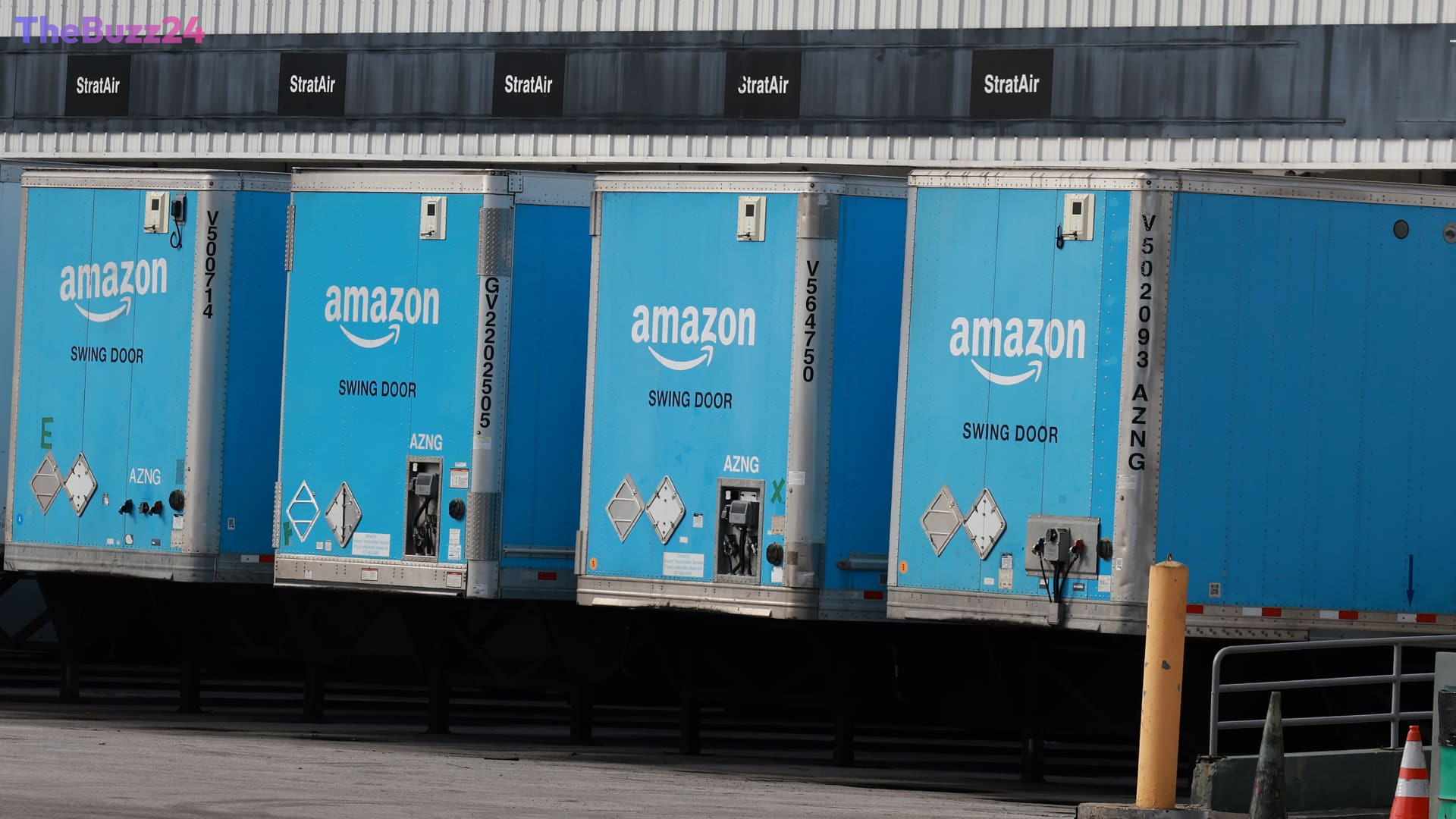
This strategic expansion is part of Amazon’s broader initiative, dubbed Amazon Supply Chain Services. The company has been steadily building an extensive logistics infrastructure, including a large fleet of cargo planes, tens of thousands of delivery vans, and a substantial freight operation comprising 80,000 trailers and 24,000 containers. This allows Amazon to reduce its reliance on external carriers and enhance its own delivery capabilities, now extending these assets to external commercial clients.
“The feedback from Amazon selling partners using our LTL service was clear: the technology, visibility, and reliability were exactly what they needed — and they wanted to use it more broadly,” stated Jim Ruiz, director of Amazon Freight. “Now Amazon LTL can move your freight wherever it needs to go, servicing destinations nationwide for businesses of all sizes.” This move follows Amazon’s recent unveiling of an “end-to-end” supply chain service, which also impacted the stock values of competitors like UPS and FedEx.
Key Takeaways
- Amazon has opened its less-than-truckload (LTL) shipping service to all businesses nationwide, not just its own suppliers.
- The expansion caused significant stock price drops for major freight carriers including Old Dominion, ArcBest, Saia, XPO Logistics, and FedEx Freight.
- This move is part of Amazon's growing strategy to offer comprehensive supply chain and logistics services to external clients.
Editor’s Analysis & Impact
Amazon’s aggressive push into the third-party logistics market, particularly with its LTL offering, represents a significant disruption for established freight companies. By leveraging its immense infrastructure and technological capabilities, Amazon is not only optimizing its own operations but also creating a formidable competitor for traditional carriers. The market reaction underscores the perceived threat to incumbent players’ market share and profitability. This expansion signals a broader trend of tech giants entering and reshaping traditional industries, forcing established businesses to innovate rapidly or risk being outmaneuvered. The long-term implications could include increased price competition, enhanced service offerings for businesses, and a fundamental shift in the logistics landscape.
Frequently Asked Questions
Q: What is less-than-truckload (LTL) shipping?
A: Less-than-truckload (LTL) shipping is a method where multiple customers' smaller shipments are consolidated onto a single truck trailer. This is an efficient option for businesses that don't have enough freight to fill an entire truck, making it more cost-effective than full truckload (FTL) shipping.
Q: Why did Amazon expand its LTL service to all businesses?
A: Amazon expanded its LTL service to all businesses to leverage its existing logistics infrastructure, generate new revenue streams, and further establish itself as a comprehensive supply chain provider. The company cited demand from its selling partners for broader access to its reliable and technologically advanced shipping solutions.
Q: What is Amazon Supply Chain Services?
A: Amazon Supply Chain Services is a program under which Amazon offers various logistics and freight solutions to external businesses. This includes its newly expanded LTL shipping, warehousing, fulfillment, and other end-to-end supply chain management capabilities, aiming to provide a seamless experience for clients.
AI Disclosure: This article is based on verified data and official reports. Our Team and AI have cross-referenced every financial detail with primary sources to ensure total accuracy.
More from this Category