Antarctica’s ‘Grinning Skull’ Island Reveals Accelerating Ice Melt
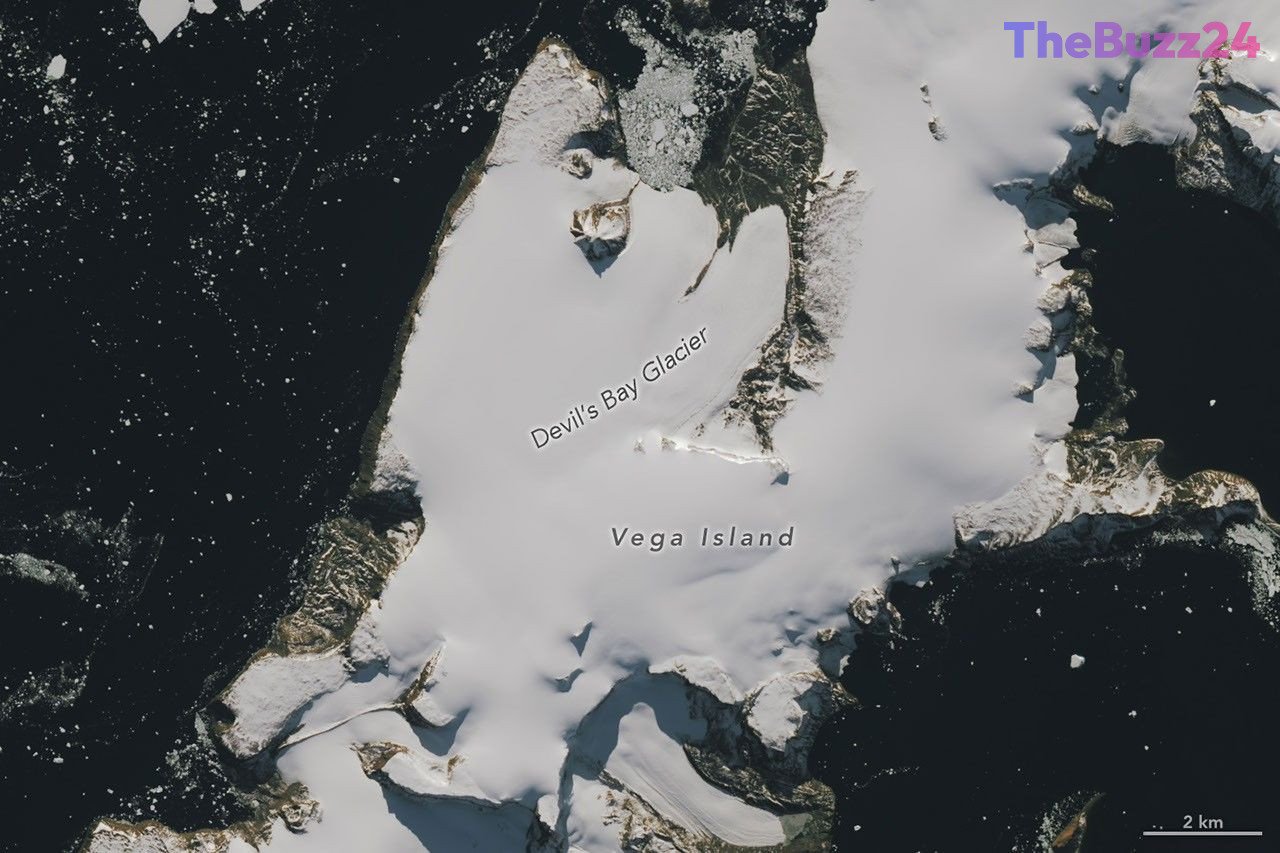
Shrouded in ice within the remote Weddell Sea, Vega Island presents a striking and somewhat eerie spectacle. This isolated landmass, situated east of the Antarctic Peninsula, features a unique combination of ice, rock outcrops, and glacial moraines that collectively form the appearance of a smirking skull in profile, seemingly gazing towards nearby Devil Island.
Recent satellite observations, captured by the Operational Land Imager (OLI) on Landsat 9, highlight a significant transformation in Vega Island’s icy visage. Images from March 22, 2025, and October 10, 2026, reveal a stark contrast: the typical snow cover of austral autumn gives way to large expanses of exposed, darker ice in spring. This absence of snow and the visibility of bare ice are attributed to above-average temperatures during the 2026 winter, particularly in June. Glaciologist Mauri Pelto of Nichols College noted that the winter season offered “no treat for these glaciers,” with limited new snow accumulation further diminished by sublimation and wind scouring.
The exposure of bare ice carries critical implications for the island’s future. Darker ice surfaces absorb more solar energy than reflective snow, poised to accelerate melting as the days lengthen and temperatures rise. Pelto warned that without a fresh layer of spring snow, the “skull” will “weather away,” leading to a “changing jawline and expanding eye socket.” This accelerated melt compounds a long-term trend; comprehensive mapping dating back to 1982, also aided by Landsat imagery, cataloged 29 glaciers on Vega Island, many of which have shown consistent ice loss and increased exposed bedrock in recent decades, including the closely monitored Devil’s Bay Glacier since 1998-1999. Beyond its geological significance, Vega Island holds a place in history as a beacon of hope during the harrowing Swedish Antarctic Expedition of 1901-1903, where two isolated groups of explorers reunited at Cape Well-met, off the “forehead” of the island’s skull-like formation, before their eventual rescue.
Key Takeaways
- Vega Island in Antarctica displays a natural ice and rock formation resembling a grinning skull, a striking visual in the Weddell Sea.
- Recent satellite imagery from Landsat 9 shows significant areas of bare ice due to above-average winter temperatures and reduced snow cover, indicating accelerated glacial melt.
- Glaciers on Vega Island have been in decline for decades, with current conditions suggesting further rapid ice loss, which could alter the island's distinctive features.
Editor’s Analysis & Impact
The visible changes on Vega Island serve as a stark indicator of the accelerating impacts of climate change in polar regions. While a single island’s melt may not directly impact global markets, it underscores the broader environmental shifts affecting Earth’s cryosphere. The increased exposure of bare ice, a consequence of warmer winters and reduced snow, creates a feedback loop where darker surfaces absorb more solar radiation, further accelerating melt. This phenomenon, observed globally, contributes to sea-level rise and alters delicate polar ecosystems. The long-term decline of glaciers on Vega Island, coupled with recent rapid changes, highlights the urgency for continued satellite monitoring and robust climate action to mitigate these profound environmental transformations.
Frequently Asked Questions
Q: What is the unique feature of Vega Island mentioned in the article?
A: Vega Island is noted for a natural formation of ice, rock outcrops, and glacial moraines that, when viewed in profile, strikingly resembles a grinning skull.
Q: Why is there more bare ice visible on Vega Island recently?
A: Recent observations indicate increased bare ice due to above-average winter temperatures in 2026, particularly in June, which led to limited new snow accumulation and increased loss of existing snow through sublimation and wind scouring.
Q: What are the implications of bare ice for the glaciers on Vega Island?
A: Bare ice is darker than snow and absorbs more solar energy, which accelerates the melting process as temperatures rise. This could lead to a more rapid decline of the island's glaciers and alter its distinctive skull-like features.
AI Disclosure: This article is based on verified data and official reports. Our Team and AI have cross-referenced every financial detail with primary sources to ensure total accuracy.
More from this Category