Atmospheric Ripples: How Super Typhoon Sinlaku Revealed Hidden Storm Dynamics
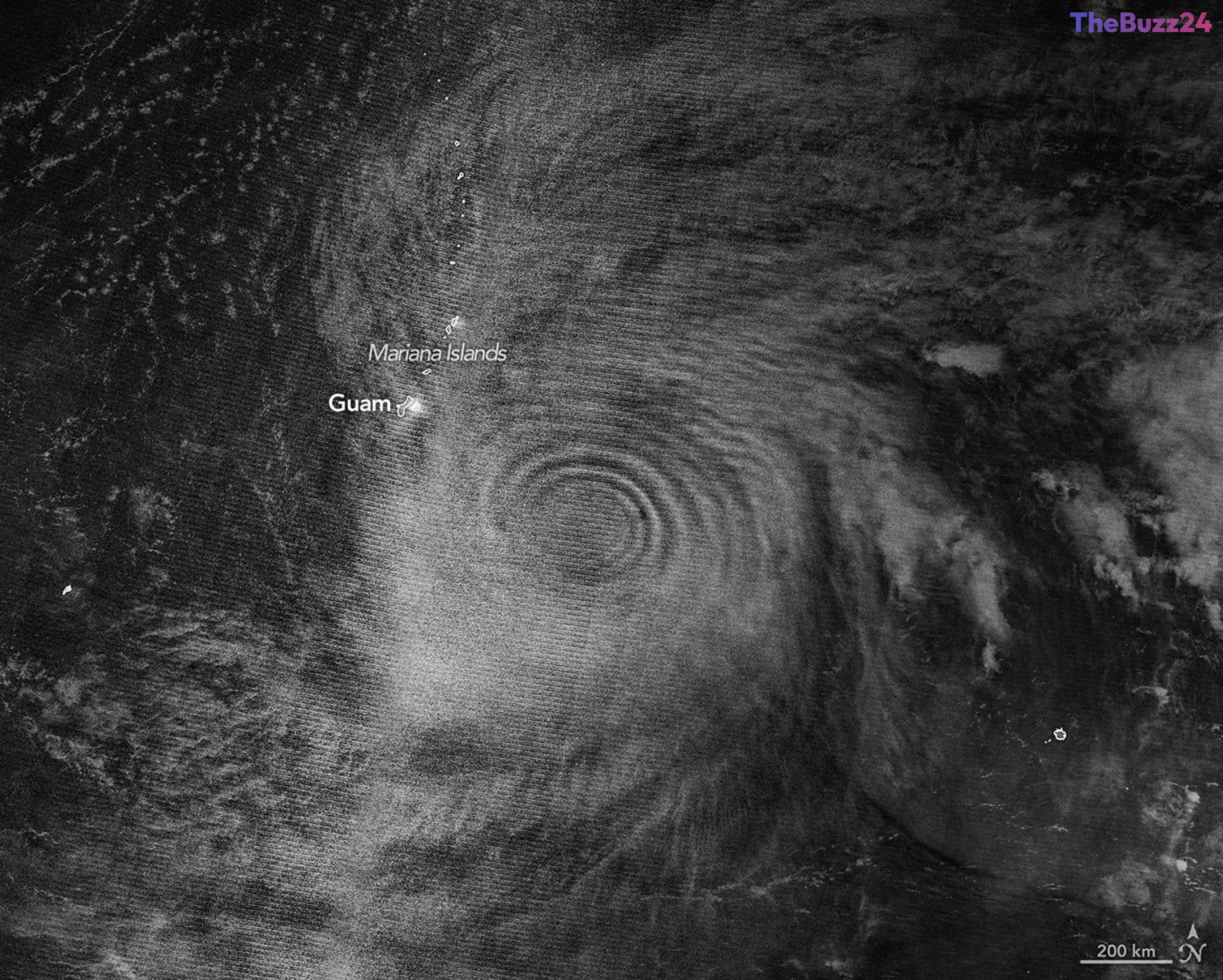
In mid-April 2026, Super Typhoon Sinlaku made headlines as it tore across the North Pacific, reaching ‘violent typhoon’ status—a classification comparable to a Category 5 hurricane. While the storm’s immediate impact on the Mariana Islands was characterized by intense rainfall and flooding, the cyclone also triggered a rare and fascinating phenomenon in the upper atmosphere. Satellite sensors captured clear evidence of atmospheric gravity waves radiating outward from the storm, appearing as concentric ripples in the mesosphere.
These gravity waves were made visible through mesospheric airglow, a process where atoms and molecules release energy absorbed from sunlight. As Sinlaku rapidly intensified from a Category 2 to a Category 5 storm, the massive release of latent heat near its eyewall created ‘hot towers’ of cumulonimbus clouds. These towers acted like a piston, pushing energy upward through the troposphere and into the stratosphere and mesosphere. Researchers noted that the preservation of these distinct ring-like patterns was likely aided by relatively calm stratospheric winds at the time.
Beyond the visual spectacle, the detection of these waves provides a new frontier for meteorology. Scientists are exploring whether monitoring these gravity waves can serve as a reliable indicator of a storm’s intensification, particularly when the system is over open water where traditional data is sparse. Furthermore, these waves have broader implications for global weather modeling and space weather, as they can influence stratospheric wind patterns and even disrupt satellite and radio communications by creating disturbances in the ionosphere.
As climate patterns shift, understanding the connection between intense tropical cyclones and the upper atmosphere is becoming increasingly critical. By integrating these high-altitude observations into modern weather models, forecasters hope to improve long-term climate predictions and enhance our ability to track the evolution of extreme weather events before they reach land.
Key Takeaways
- Super Typhoon Sinlaku generated rare atmospheric gravity waves that were visible as ripples in the mesosphere through airglow.
- These waves are driven by intense convection in the storm's eyewall, which pushes energy high into the upper atmosphere.
- Tracking these gravity waves could provide meteorologists with a new tool to predict the rapid intensification of tropical cyclones over the open ocean.
Editor’s Analysis & Impact
The study of atmospheric gravity waves represents a significant leap in how we monitor extreme weather. Historically, meteorologists have relied on surface-level data and tropospheric satellite imagery to track storm intensity. However, the ability to observe the ‘echoes’ of a storm in the mesosphere offers a vertical perspective that was previously underutilized. From a market and industry standpoint, this research is vital for the aerospace and telecommunications sectors. Since these gravity waves can cause ionospheric disturbances that interfere with satellite signals and radio communications, better predictive models are essential for maintaining global connectivity. As we move toward more frequent and intense tropical events, integrating these high-altitude observations into commercial and governmental weather forecasting will likely become a standard practice, driving demand for advanced infrared imaging and atmospheric sensing technologies.
Frequently Asked Questions
Q: What are atmospheric gravity waves?
A: Atmospheric gravity waves are oscillations in the air, similar to ripples on a pond, caused by the vertical displacement of air masses—in this case, by the intense convection of a tropical cyclone.
Q: Why are these waves important for weather forecasting?
A: They can act as a signature of a storm's intensification. By observing these waves, scientists can better understand how a storm is developing, even when it is far out at sea and away from traditional monitoring stations.
Q: Can these waves affect technology on Earth?
A: Yes. Gravity waves can reach the ionosphere and create disturbances that may interfere with satellite signals, GPS, and radio communications.
AI Disclosure: This article is based on verified data and official reports. Our Team and AI have cross-referenced every financial detail with primary sources to ensure total accuracy.
More from this Category