Atrocities in El-Fasher: Evidence Mounts of Crimes Against Humanity in Sudan
New investigations have revealed that the Rapid Support Forces (RSF) engaged in systematic crimes against humanity and ethnic cleansing during their protracted campaign to seize the city of El-Fasher in Sudan’s Darfur region. The siege, which lasted 18 months, stands as one of the most brutal chapters in the ongoing civil war between the RSF and the Sudanese Armed Forces. Survivors have provided harrowing accounts of murder, torture, sexual slavery, and the deliberate targeting of children, with evidence suggesting that many of these acts were motivated by the ethnic identity of the victims.
Researchers analyzed dozens of survivor testimonies, satellite imagery, and open-source video evidence to document the scale of the violence. The findings indicate that non-Arab communities, particularly the Zaghawa ethnic group, were specifically targeted by RSF fighters and associated militias. Reports describe a campaign of terror where civilians were subjected to forced displacement, imprisonment, and extreme physical violence. The documentation suggests that the severity and nature of these attacks may meet the legal threshold for genocide, as the violence extended beyond military objectives to include the systematic destruction of civilian life.
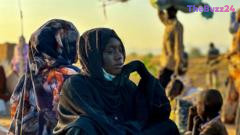
As the conflict continues to destabilize the region, the humanitarian toll has reached catastrophic levels. With over 14 million people displaced and millions facing acute hunger, the situation in Sudan is currently categorized as one of the world’s worst humanitarian crises. While the RSF leadership has previously claimed to be investigating reports of misconduct, they have consistently denied the scale of the atrocities described by international observers. Calls for an immediate ceasefire and the deployment of international protection forces are growing louder as the international community grapples with the mounting evidence of war crimes.
Key Takeaways
- The RSF is accused of committing crimes against humanity and ethnic cleansing during the 18-month siege of El-Fasher.
- Evidence suggests that children were deliberately targeted, and sexual violence was utilized as a weapon of war.
- The conflict has resulted in a massive humanitarian crisis, displacing 14 million people and leaving 28 million facing severe food insecurity.
Editor’s Analysis & Impact
The situation in Sudan represents a profound failure of international diplomacy and regional stability. The systematic nature of the violence in El-Fasher indicates that the conflict has devolved into an ethnic-based struggle, which significantly complicates any potential path toward a peaceful resolution. From a geopolitical perspective, the inability of global powers to enforce a ceasefire or provide meaningful protection for civilians suggests a weakening of international humanitarian norms. The long-term implications are dire: a generation of displaced Sudanese citizens, a shattered infrastructure, and the potential for the conflict to spill over into neighboring states. Future stability will require not only an immediate cessation of hostilities but also a robust, long-term accountability framework to address the war crimes that have fundamentally altered the social fabric of the Darfur region.
Frequently Asked Questions
Q: What is the primary cause of the conflict in El-Fasher?
A: The conflict is part of a broader power struggle between the Sudanese Armed Forces and the Rapid Support Forces, with the RSF specifically targeting El-Fasher to consolidate control over the Darfur region.
Q: Are there international efforts to address the violence in Sudan?
A: Yes, there is increasing international pressure for a ceasefire and calls for the deployment of an international force to protect civilians, though a definitive resolution remains elusive.
AI Disclosure: This article is based on verified data and official reports. Our Team and AI have cross-referenced every financial detail with primary sources to ensure total accuracy.
More from this Category