Supreme Court Affirms Birthright Citizenship, Rejects Trump’s Executive Order
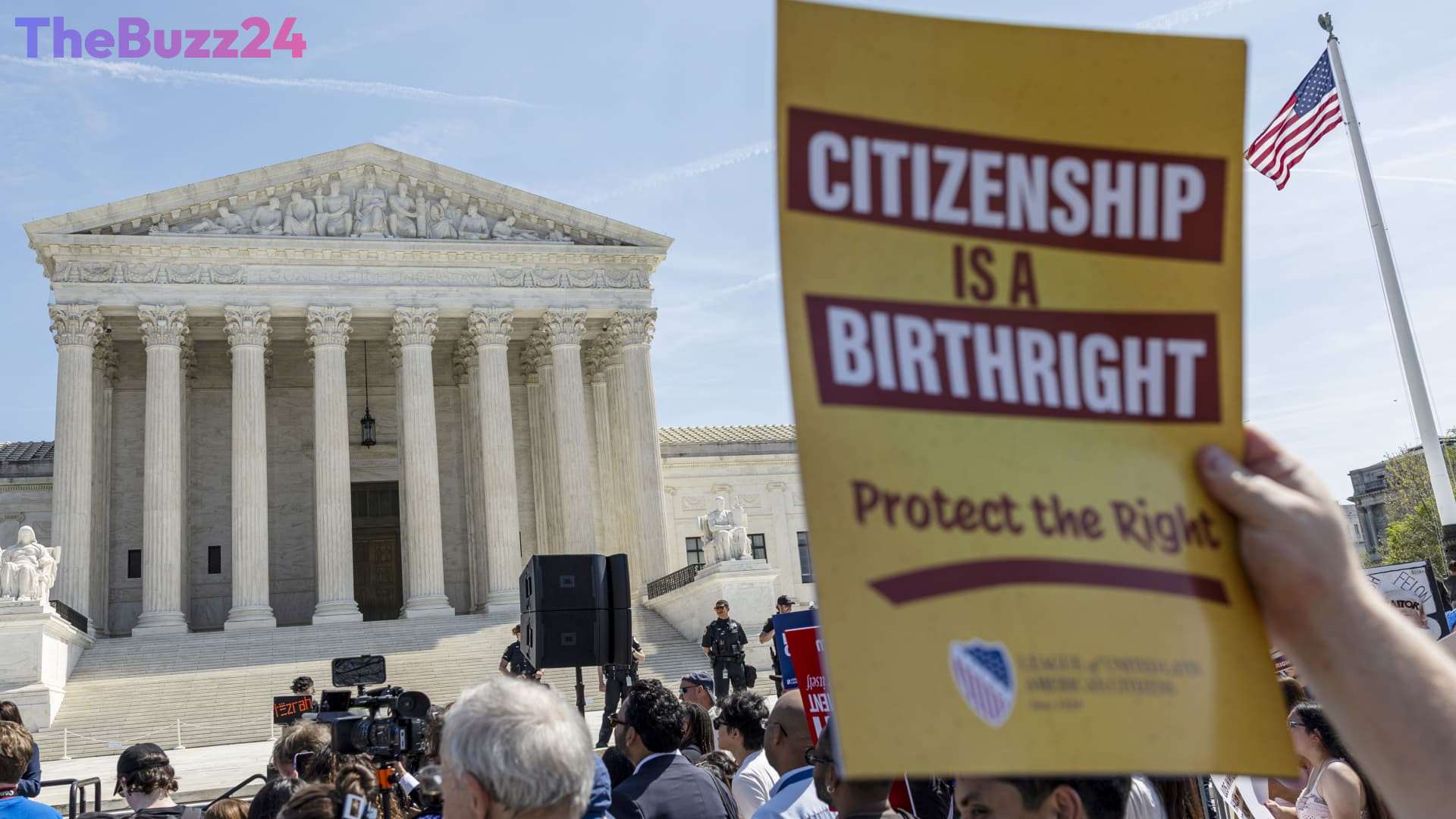
The United States Supreme Court has delivered a significant ruling, upholding the long-standing principle of birthright citizenship. This fundamental right dictates that individuals born within U.S. territory are automatically granted citizenship, irrespective of their parents’ immigration status. The decision effectively nullifies an executive order issued by former President Donald Trump, which had aimed to challenge this constitutional tenet for children born to non-citizen parents.
In the majority opinion, Chief Justice John Roberts articulated that children born in the United States to parents who are unlawfully or temporarily present are indeed ‘subject to the jurisdiction’ of the nation and are citizens at birth, as guaranteed by the Fourteenth Amendment’s Citizenship Clause. This clause, ratified in 1868, states that ‘All persons born or naturalized in the United States, and subject to the jurisdiction thereof, are citizens of the United States and of the State wherein they reside.’ The majority opinion saw concurrence from conservative Justice Amy Coney Barrett and the court’s three liberal justices: Elena Kagan, Sonia Sotomayor, and Ketanji Brown Jackson.
Adding a nuanced perspective, Justice Brett Kavanaugh suggested that while Trump’s executive order might not directly violate the Fourteenth Amendment, it did conflict with a federal statute enacted in 1940 concerning citizenship for those born in the U.S. However, the dissenting opinions, penned by Justices Clarence Thomas, Samuel Alito, and Neil Gorsuch, expressed strong disagreement with the majority’s interpretation. Justice Alito, in his dissent, characterized the court’s decision as a ‘serious mistake.’ The case, known as Trump v. Barbara, saw former President Trump attend oral arguments, a rare occurrence for a sitting president.
Had Trump’s order been upheld, it would have potentially impacted tens of thousands of infants born monthly to undocumented immigrants or temporary visitors, denying them American citizenship. Following the ruling, Trump expressed his disappointment on social media, suggesting that Congress could legislate to address birthright citizenship, stating it would not require a constitutional amendment. The American Civil Liberties Union, represented by national legal director Cecillia Wang, hailed the decision as a victory for foundational American rights, emphasizing the relief felt by families who had been under the uncertainty created by the executive order.
Key Takeaways
- The Supreme Court has affirmed birthright citizenship, confirming that children born in the U.S. are automatically citizens regardless of their parents' immigration status.
- The ruling overturns a previous executive order by former President Donald Trump that sought to end birthright citizenship for children of undocumented or temporarily present immigrants.
- The majority opinion, authored by Chief Justice John Roberts, cited the Fourteenth Amendment's Citizenship Clause as the basis for the decision, with support from both liberal and some conservative justices.
Editor’s Analysis & Impact
This Supreme Court decision solidifies a foundational aspect of American law, reinforcing the principle of birthright citizenship derived from the Fourteenth Amendment. The rejection of Trump’s executive order signals a deference to established constitutional interpretation over executive action aimed at altering long-standing immigration-related rights. The ruling’s impact is significant for the millions of individuals and families affected by immigration policies, providing legal certainty. It also highlights the ongoing tension between executive authority and constitutional guarantees, potentially setting the stage for further legislative or judicial challenges regarding citizenship and immigration. The split among justices underscores the contentious nature of these issues within the current legal and political landscape.
Frequently Asked Questions
Q: What is birthright citizenship?
A: Birthright citizenship is the legal right of a child to be a citizen of a country based on being born within its territory. In the United States, this principle is rooted in the Citizenship Clause of the Fourteenth Amendment to the Constitution.
Q: What was Donald Trump's executive order regarding birthright citizenship?
A: Former President Donald Trump issued an executive order that attempted to deny U.S. citizenship to children born in the United States to parents who were not legally present in the country or were in the U.S. temporarily. The Supreme Court's ruling rejected this order.
Q: Which part of the Constitution guarantees birthright citizenship?
A: The Citizenship Clause of the Fourteenth Amendment to the U.S. Constitution guarantees birthright citizenship. It states that 'All persons born or naturalized in the United States, and subject to the jurisdiction thereof, are citizens of the United States and of the State wherein they reside.'
AI Disclosure: This article is based on verified data and official reports. Our Team and AI have cross-referenced every financial detail with primary sources to ensure total accuracy.
More from this Category