India Initiates Landmark Digital Census to Modernize National Data Collection
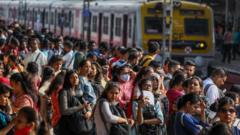
India has officially launched its 16th national census, a massive administrative undertaking designed to account for a population exceeding 1.4 billion people. This project marks the end of a 15-year hiatus, the longest interval between decennial censuses in the nation’s history. To modernize the process, the government is implementing a digital-first strategy that utilizes mobile applications for field enumerators and a multilingual online portal, allowing citizens to self-report their data in 16 different languages.
The operation will cover all 36 states and territories, mobilizing a workforce of over three million personnel, including educators and local government staff. The survey is comprehensive, tracking 33 distinct metrics that include household infrastructure, internet access, dietary habits, and family composition. The project is structured in two phases: the first focuses on housing and infrastructure, while the second, slated for 2027, will concentrate on individual demographics, migration patterns, and educational attainment.
This census is considered a vital tool for future policy development and resource allocation. Because the last official count took place in 2011, the government has been forced to rely on outdated projections for welfare programs and public spending. By gathering current, granular data, officials hope to better address the needs of urban migrant populations and ensure that social services are distributed equitably. The updated survey also incorporates more inclusive criteria for household relationships, reflecting the evolving social structure of the country.
Although the project faced significant delays due to the global pandemic and administrative hurdles, it remains the primary mechanism for governance and political representation. Despite some public discourse regarding data privacy, the initiative is expected to provide a definitive snapshot of the nation, serving as the foundation for future infrastructure planning and the delivery of essential services to millions of citizens.
Key Takeaways
- India has begun its first national census in 15 years, utilizing a new digital-first approach with mobile apps and a multilingual portal.
- The project involves over three million personnel and will collect data on 33 metrics across 36 states and territories.
- The updated data is critical for correcting outdated population projections, which will improve the accuracy of welfare distribution and political representation.
Editor’s Analysis & Impact
The launch of India’s digital census is a watershed moment for the country’s administrative and economic planning. By moving away from paper-based records to a digital framework, the government is not only increasing efficiency but also creating a high-resolution data set that will influence policy for the next decade. The economic implications are profound; accurate data allows for more precise targeting of subsidies, infrastructure investment, and public health initiatives. However, the success of this project hinges on public trust regarding data security and the technical reliability of the digital infrastructure in rural areas. If successful, this census will serve as a global case study for how large-scale, emerging economies can leverage technology to bridge the gap between outdated demographic models and the realities of a rapidly urbanizing, modern society.
Frequently Asked Questions
Q: Why was there a 15-year gap since the last census?
A: The delay was primarily caused by the global pandemic and various administrative scheduling conflicts that pushed back the decennial timeline.
Q: How can citizens participate in the new census?
A: Citizens can participate through a digital-first approach, which includes a multilingual online portal available in 16 languages, or through field enumerators using mobile applications.
AI Disclosure: This article is based on verified data and official reports. Our Team and AI have cross-referenced every financial detail with primary sources to ensure total accuracy.
More from this Category