Bitcoin Surges Toward $80,000 Amid Geopolitical De-escalation and Treasury Liquidity
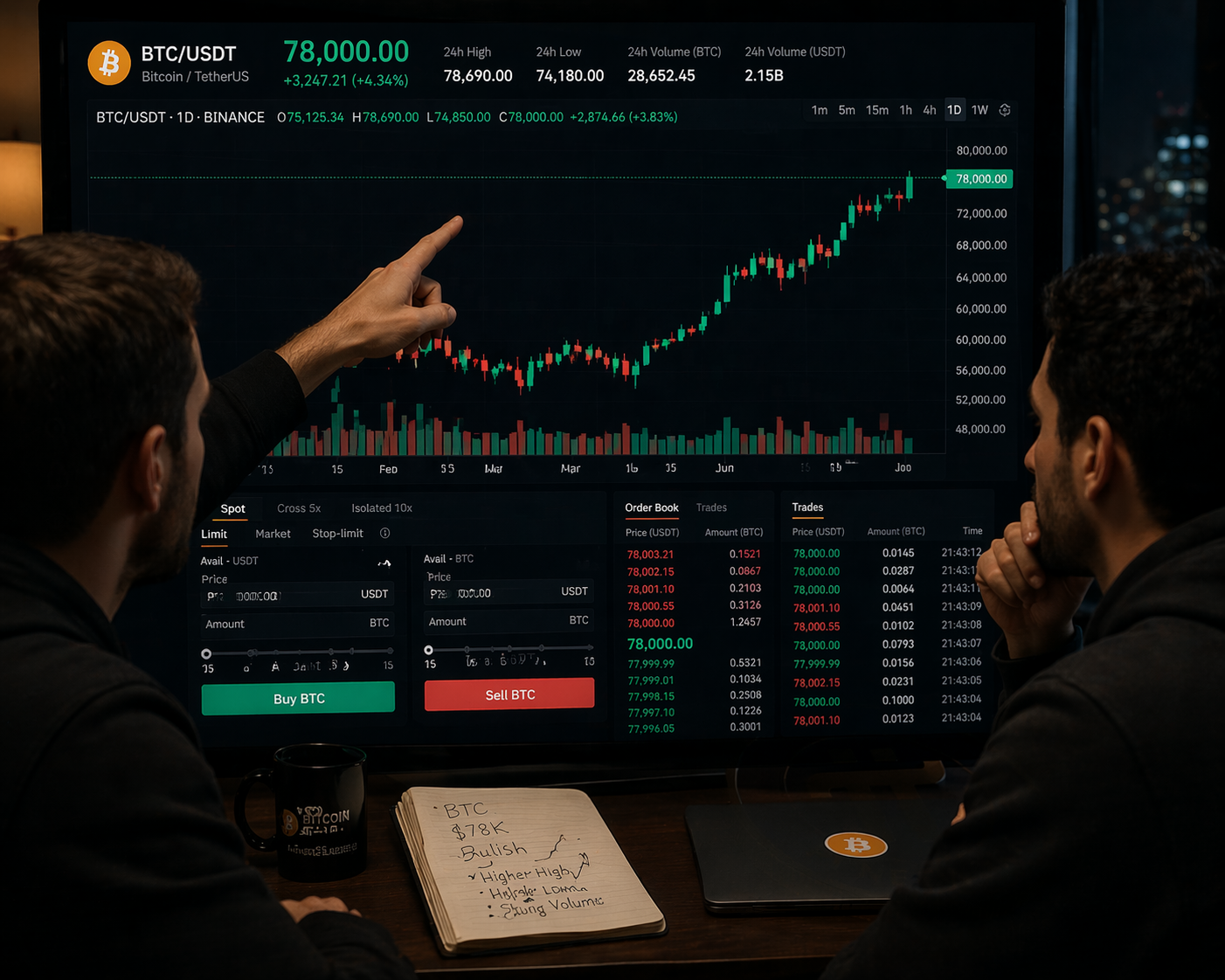
Bitcoin has experienced a significant rally, climbing past the $78,000 threshold to reach a peak of $78,452. This nearly 6% weekly gain follows a period of heightened market sensitivity, driven by a combination of cooling geopolitical tensions and major fiscal policy shifts. The primary catalyst for the recent optimism was the announcement by U.S. President Donald Trump regarding the extension of a cease-fire between the United States and Iran. This diplomatic pause, facilitated by negotiations involving Pakistan, has fostered a risk-on environment that has bolstered demand for high-growth assets like digital currencies.
Beyond geopolitical developments, the cryptocurrency market is reacting to the U.S. Treasury’s historic $15 billion debt buyback program. By injecting substantial liquidity into the financial system, this move is widely viewed as a tailwind for Bitcoin, which historically thrives when capital availability increases. As investors seek alternative stores of value, the influx of liquidity is expected to support Bitcoin’s price action, even as institutional participants maintain a measured approach.
While spot Bitcoin exchange-traded funds (ETFs) saw a cooling in daily inflows—recording $11.84 million compared to the previous day’s $238 million—the broader market sentiment remains bullish. Technical analysis supports this outlook, with Bitcoin trading comfortably above its 50-day and 100-day exponential moving averages. With the Relative Strength Index (RSI) and MACD indicators signaling sustained buying pressure, market participants are now eyeing the $80,000 psychological barrier as the next major milestone for the asset.
Key Takeaways
- Bitcoin reached a high of $78,452, driven by a cease-fire extension between the U.S. and Iran.
- A historic $15 billion U.S. Treasury debt buyback is injecting liquidity, providing a favorable environment for digital assets.
- Technical indicators remain bullish, with Bitcoin holding above key moving averages and targeting the $80,000 resistance level.
Editor’s Analysis & Impact
The recent surge in Bitcoin highlights its increasing sensitivity to both macroeconomic liquidity and geopolitical stability. The U.S. Treasury’s massive debt buyback program serves as a classic liquidity injection, which historically correlates with upward pressure on risk assets. When combined with the de-escalation of tensions in the Middle East, the market environment has shifted toward a ‘risk-on’ posture. However, the divergence between retail-driven price action and the cooling institutional inflows into spot ETFs suggests that professional investors remain cautious about the long-term sustainability of the peace talks. Looking ahead, if the $80,000 resistance is breached, it could trigger a new wave of momentum trading. Conversely, any breakdown in diplomatic negotiations could lead to a rapid reversal, underscoring the volatility inherent in assets that react simultaneously to global politics and central bank fiscal policy.
Frequently Asked Questions
Q: Why does a U.S. Treasury debt buyback affect Bitcoin prices?
A: A debt buyback increases the amount of cash circulating in the financial system. As a liquidity-sensitive asset, Bitcoin often benefits from this increased capital availability as investors look for alternative stores of value.
Q: What are the key technical levels to watch for Bitcoin?
A: Immediate resistance is identified near $78,962, with a major psychological barrier at $80,000. On the downside, support is anchored at $75,680 and the 100-day exponential moving average at $75,368.
AI Disclosure: This article is based on verified data and official reports. Our Team and AI have cross-referenced every financial detail with primary sources to ensure total accuracy.
More from this Category