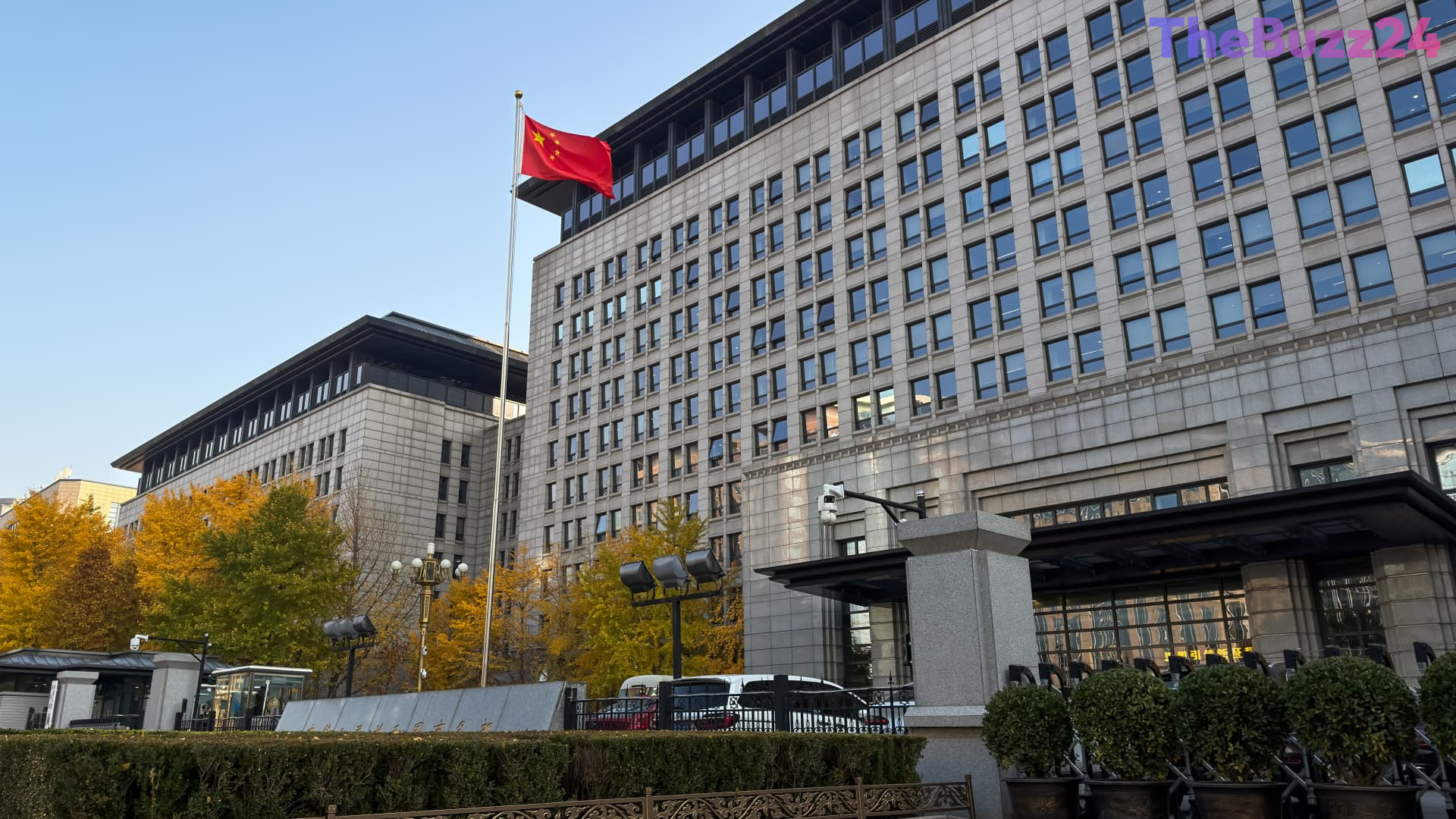
China Implements Trade Restrictions Against U.S. Firms in Response to Pentagon Blacklist
China has initiated a series of trade countermeasures against dozens of U.S. entities, marking a direct response to the Pentagon’s recent expansion of a blacklist targeting Chinese technology companies. The Chinese Ministry of Commerce announced that 10 American industrial suppliers have been placed on an export control list, effectively prohibiting the export of dual-use items from China to these firms. The list includes notable companies such as rare earth miners MP Materials Corp and USA Rare Earth, as well as drone manufacturers Teal Drones and Jaia Robotics. Other affected organizations include Aveox Inc, Ball Aerospace & Technologies Corp, and Oshkosh Defense.
In a parallel move, the Chinese Finance Ministry has barred 46 U.S. companies, primarily defense contractors, from participating in government procurement projects. While these restrictions are significant in scope, they contain specific exemptions for foreign-funded, locally registered entities associated with the targeted firms. This dual-pronged approach follows the Pentagon’s recent update to its ‘1260H’ list, which identified several Chinese tech giants, including Alibaba Group, Baidu, and BYD, as entities allegedly supporting Beijing’s military operations.
Analysts suggest that these countermeasures are largely symbolic, as many of the targeted U.S. companies maintain minimal business exposure within the Chinese market. The move appears designed to signal Beijing’s resolve to protect its corporate interests without triggering a broader, more damaging escalation in bilateral trade relations. Despite the tension, experts note that the current actions reflect a calculated effort to maintain stability in the wake of recent high-level diplomatic summits between the two nations.
Key Takeaways
- China has placed 10 U.S. industrial suppliers on an export control list and excluded 46 U.S. firms from government procurement.
- The move is a direct retaliation against the Pentagon's recent addition of Chinese tech companies like Alibaba and BYD to its military-linked entity list.
- Experts view the countermeasures as largely symbolic, intended to signal defiance while avoiding a major disruption to the broader U.S.-China economic relationship.
Editor’s Analysis & Impact
The latest trade friction between Washington and Beijing highlights the increasingly complex ‘tit-for-tat’ nature of modern geopolitical competition. By targeting specific industrial suppliers and defense contractors, China is signaling that it will not remain passive as the U.S. expands its definition of national security threats to include a wider array of Chinese technology firms. However, the choice of companies with limited exposure to the Chinese market suggests a strategic restraint. Beijing is likely attempting to balance domestic political pressure to appear strong with the economic necessity of maintaining a stable relationship with the U.S. market. Looking forward, we can expect this pattern of targeted, symbolic retaliation to continue as both nations navigate the delicate intersection of national security, artificial intelligence, and global supply chain dominance.
Frequently Asked Questions
Q: What is the Pentagon's 1260H list?
A: The 1260H list identifies companies that the U.S. Department of Defense believes have aided the Chinese military. While it does not impose immediate sanctions, it prohibits the Pentagon from awarding direct contracts to these entities.
Q: Are these new Chinese trade restrictions expected to have a major impact on the U.S. economy?
A: Most analysts believe the impact will be minimal, as the targeted U.S. companies have little to no meaningful business operations or supply chain dependencies within China.
AI Disclosure: This article is based on verified data and official reports. Our Team and AI have cross-referenced every financial detail with primary sources to ensure total accuracy.
More from this Category