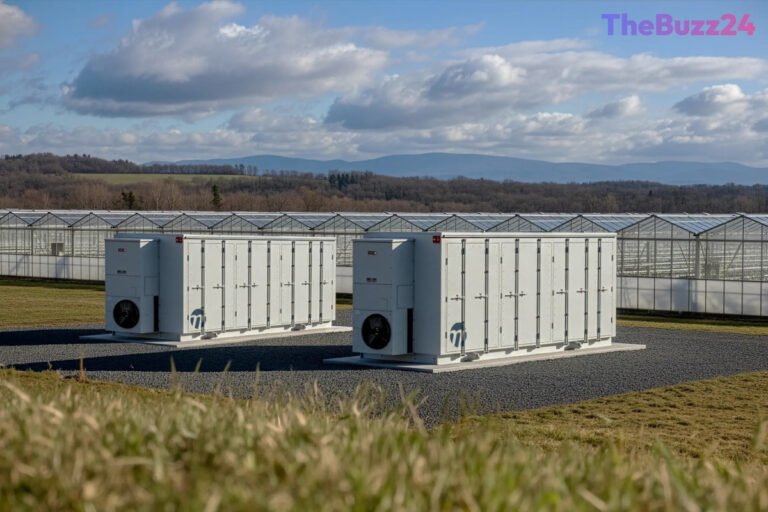
Convective Capital Secures $85 Million Fund to Accelerate Disaster Resilience Technologies
Convective Capital has successfully closed an $85 million fund dedicated to advancing physical disaster resilience. The firm, led by Bill Clerico, is strategically expanding its investment focus from its initial concentration on wildfire mitigation to encompass a broader spectrum of natural disaster risk management. This substantial capital infusion follows a successful $35 million inaugural fund raised in 2022, marking a significant transition from individual investor backing to robust institutional support from major insurance companies and asset managers.
The firm’s investment strategy is deeply rooted in “firetech” and comprehensive physical risk management solutions. Previous successful portfolio companies include Pano, which leverages AI-powered cameras for early fire detection, and Burnbot, a pioneer in robotics for efficient brush clearing. With the newly secured fund, Convective Capital has already initiated investments in innovative companies such as The Lumber Manufactory, which specializes in economical forest management, and Voltaire, a firm utilizing drones for power line inspection. These strategic investments are part of a growing ecosystem aimed at safeguarding the estimated $60 trillion in real estate currently exposed to high disaster risk.
Beyond providing essential capital, Convective Capital plays a pivotal role in bridging the gap between emerging startups and traditionally complex sectors like utilities and government agencies. As climate-related disasters increasingly strain critical infrastructure and compel insurance providers to reassess their market presence, the firm is poised to capitalize on the escalating demand for innovative mitigation tools. Furthermore, the rapid expansion of AI and data centers is placing additional stress on physical systems, creating new market opportunities for technologies capable of monitoring, predicting, and protecting against environmental threats.
Key Takeaways
- Convective Capital has closed an $85 million fund to invest in technologies enhancing physical disaster resilience.
- The firm is broadening its investment focus from wildfire mitigation to a wider range of natural disaster risks, now backed by institutional investors.
- New investments include companies focused on economical forest management and drone-based infrastructure inspection, alongside previous successes in AI-powered fire detection and brush-clearing robotics.
Editor’s Analysis & Impact
This significant $85 million fund closure by Convective Capital underscores a growing recognition of the urgent need for disaster resilience technologies. The shift to institutional backing signals mainstream confidence in this critical sector, driven by escalating climate-related risks and their profound impact on infrastructure and the insurance industry. We can anticipate accelerated innovation and deployment of ‘firetech’ and broader physical risk management solutions. Convective Capital’s role in connecting startups with utilities and government agencies is crucial for overcoming adoption barriers. This investment not only aims to protect vulnerable assets but also highlights the evolving role of AI and robotics in mitigating environmental threats, offering a proactive approach to adapting to a changing climate and the added pressures from expanding digital infrastructure.
Frequently Asked Questions
Q: What is Convective Capital's primary investment focus with this new fund?
A: The firm is primarily focused on investing in technologies that enhance physical disaster resilience, broadening its scope from initial wildfire mitigation to a wider array of natural disaster risks.
Q: How does Convective Capital support its portfolio companies beyond providing capital?
A: Beyond financial investment, Convective Capital plays a crucial role in connecting startups with challenging sectors like utilities and government agencies, facilitating the adoption and deployment of their innovative solutions.
Q: What market trends are driving the demand for disaster resilience technologies?
A: The demand is driven by increasing climate-related disasters, the strain on existing infrastructure, insurance providers re-evaluating their market presence, and the additional stress placed on physical systems by the rapid expansion of AI and data centers.
AI Disclosure: This article is based on verified data and official reports. Our Team and AI have cross-referenced every financial detail with primary sources to ensure total accuracy.
More from this Category