Croatia Joins Global Coalition for Sustainable Lunar Exploration
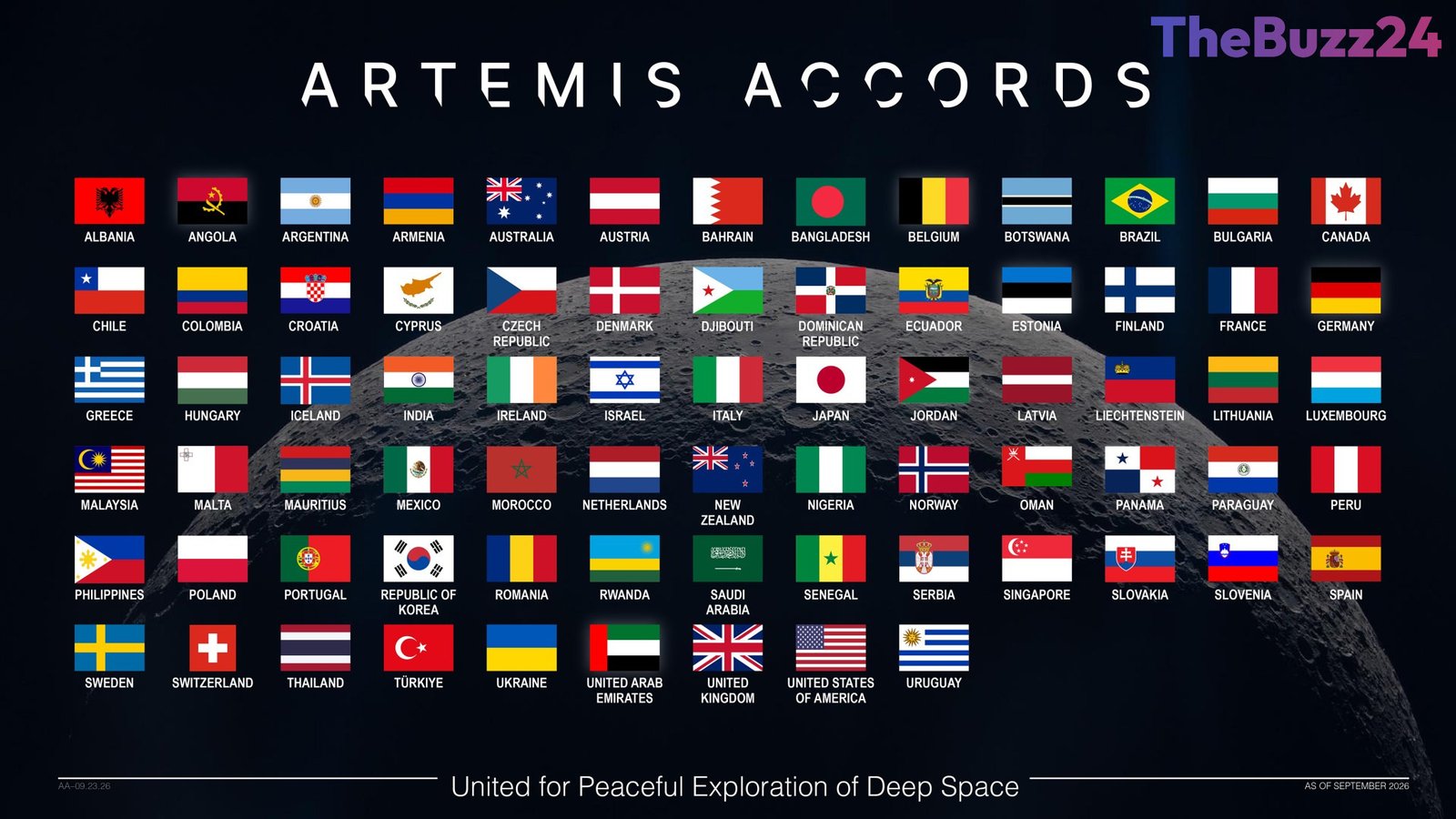
The Republic of Croatia has officially become the 74th nation to join the Artemis Accords, marking a significant expansion of the international coalition dedicated to peaceful and transparent space exploration. The signing ceremony, held in Zagreb, was attended by representatives from NASA and the U.S. Department of State, signaling a new era of bilateral cooperation in aerospace science and technology.
By signing the Accords, Croatia commits to a set of guiding principles designed to ensure safety and coordination in lunar and deep-space missions. These principles include the transparent sharing of scientific data, the preservation of historic space artifacts, and a commitment to rendering aid to other nations during space operations. For Croatia, the agreement serves as a strategic move to bolster its domestic scientific community and integrate its burgeoning space industry into the global market.
This development follows Croatia’s recent entry into the space sector, highlighted by the successful deployment of its first satellite, CroCube, which reached orbit via a SpaceX Falcon 9 rocket in late 2024. Government officials noted that the partnership with NASA is expected to accelerate the introduction of advanced technologies and provide new economic opportunities for Croatian companies interested in the growing space economy.
Established in 2020, the Artemis Accords have become the primary framework for nations participating in the next generation of lunar exploration. As the coalition grows, it continues to shape the international standards for how humanity will operate on the Moon, Mars, and beyond, fostering a collaborative environment for both government agencies and private sector partners.
Key Takeaways
- Croatia has become the 74th signatory to the Artemis Accords, committing to international standards for peaceful space exploration.
- The agreement aims to foster collaboration in lunar missions, scientific data sharing, and the development of Croatia's domestic space industry.
- This move builds on Croatia's recent technological progress, specifically the successful 2024 launch of its first satellite, CroCube.
Editor’s Analysis & Impact
The addition of Croatia to the Artemis Accords underscores the rapid globalization of the space sector. As more nations seek to establish a foothold in the ‘New Space’ economy, the Accords serve as a vital diplomatic and regulatory framework that mitigates the risks of conflict and operational interference. For Croatia, this is a clear signal of intent to transition from a space-curious nation to an active participant in the lunar supply chain. The broader implication is that the Artemis program is successfully creating a ‘soft power’ network that standardizes space operations, effectively creating a global consensus on lunar governance. As the number of signatories grows, the Accords are increasingly likely to become the de facto international law for space, potentially marginalizing nations that operate outside of these established norms.
Frequently Asked Questions
Q: What are the Artemis Accords?
A: The Artemis Accords are a set of non-binding principles designed to guide civil space exploration and use in the 21st century, focusing on transparency, safety, and the peaceful use of space.
Q: Does signing the Artemis Accords require a country to fund NASA missions?
A: No, signing the Accords is a commitment to a set of shared principles for space exploration and cooperation; it does not mandate specific financial contributions to NASA's budget.
AI Disclosure: This article is based on verified data and official reports. Our Team and AI have cross-referenced every financial detail with primary sources to ensure total accuracy.
More from this Category