Curiosity Rover Back in Action: Mars Mission Resumes After Successful Drill Repair
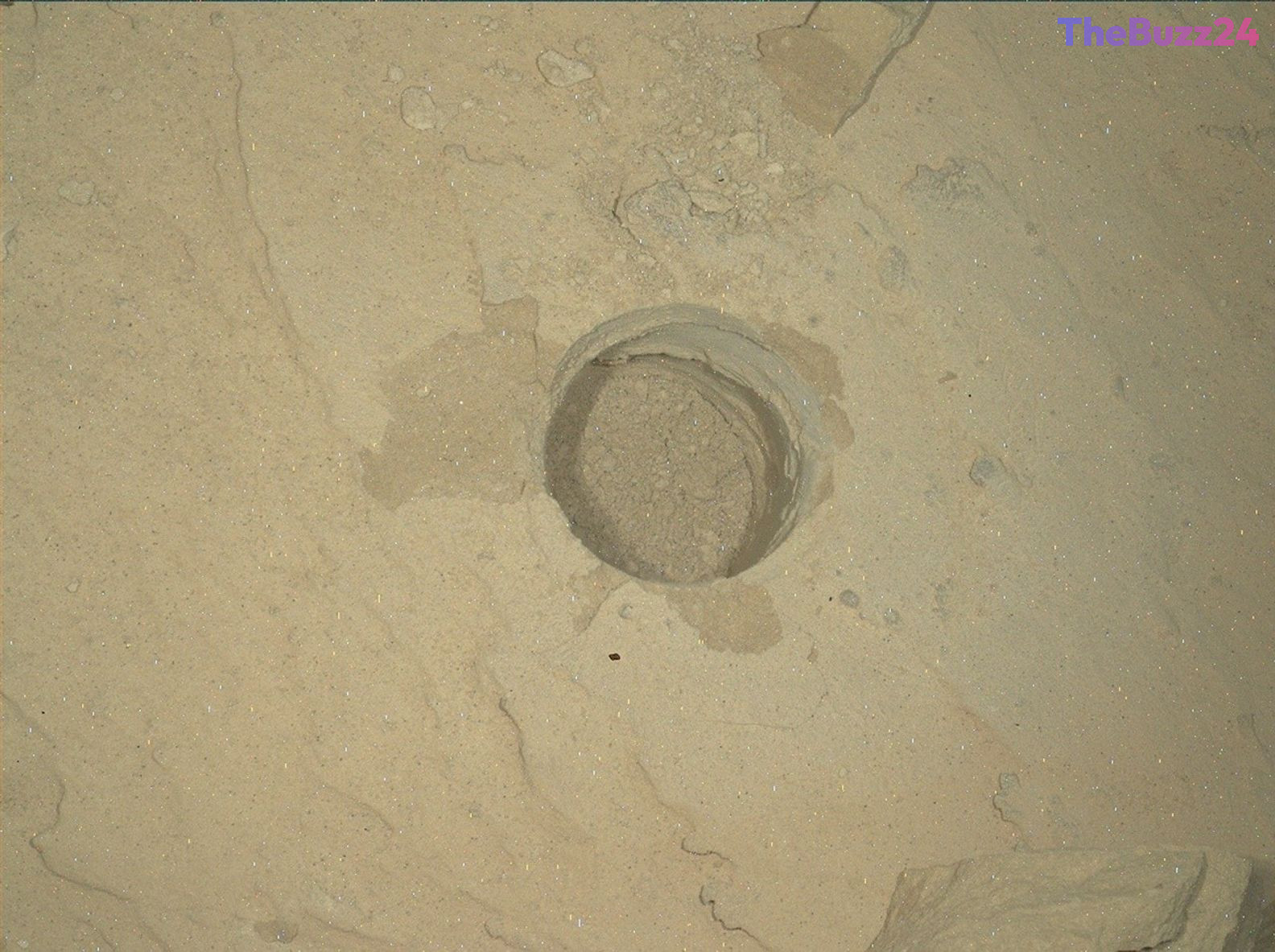
The Curiosity rover has successfully navigated a major technical hurdle on the Martian surface after its drilling mechanism became trapped within a rock formation known as “Atacama.” Mission control engineers executed a series of delicate, remote robotic maneuvers to dislodge the hardware, successfully freeing the drill without causing any lasting damage to the rover’s sophisticated equipment. Following the recovery, the rover utilized its Mars Hand Lens Imager (MAHLI) to document the internal structure of the rock, providing researchers with unprecedented high-resolution data regarding the planet’s subsurface composition.
With the drilling system back in full working order, the mission team has pivoted to an intensive geological survey of the surrounding terrain. Curiosity is currently utilizing its suite of advanced scientific instruments, including the ChemCam and the Alpha Particle X-ray Spectrometer (APXS), to examine various bedrock patches and fracture sites at locations such as “Tamarugal,” “Tamarugo,” and “Colchane.” In addition to its drilling operations, the rover is conducting a wide-ranging survey of the landscape, which includes monitoring the movement of sand dunes and performing a detailed inspection of a potential meteorite identified as “Isla Mocha.”
Currently, the rover is making steady progress on an uphill trajectory toward a significant geological contact zone. This specific area, where two distinct rock formations meet, is expected to yield critical evidence regarding the ancient environmental shifts that shaped the Martian surface. Throughout this journey, Curiosity continues to provide essential data on atmospheric conditions and radiation levels. Engineering diagnostics confirm that the rover remains in excellent operational health, and the team is already finalizing plans for an upcoming, more ambitious drilling campaign as the rover reaches its next target destination.
Key Takeaways
- Curiosity successfully cleared a drill jam at the 'Atacama' site, restoring full functionality to its primary sampling tool.
- The rover is actively analyzing diverse geological features, including bedrock, shifting sand dunes, and a suspected meteorite.
- The mission is currently advancing toward a critical geological contact zone to uncover details about Mars' ancient environmental history.
Editor’s Analysis & Impact
The successful remote repair of the Curiosity rover’s drilling mechanism serves as a testament to the durability and adaptability of modern robotic space exploration. By overcoming mechanical failures millions of miles from Earth, the mission team has reinforced the feasibility of long-term, autonomous scientific operations in extreme environments. This event highlights the critical role of remote troubleshooting and robust engineering in space missions. As Curiosity approaches a key geological contact zone, the data collected will be vital for refining our understanding of how Mars transitioned from a potentially habitable environment to its current arid state. Furthermore, the ability to maintain and repair complex hardware in such isolation provides a foundational blueprint for future missions, including potential human-led expeditions, by demonstrating that mission longevity can be extended through precise, ground-based intervention.
Frequently Asked Questions
Q: What caused the temporary interruption in the Curiosity rover's drilling operations?
A: The mission was briefly delayed when the rover's drill mechanism became lodged inside a rock target identified as 'Atacama'.
Q: Why is the geological contact zone important for the mission?
A: The contact zone marks the boundary between two different rock formations, which scientists believe will offer essential clues about the ancient environmental and geological evolution of Mars.
AI Disclosure: This article is based on verified data and official reports. Our Team and AI have cross-referenced every financial detail with primary sources to ensure total accuracy.
More from this Category